A hospital can place an order for “medical vacuum plant” and receive proposals that differ in pump arrangement, receiver inclusion, controls, maintenance facilities, monitoring and commissioning scope. A medical vacuum source is not simply an industrial vacuum pump connected to a pipe network.
A good procurement package defines the required medical vacuum service, the approved network design and the exact boundary between source plant, distribution components and point-of-use suction equipment. The source design, infection-control requirements and testing remain duties for suitably qualified project and hospital personnel.
Identify the intended vacuum service
Ask the clinical and engineering teams to confirm that the service is medical vacuum within the hospital MGPS. Dental suction systems, laboratory extraction, anesthesia scavenging disposal systems and industrial vacuum have different scopes and may be subject to different requirements. Similar negative-pressure equipment does not make the services interchangeable.
The ISO 7396-1 scope includes medical vacuum pipeline systems in healthcare facilities. The NHS HTM 02-01 and Scottish SHTM 02-01 provide medical gas and vacuum system design/management guidance. The applicable national code, healthcare operator and approved specification govern the actual installation.
Begin with a plant duty and connection schedule
The project design authority should state the required vacuum duty at the system interface and relevant operating conditions, with an engineering calculation, rather than simply “two pumps × 100.” Record the medical vacuum service, proposed plant location, approved source duty, distribution boundary, intended monitoring points and the design cases that the source must satisfy.
Ask bidders to document how they interpret stated flow and vacuum units and test conditions; inconsistent units and reference conditions can create misleading comparisons.
A plant supplier should be able to link the offered assembly to a complete equipment and controls schedule. Any difference from the project duty must be declared and reviewed by the designer.
Keep separate source, pipeline and patient-side equipment
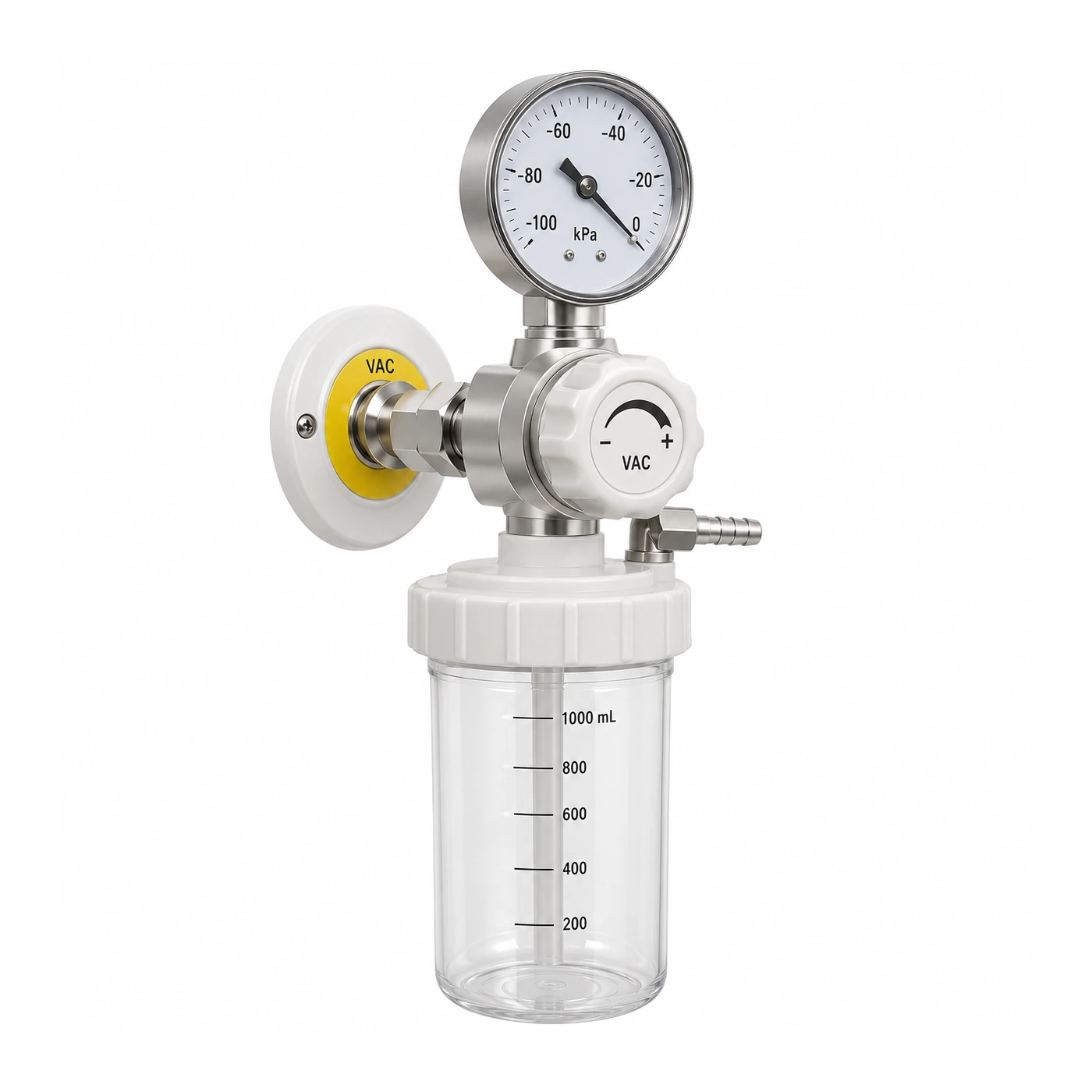
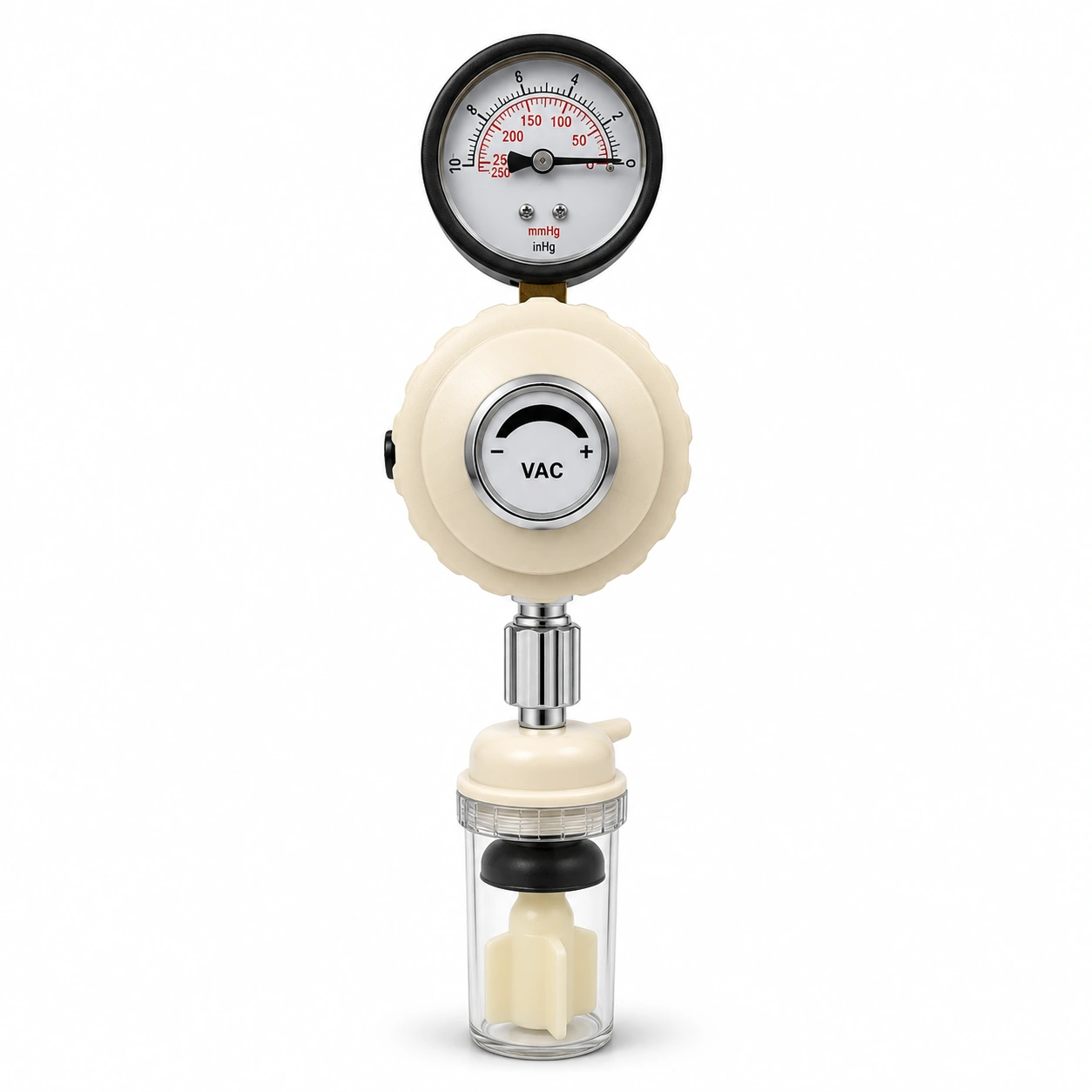
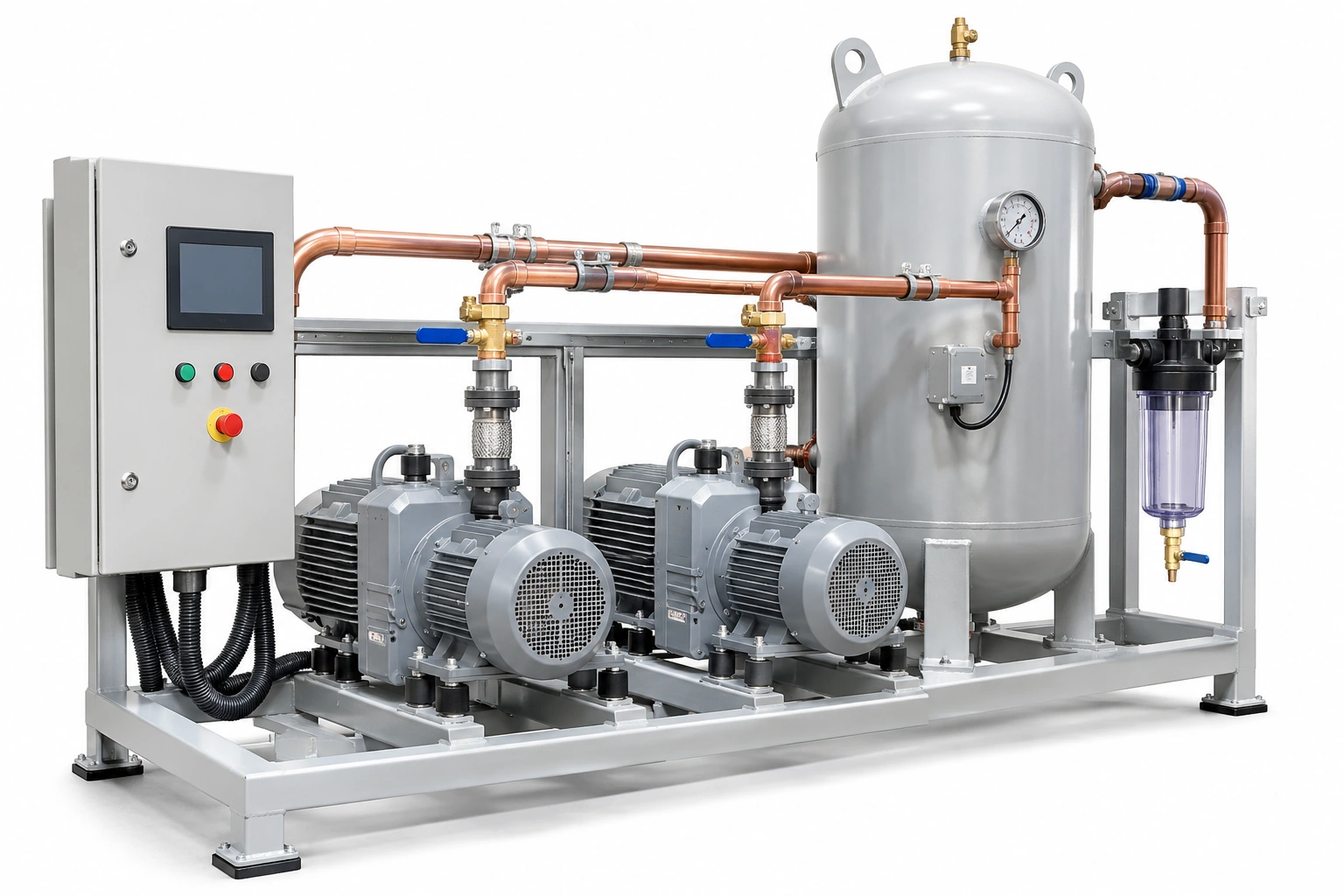
A source plant may include vacuum-producing equipment and associated receivers, controls, monitoring and other engineered accessories appropriate to its design. The pipeline distribution system carries the vacuum service through the hospital. Patient-side suction devices, regulators, collection containers and clinical accessories form separate purchasing and operating scopes.
This distinction matters because a vacuum plant quotation does not automatically include collection jars or patient-side vacuum regulators, and the presence of an outlet does not confirm source performance.
Create an interface row for the source outlet to pipeline connection, a second for monitoring/alarm data, and further lines for installation/verification ownership.
Review contamination and maintenance arrangements
Medical vacuum can involve contamination-related concerns because of its clinical use and potential incidents in the downstream system. Ask the responsible engineer and hospital team how the approved source arrangement deals with the relevant protection, hygiene, inspection and maintainability requirements.
Do not improvise a filtration specification or cleaning procedure from an equipment catalogue. Clinical and engineering controls must match the applicable guidance and the hospital's infection-control and safety rules.
Also identify maintenance access and how the operator can keep the required service continuity while approved equipment is maintained. The presence of more than one pump is not, on its own, proof of resilience.
Issue an equipment-comparison worksheet
Compare tenders using the same rows:
- Defined medical-vacuum source duty and test basis.
- Pump/equipment configuration and documented operating cases.
- Receiver and other source accessories included or excluded.
- Mechanical and electrical interfaces, controls and alarms.
- Site conditions, noise and heat-rejection requirements.
- Maintenance, inspection, spare parts and training provision.
- System interface drawings, factory/site acceptance plan and handover records.
- Clear warranty and response obligations.
Mark “not stated” visibly rather than assuming an unlisted item is supplied.
Source acceptance evidence
A typical project evidence index includes approved P&ID and equipment lists, installation inspection records, agreed performance test results, alarm and monitoring function records, equipment identities, controls documentation, relevant quality/contamination measures and maintenance instructions.
Acceptance should cover the source's relationship to the pipeline system and applicable service requirements. The appointed competent team determines testing and sign-off; this article does not provide instructions for adjusting or testing a live clinical system.
Common project error: plant versus suction package
A tender describes “vacuum system: pumps, regulators, jars and outlets.” One vendor prices only pumps, while another includes patient-side items. The technical buyer must split the scope into source plant, distribution and end-use equipment before comparing prices.
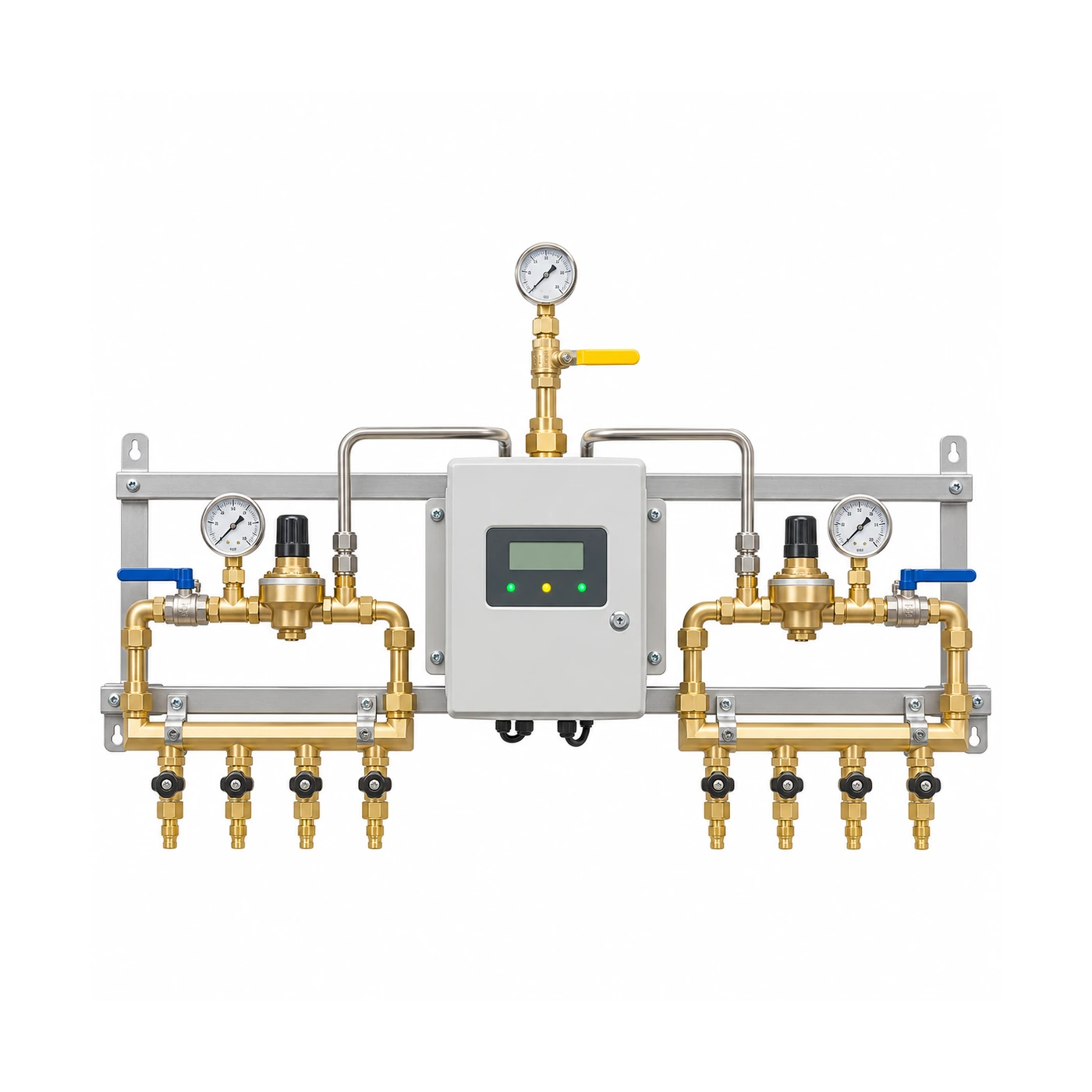
BWC Medgas does not supply complete medical vacuum plants. It can discuss relevant downstream medical gas outlets, vacuum/pressure accessories, zone valves and related hardware where the design specifies them.
Send a defined downstream MGPS component schedule to BWC Medgas.
Questions worth answering before award
Does a vacuum pump's published capacity prove source compliance?
No. Intended service, complete assembly, relevant duty, control and verification requirements still need engineering assessment.
Can medical vacuum be combined with an AGSS system by default?
No. These are distinct services with their own technical standards and system boundaries.