
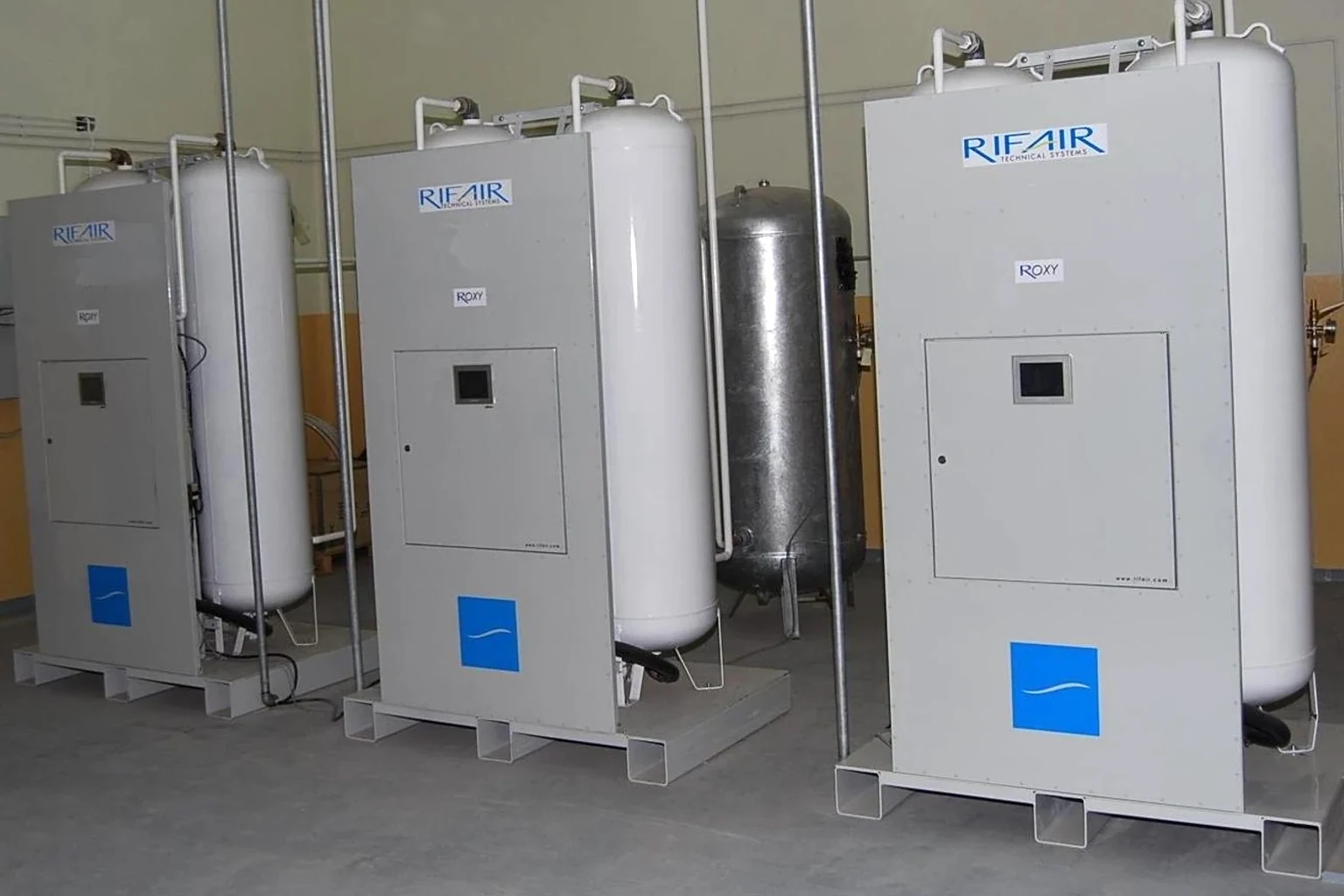
A PSA (pressure swing adsorption) oxygen plant quotation may prominently state the oxygen percentage and nominal output. Those two figures do not demonstrate whether the complete plant can safely support a hospital's specified oxygen 93 supply system. A useful evaluation starts with the facility's approved demand and quality requirements, then checks the utilities, supply continuity, monitoring and intended MGPS interface.
This guide is a procurement and project-assurance checklist. It does not prescribe commissioning setpoints, gas-processing adjustments or clinical operating methods.
Confirm the product and regulatory route
Determine whether the project intends to produce oxygen 93 on site and what medicinal-gas rules apply in that jurisdiction. The system must be evaluated for the exact product and legal/regulatory responsibilities, not merely for “oxygen purity above 90%.”
ISO 7396-1:2016 covers defined oxygen and oxygen 93 systems and includes source and downstream requirements. The older ISO 10083:2006 should not be presented as the latest standalone standard: it was withdrawn and replaced by coverage within ISO 7396-1.
The WHO guide addresses oxygen source, storage and distribution product requirements. Its high-level information helps shape the request, but it is not a license to bypass nationally required quality control.
Obtain a duty curve, not only one rating
Request output data for the specified operating conditions and clinical demand cases. Record units consistently, including the conditions under which gas volume and flow are stated, the intended delivered product and source outlet requirements.
Ask the manufacturer what effect ambient temperature, humidity, altitude, input air conditions, maintenance and turndown may have on the rated capability. The hospital's designer should review the combined plant and pipeline performance at the relevant duty.
Do not assume that a laboratory oxygen concentration figure at low demand remains unchanged across every load condition.
List utility and infrastructure dependencies
A PSA plant depends on more than its oxygen-producing beds. Obtain a schedule of:
- Site electrical demand and necessary protection/standby arrangements.
- Incoming air treatment and environmental quality conditions.
- Compressor, dryer, filtration, adsorbent and control/monitoring subsystems.
- Ventilation, heat rejection, plant-room access and noise considerations.
- Buffer/storage arrangements and the approved independent or reserve supply strategy.
- Maintenance access, spare parts, operator training and specialized service support.
- The exact mechanical interface to downstream oxygen distribution.
The appropriate design/installation authorities determine the resulting system architecture. BWC Medgas is a supplier of selected components, not a complete PSA plant vendor.
Create the gas-quality responsibility matrix
When a facility produces gas on site, it can assume substantial responsibilities for product quality and ongoing control under the applicable rules. Record who owns the oxygen quality specification, sampling arrangements, test method, instrument calibration, alarm thresholds and rejection/response procedure.
Distinguish a factory demonstration from onsite product quality acceptance. A plant that passes a short demonstration at the supplier's facility may still require full site-specific verification.
Do not infer legal compliance from a generic CE statement, nor use a supplier's claimed purity to replace required documentation for the product and its approved use.
Compare offers on a complete assembly basis
A fair evaluation worksheet should record each vendor's inclusion/exclusion for compressor and dryer equipment, adsorption trains, controls, oxygen analysis, buffer and storage, fittings, power works, commissioning, testing, spares and long-term maintenance.
Mark omissions by name. “Plant complete” is not specific enough for comparison. Request equipment model/serial identification and a validated factory scope list in the final package.
Build an acceptance evidence register
Before contract award, agree which evidence will be supplied at factory, during installation and at site acceptance. A practical index can include: approved system P&ID, equipment list, utility drawings, control/alarm schedule, quality plan, test protocol, calibrated instrument records, site performance results, declared product quality, training/maintenance documents and signed acceptance.
Acceptance requires competent oversight and applicable rules; this list does not tell a contractor how to make operating adjustments to a live medical gas supply.
Sample acceptance matrix entry
“Q-PSA-05 — Oxygen product verification. Owner: hospital-designated quality authority. Evidence: agreed sampling and test records for the relevant operating cases; calibrated measurement equipment; defined review and acceptance decision. Status: open until signed.”
This format keeps evidence and accountability visible without inventing universal test limits.
BWC component interfaces
Downstream products might include MGPS manifolds and hardware, pressure accessories, alarm panels and medical gas valves. Select them against the approved design rather than a generic PSA advertisement.
Send the approved component interface schedule to BWC Medgas.
Questions and misconceptions
Does a 93% claim prove the entire plant is hospital-ready?
No. Product quality, regulation, source architecture, performance, maintenance and system acceptance are separate requirements.
Can a home oxygen concentrator be used as an MGPS oxygen source?
It cannot be assumed suitable. Equipment intended for individual patient use and plant source systems have different intended scopes.