
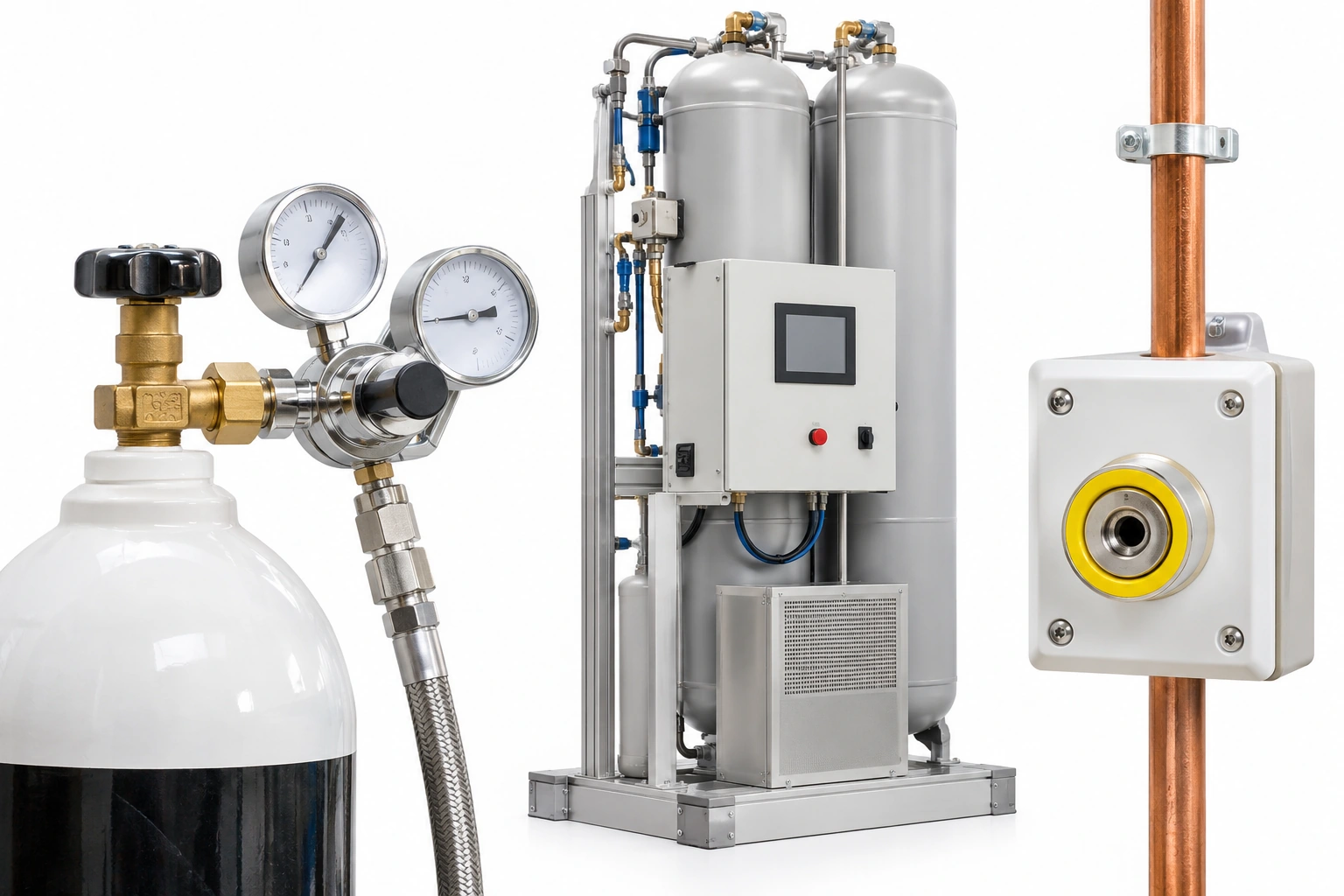
A hospital receives a certificate showing that delivered cylinders contained the specified medical gas. Separately, its on-site oxygen production plant reports a product analysis value. Neither record alone establishes that every point in the completed medical gas distribution is delivering the intended gas under the correct conditions.
The practical response is a source gas-quality responsibility and evidence register: one controlled document that records what product is supplied or manufactured, who owns its quality, how evidence is collected and how site acceptance is documented.
Separate three questions that are often mixed up
Product identity: What gas or specified gas mixture does the hospital intend to supply? Medical oxygen, oxygen 93, medical air and other services have distinct definitions and applicable rules.
Source quality: What evidence demonstrates that the delivered or manufactured gas satisfies the product specification under the required conditions? This may involve supplier release documents, on-site manufacturing quality controls and appropriate monitoring or testing.
System identification and quality: What evidence demonstrates that the installed distribution and terminals are connected, identified and verified for the intended service? The engineering testing plan addresses this separately from the source supplier's product certificate.
Do not merge the three into a single “oxygen test OK” checkbox.
Define the quality owner for each source type
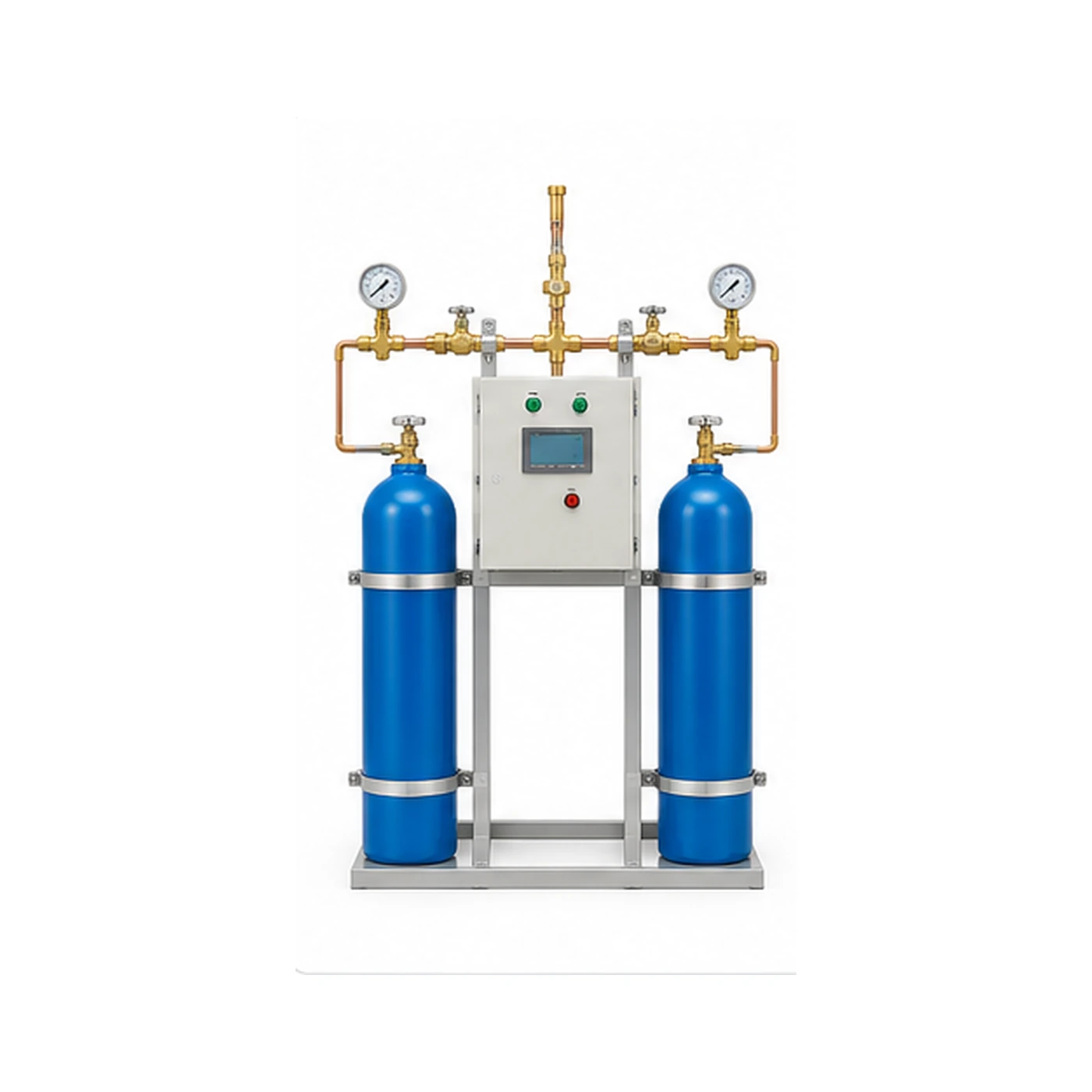
For externally supplied medicinal gas, identify the authorized gas supplier and the hospital's receipt, storage and traceability controls. For on-site production, identify the organization's actual manufacturing/quality obligations and responsible personnel under applicable regulation.
ISO 7396-1 highlights that healthcare facilities manufacturing certain gases on site assume important quality responsibilities. National regulation may additionally require licensing or other controls. A manufacturer’s generic product brochure cannot delegate those responsibilities away.
A vacuum source presents different quality/operational questions from a manufactured medicinal gas; it should not receive a fictitious “oxygen purity” field in the same worksheet.
Create an evidence register by gas service
Recommended fields:
- Service and intended product specification with document edition.
- Source type, model/asset or supplier batch reference.
- Supply owner and source-quality owner.
- Required product release or test evidence and its author.
- Sampling/monitoring decision and approved method reference.
- Instrument or laboratory qualification/calibration reference where applicable.
- Conditions and operating cases covered by the evidence.
- Alarm or out-of-specification response document reference.
- System gas identity/quality verification records at the required points.
- Reviewer, date, unresolved issues and final acceptance decision.
Record a clear not applicable with reason where a field truly does not apply. Do not substitute a supplier's claim for measured or verified evidence required by the project.
Why operating conditions must be recorded
A gas system can produce different results under changes in demand, ambient conditions or maintenance state. The quality plan should establish which operating cases and production modes are represented in the accepted evidence, and whether production remains within the specified quality controls.
This is especially relevant to on-site oxygen production and synthetic-air systems, but the precise checks and acceptance criteria must come from the governing product quality rules and approved engineering plan, not this guide.
Create a release hold point before clinical use
Before a newly installed or modified source is released, establish which completed documents the designated decision-makers require. The package can include source-specific quality evidence, pipeline test records, gas identity verification, alarm function evidence and resolved deviations.
The 2026 NHS HTM 02-01 and SHTM 02-01 provide current healthcare project verification frameworks. The exact required tests, responsibility and release steps depend on the facility and local requirements.
Do not treat a passed factory acceptance demonstration as authority to place a hospital source into patient-care service.
Worked record example
“QA-O2-017 — Oxygen source product identity and quality. Equipment reference: project source OX-02. Product specification: approved contract document. Sampling method: referenced in the site's quality plan. Evidence supplied: batch/source record and independent site evidence where required. Quality reviewer: appointed hospital authority. Status: open until accepted.”
The example demonstrates evidence control; it intentionally contains no universal oxygen purity threshold or operational adjustment.
Handling mismatched certificates
If the paperwork identifies a different source model, batch, gas identity, method or operating case, record the discrepancy rather than assuming it is inconsequential. The responsible quality and engineering authorities must determine the disposition and any additional evidence.
For procurement, request the exact model documentation and clarify which records come with equipment versus which must be generated at installation/commissioning.
BWC Medgas contribution
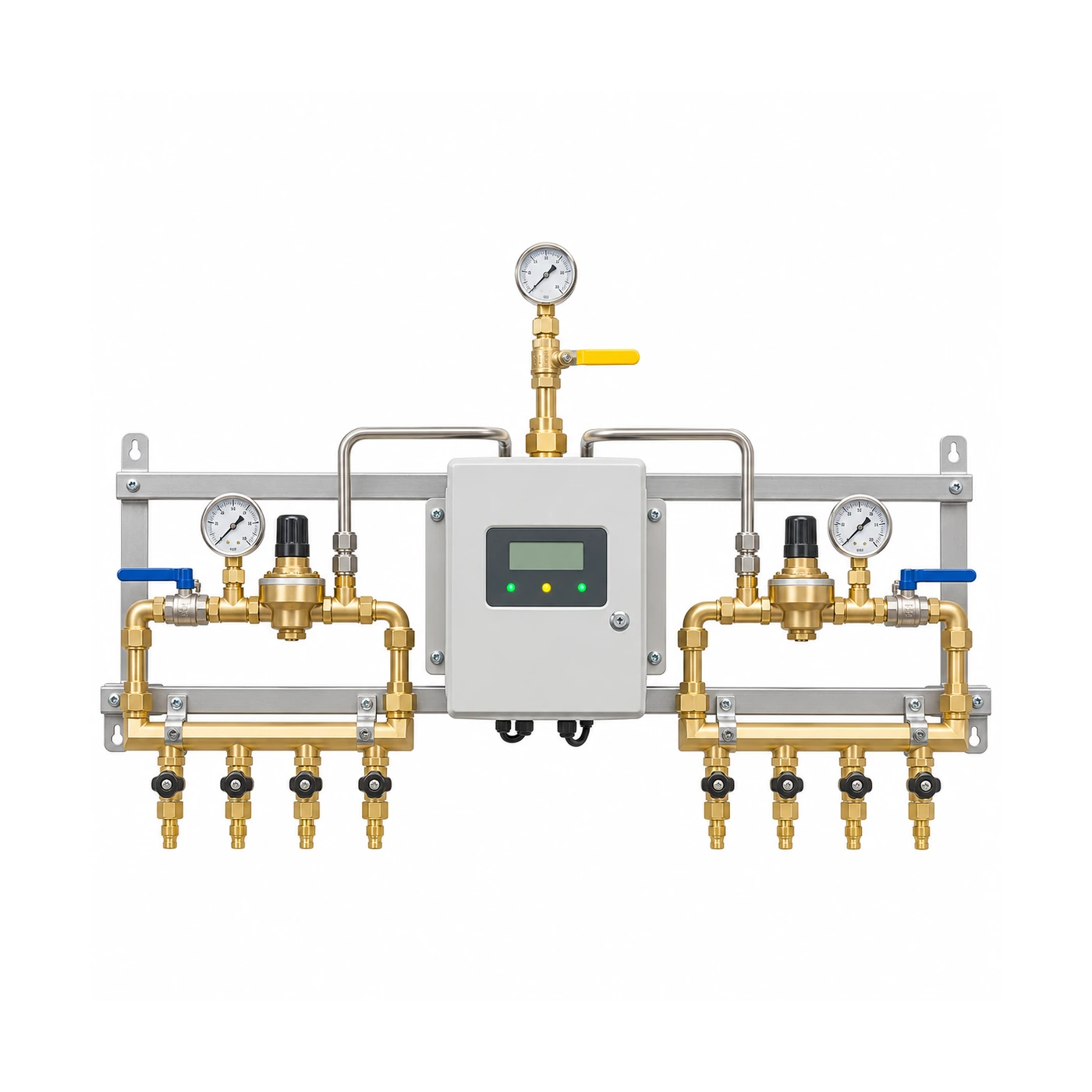
BWC can provide product-specific information for selected terminal units, manifold accessories, regulators and alarm panels. These records support component selection but do not constitute hospital-wide source gas-quality certification.
Discuss the relevant component documents with BWC Medgas.
Frequently asked questions
Does an oxygen supplier's certificate prove gas identity at every outlet?
No. The installed pipeline and terminal system needs its own required verification.
Is an ISO equipment standard the same as a medicinal-gas manufacturing license?
No. Product/device requirements and legal authority to manufacture or supply medicinal gas are different questions.