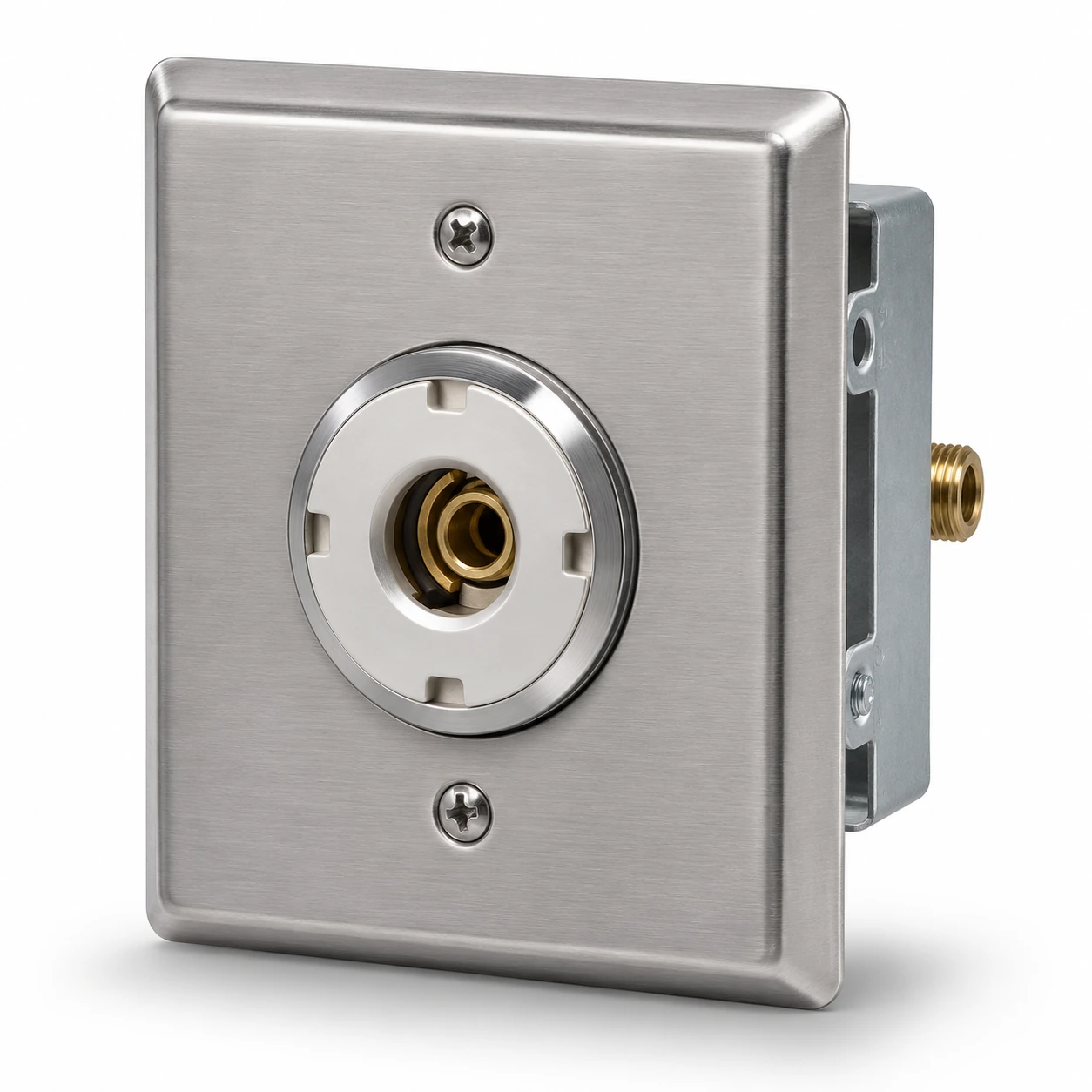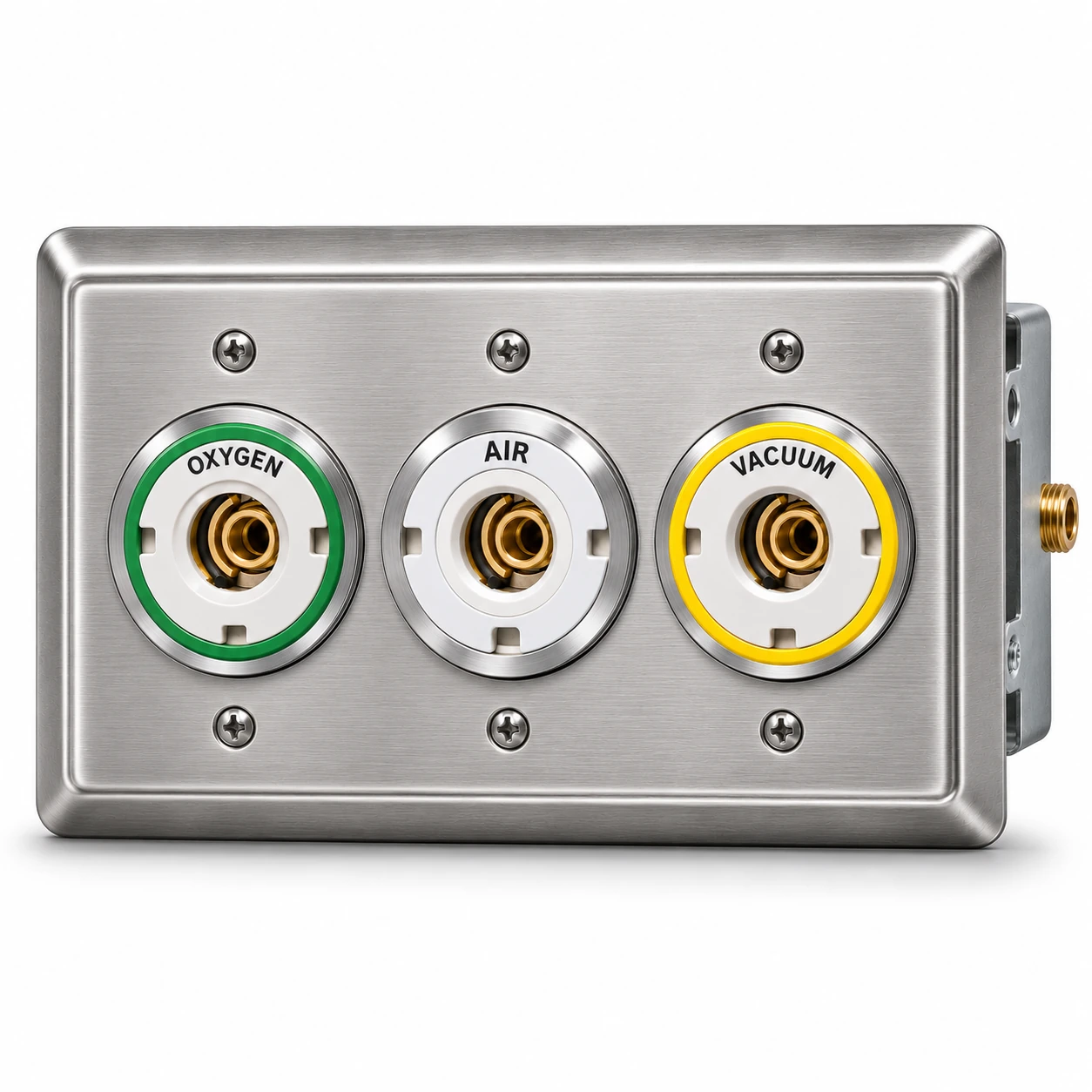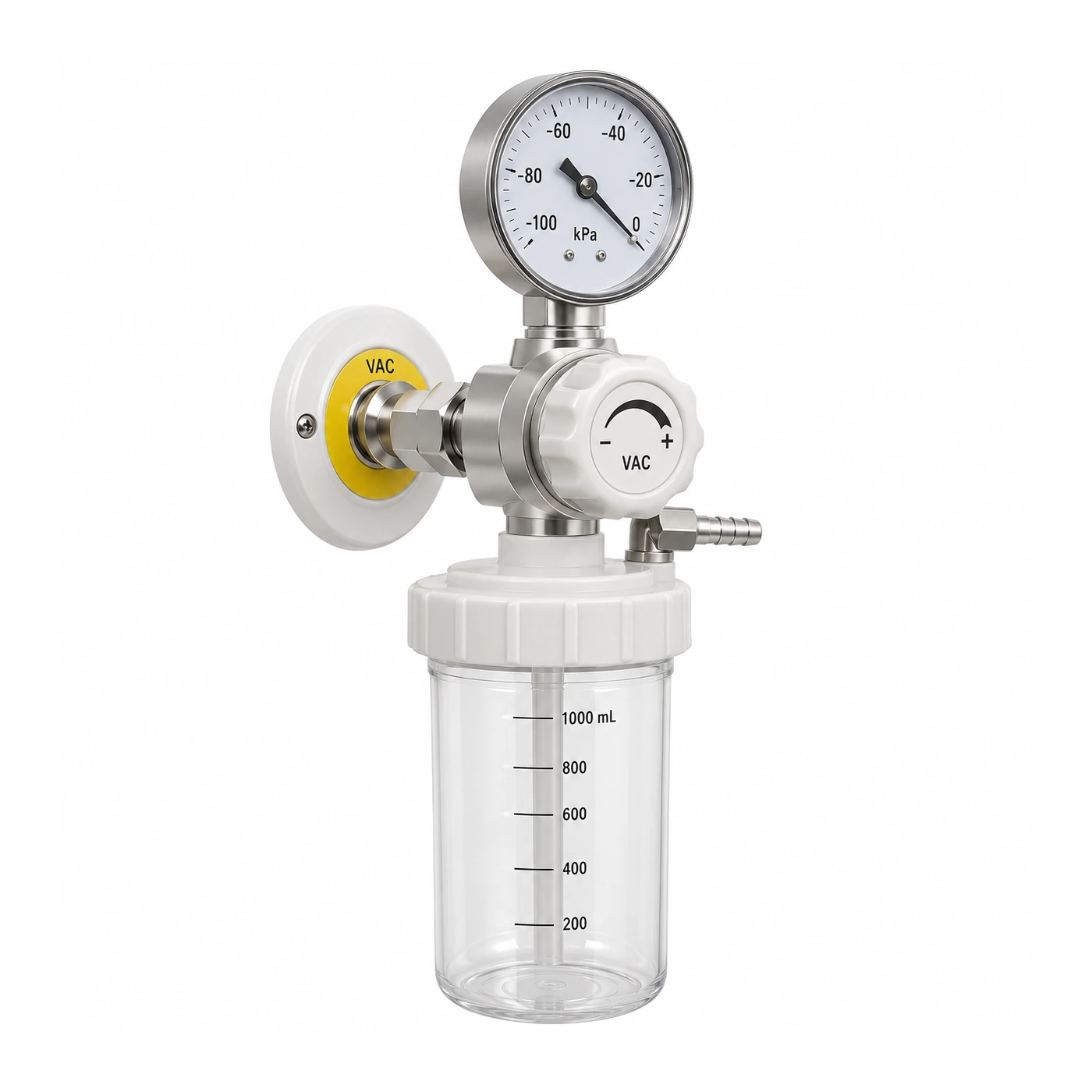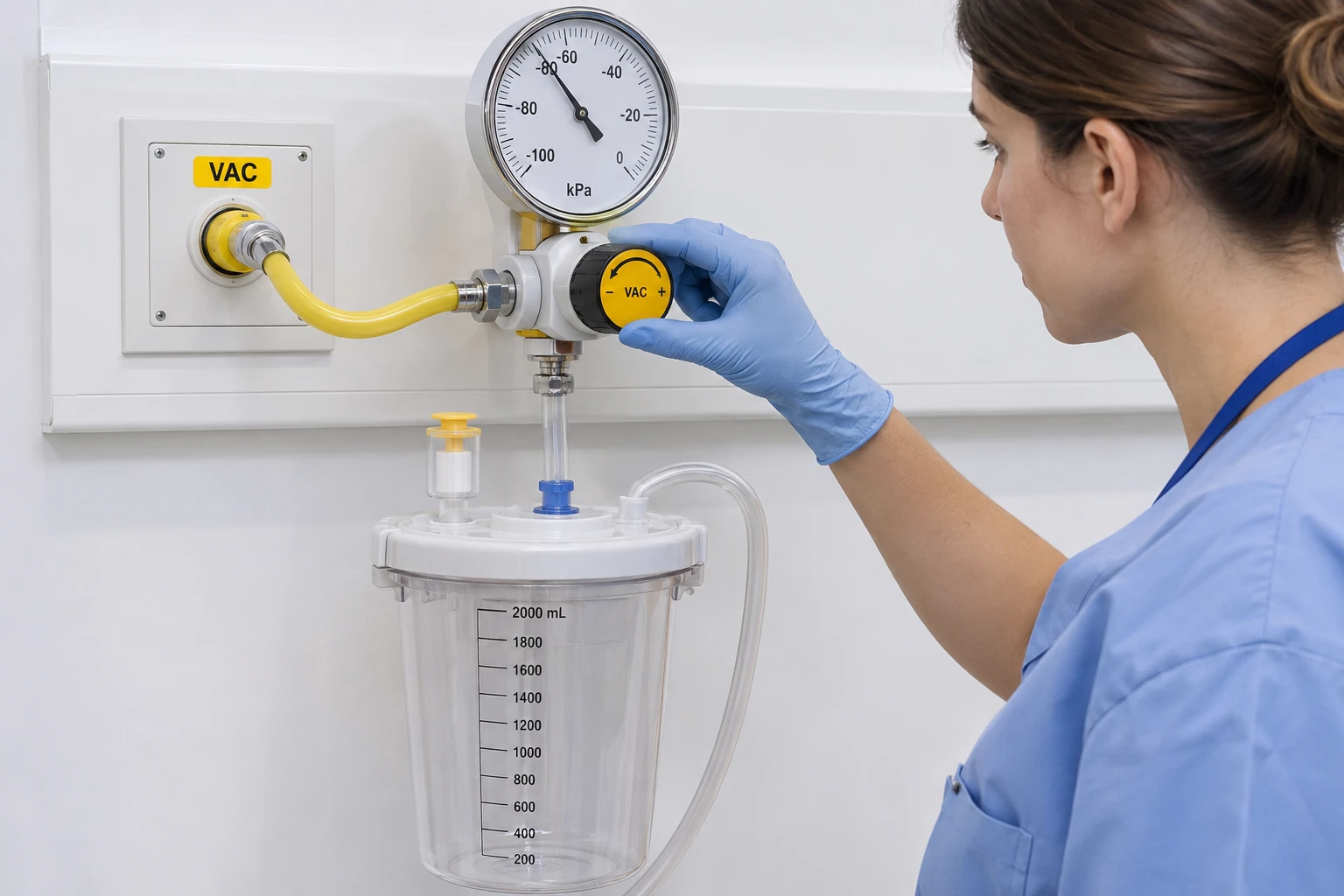
A tender line saying “vacuum outlet including suction bottle” can describe two fundamentally different scopes: a fixed MGPS medical vacuum terminal and a clinical suction accessory assembly. If the bidder prices only the wall terminal, the hospital may be missing the patient-side equipment it expected. If it prices only a vacuum regulator and collection jar, there may be no installed outlet to attach it to.
A scope-separation schedule makes the boundary explicit. The clinical and engineering teams must approve the intended equipment and medical vacuum supply system; the component list below does not authorize a clinical use or a particular suction setting.
Identify the fixed system boundary
The medical vacuum source, pipeline distribution, relevant valves and installed terminal unit form the MGPS service. ISO 7396-1:2016 defines the system-level context, and ISO 9170-1:2017 includes medical vacuum terminal units within its scope.
A fixed vacuum terminal has a specified gas/vacuum service connection, installed identity and mechanical/performance requirements. Its role is to provide an approved connection point, not to regulate every patient's suction setting by itself.
The equipment connected downstream may serve particular clinical uses, and its device-specific requirements must be evaluated separately.
Distinguish the end-use assembly
Common patient-side equipment categories may include a suitable vacuum regulator, associated connection/probe, collection container and tubing. The exact components depend on intended clinical application, local regulations and equipment manufacturer instructions.
A hospital may separately purchase fixed wall terminals and portable suction accessories. These can have different suppliers, maintenance responsibilities and approval pathways.
Do not assume every hospital's suction assembly has the same connectors or can be connected without a compatibility review.
Build a three-part procurement matrix
| Layer | Typical procurement item | Owner to identify |
|---|---|---|
| MGPS distribution | Medical vacuum system source and installed pipework | Engineering/source contractor |
| Fixed point of connection | Gas-specific medical vacuum terminal assembly | Terminal supplier/MGPS installer |
| Patient-side equipment | Appropriate regulator/collection accessories/device interface | Clinical engineering/equipment supplier |
| System acceptance | Installed terminal and pipeline required verification | Qualified hospital verifier |
| Device acceptance | Specific accessory/device suitability and instructions | Clinical/device team |
This structure should be reflected in the contract's bill of materials; otherwise the hospital may order duplicate parts or leave important items unassigned.
Prepare a device interface schedule
For each room list the vacuum terminal's installed connector family, approved mating connector, expected patient-side device model, adapter/hosing scope and responsible supplier. Document exact model compatibility rather than relying on labels that say only “VAC.”
A terminal unit's national connection profile may differ from another site's. A vacuum regulator or probe that fits one hospital is not automatically compatible with a second facility.
Device compatibility must be confirmed by the relevant manufacturers and hospital authority, with no makeshift adapters.
Avoid common technical misinterpretations
- “Vacuum is negative pressure, so any suction connector works.” Incorrect; intended use, connection, materials and system performance still matter.
- “The suction jar is included with every vacuum terminal.” Not without an explicit supply schedule.
- “The vacuum terminal supplies a fixed clinical suction level.” The end-use assembly has its own functions and device requirements.
- “A gas-specific terminal certificate covers a connected clinical regulator.” They are separate products and responsibilities.
- “The vacuum point can also serve AGSS.” AGSS has separate system and terminal requirements under ISO 9170-2.
Keep these distinctions visible in drawings and supplier proposals.
Create a quotation schedule that is verifiable
For fixed terminals request: service, national connector family, exact model, mounting, pipeline interface, supply scope and product documents. For end-use equipment request: actual device model, intended clinical use, compatible connectors, accessories, cleaning/maintenance instructions, and supplied evidence.
Evaluate each scope separately before combining a commercial offer. A low all-in package may be cheaper only because it excludes the required accessory or installed connection.
Example: a 40-bed ward expansion
Suppose a project schedules 40 fixed vacuum terminal positions and independently specifies a smaller number of mobile or room-assigned suction accessory kits based on the clinical equipment plan. The quantities need not be one-to-one.
A generic request to provide 40 “vacuum systems” hides the decision. Use separate approved counts and indicate which equipment is shared, dedicated or supplied by the healthcare operator. The example is an inventory concept, not a clinical recommendation.
Evidence at acceptance and handover
The MGPS contractor must provide the required installed vacuum terminal and distribution records. The clinical equipment team must accept connected device/accessory function as appropriate. The healthcare operator controls final use authorization under the applicable management system.
NHS SHTM 02-01 (2026) lists distinct terminal-unit verification forms, helping keep fixed terminal records separate from equipment procurement.
BWC Medgas components
BWC can quote selected medical vacuum terminal units and specified vacuum/pressure regulation accessories from its available range, with correct model and connection information. The hospital remains responsible for approving the overall patient-care setup.
Send separate terminal and suction accessory schedules to BWC Medgas.
Frequently asked questions
Does a medical vacuum terminal automatically include the suction canister?
No. Commercial and clinical equipment scope must be stated separately.
Can a vacuum terminal replace an anaesthetic gas scavenging outlet?
No. The two systems have distinct technical standards and functions.