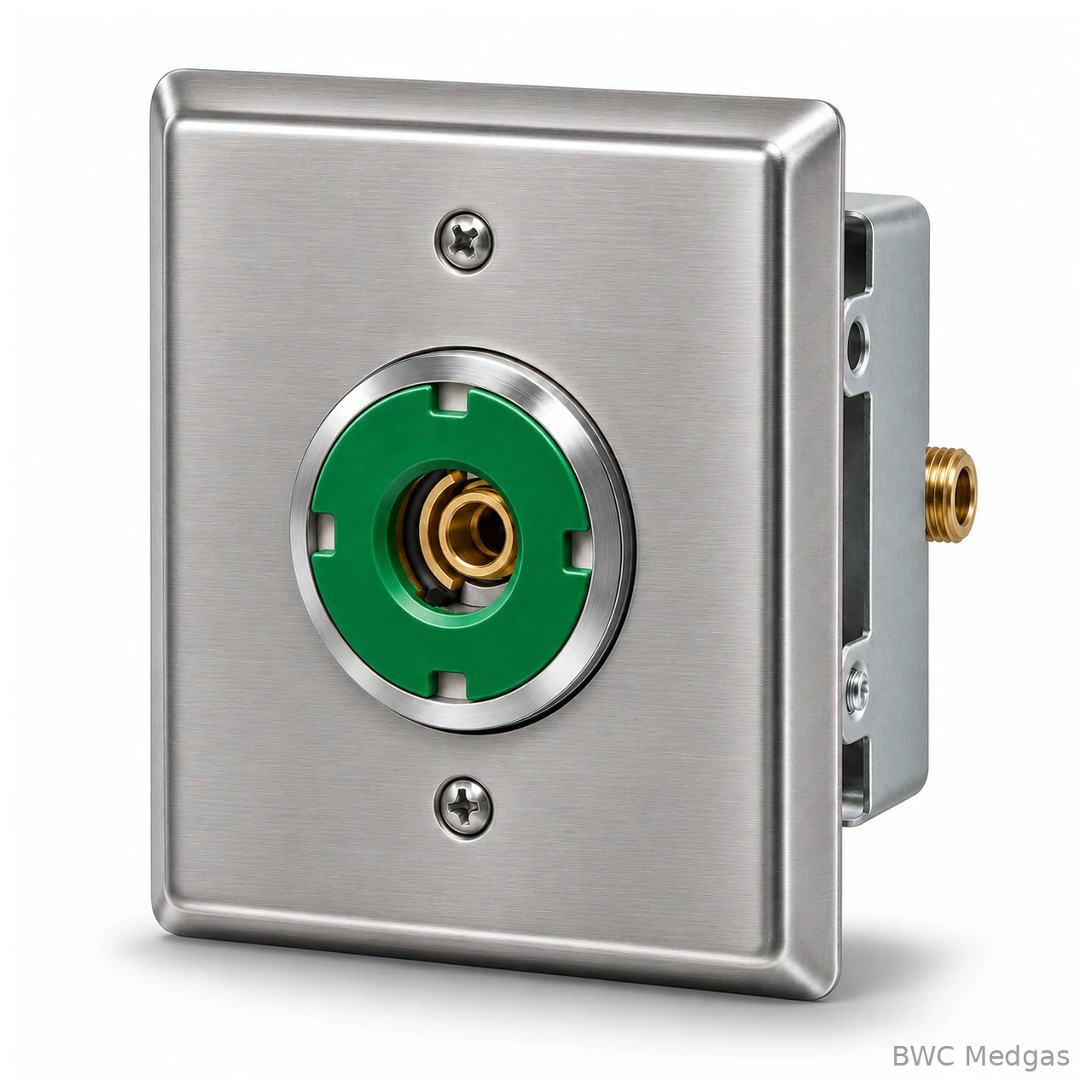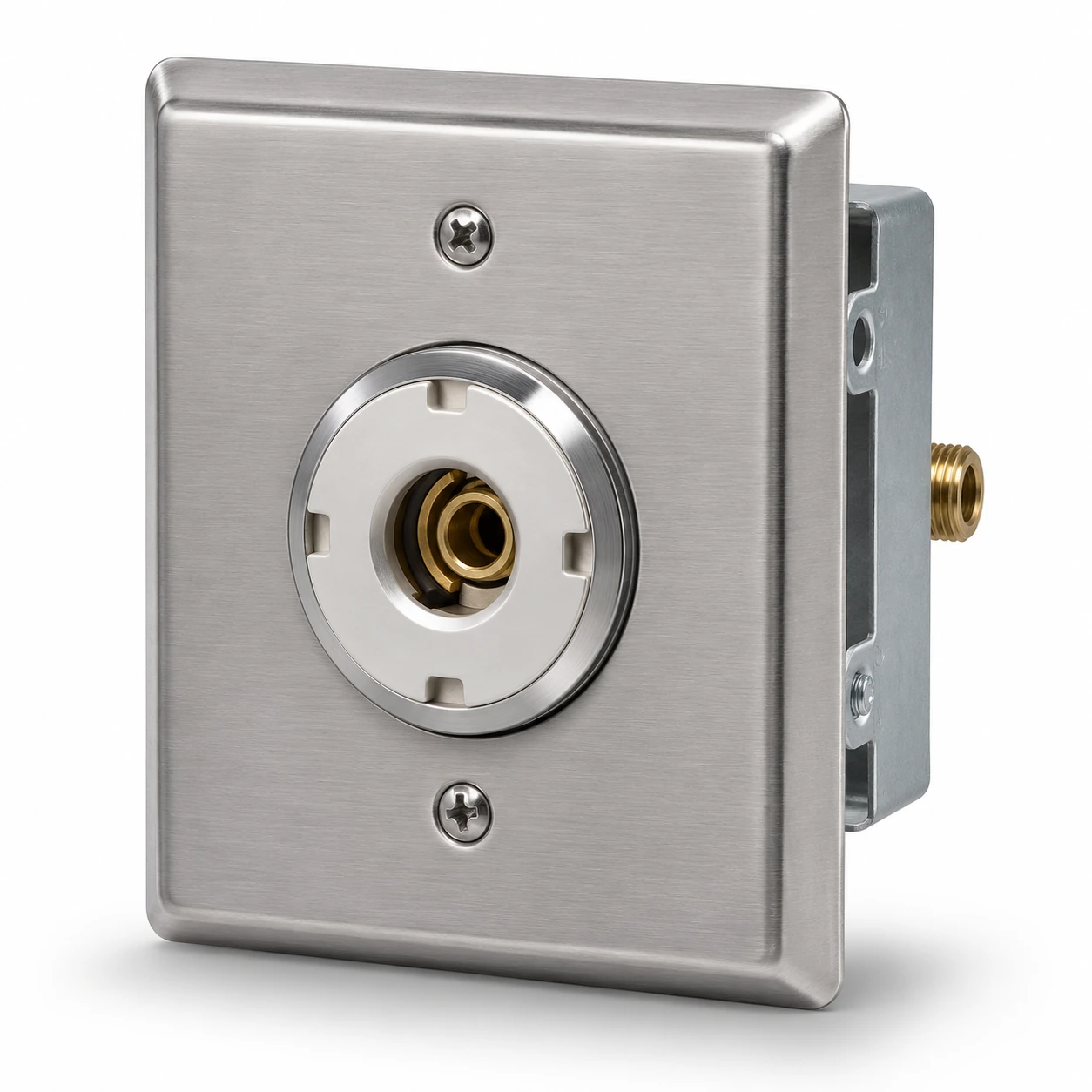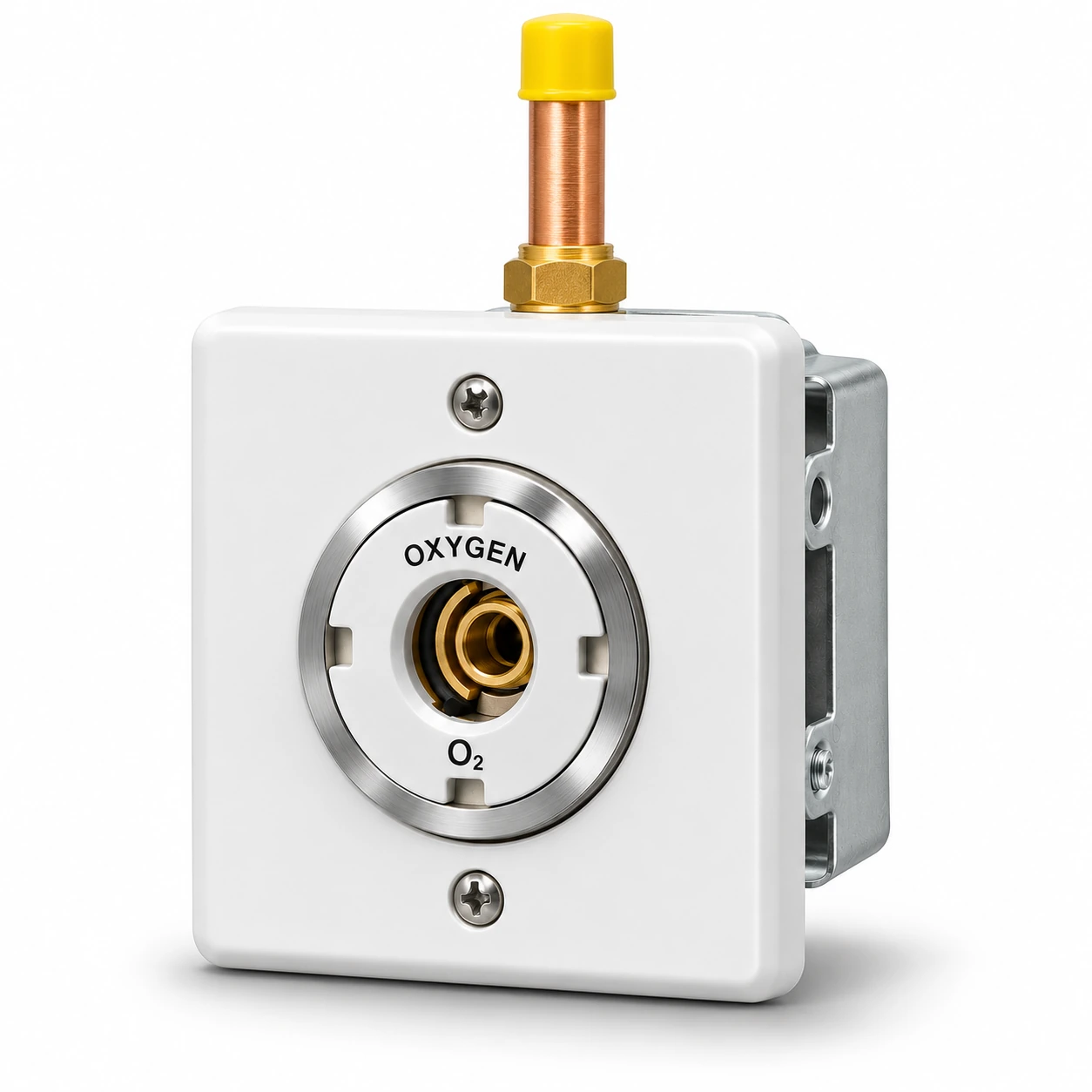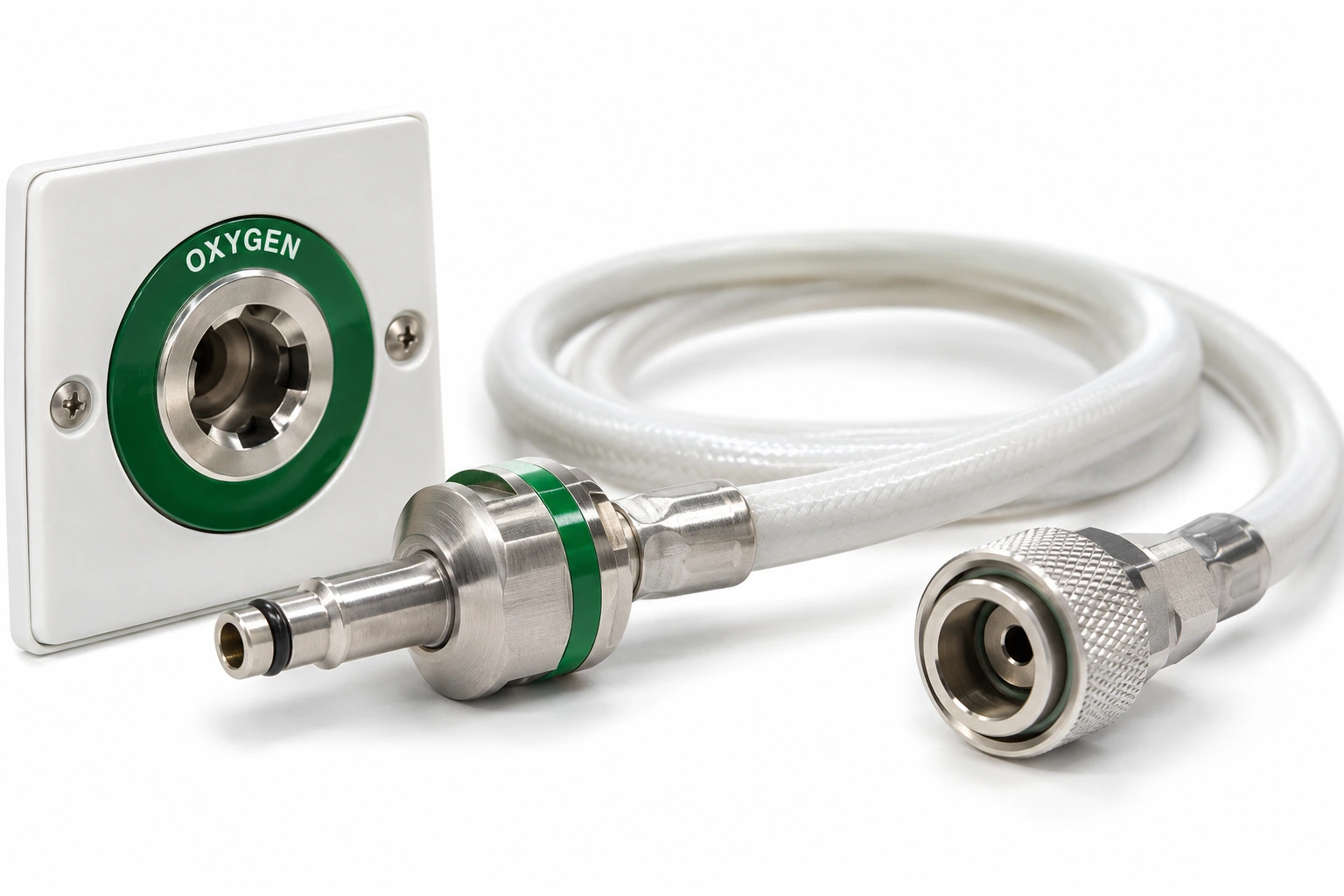
A hospital may install the correct oxygen terminal yet discover that an existing ventilator hose cannot connect because the hose probe or equipment-end fitting belongs to another approved connector family. This is not a reason to use an improvised adapter. It is evidence that procurement addressed the wall terminal but not the complete wall-to-device interface.
A good technical enquiry identifies all relevant components separately: wall terminal; terminal mating probe; low-pressure hose assembly where used; device-end connector; and the specific medical device or clinical equipment requirement.
Define the interface from both ends
Start with the approved medical gas service and the hospital's installed outlet standard. Then identify the manufacturer's exact terminal/probe family, the hose assembly specification and the receiving equipment's inlet interface.
Where hoses are required, ISO 5359:2014 governs specified low-pressure medical-gas hose assemblies. The newer ISO/DIS 5359 was still under development in November 2026; the draft is not the published replacement.
The exact connector dimensions and allocation may be specified in other standards. ISO 18082:2014 covers non-interchangeable screw-threaded (NIST) low-pressure connectors, with its 2017 amendment and a later revision still in development.
Do not conflate hose standard and connector standard
ISO 5359:2014 addresses hose assembly requirements but explicitly does not specify the dimensions or allocation of every gas-specific inlet and outlet connector.
Similarly, ISO 9170-1 addresses terminal/probe performance and gas-specificity within its scope but not every national connection dimension. A supplier listing both ISO numbers does not automatically establish that a hose has the correct two ends for the hospital.
Ask for a model-specific assembly drawing, gas designation and both end interfaces. It is unsafe to assume all oxygen-labeled hoses are interchangeable.
Use a complete four-interface register
| Stage | Exact detail to record | Acceptance owner |
|---|---|---|
| Wall terminal | Gas, physical location, manufacturer, standard family, model | Hospital MGPS designer/verifier |
| Mating probe | Gas-specific type, exact matching part, intended use | Equipment/supplier reviewer |
| Hose assembly | Gas, ISO 5359 edition, length/specification, declared end fittings | Clinical equipment/procurement |
| Device inlet | Medical equipment model and manufacturer-approved connector | Clinical engineering |
| Documentation | Approved interface drawings, product evidence and test records | Qualified project reviewers |
A label reading “DIN” or “NIST” is a starting point, not the complete model match.
An example of a dual-site purchasing trap
A medical equipment distributor supports two hospitals with different installed outlet connector families. The same ventilator model may be used at both sites, but the wall-end hose probe differs. Ordering spare hoses based only on the ventilator name can deliver a technically valid but incompatible assembly.
Use a site-specific inventory including the approved outlet family, hose product code, both connector ends and hospital equipment reference. Keep one approved record per configuration.
Distinguish hose assemblies from cylinder regulators
A regulator connected to a portable cylinder may have different intended use and applicable product standard from a hose between an MGPS terminal and a device. Do not call all flexible gas connections “regulator hoses.”
The equipment's clinical intended use and manufacturer's instructions determine which assemblies and connections are appropriate. A generic industrial pneumatic hose is not automatically a medical-gas hose.
Review practical risks without creating unsafe test advice
Gas-specificity is a safety control. Never instruct an installer to force a connector, drill the index or use an unapproved adapter to make incompatible parts fit. Any proposed substitution needs competent engineering and clinical device review.
Site testing, gas identity verification and medical equipment checks should follow the approved procedures. NHS HTM 02-01 (2026) helps define the hospital MGPS side, while device-specific requirements remain with clinical engineering.
Supplier comparison table
Ask vendors to respond with: assembly model; gas/service; declared hose standard and edition; length and construction; exact wall-end connector; exact device-end connector; permitted equipment; cleaning/packaging details; traceability; instructions; warranty and spares.
Use compatible / not compatible / evidence pending decisions. A photo of the plug is insufficient if no technical identity is provided.
The procurement team should not buy a mixed assortment on the assumption that all pieces can be adapted later.
Handover and inventory
Record the exact approved hose/probe models in the device inventory, alongside the hospital's terminal configuration and future replacement requirements. When the outlet family or device model changes, update the linked record.
This makes future emergency purchasing clearer and avoids repeated confusion during clinical equipment replacement.
BWC Medgas component scope
BWC can discuss selected gas-specific medical outlets and compatible outlet accessories within its catalogue. Hose assembly/device interface approval remains with the relevant manufacturers and hospital team; no cross-brand fit should be presumed from appearance.
Send the exact outlet and device interface schedule to BWC Medgas.
Frequently asked questions
Does ISO 5359 compliance establish the correct wall-end connection for every country?
No. Exact gas-specific connector dimensions and family must also be verified.
Is a “universal oxygen hose adapter” a sensible procurement fallback?
Not as a default. Unauthorized adapters can defeat intentional non-interchangeability and require competent safety review.