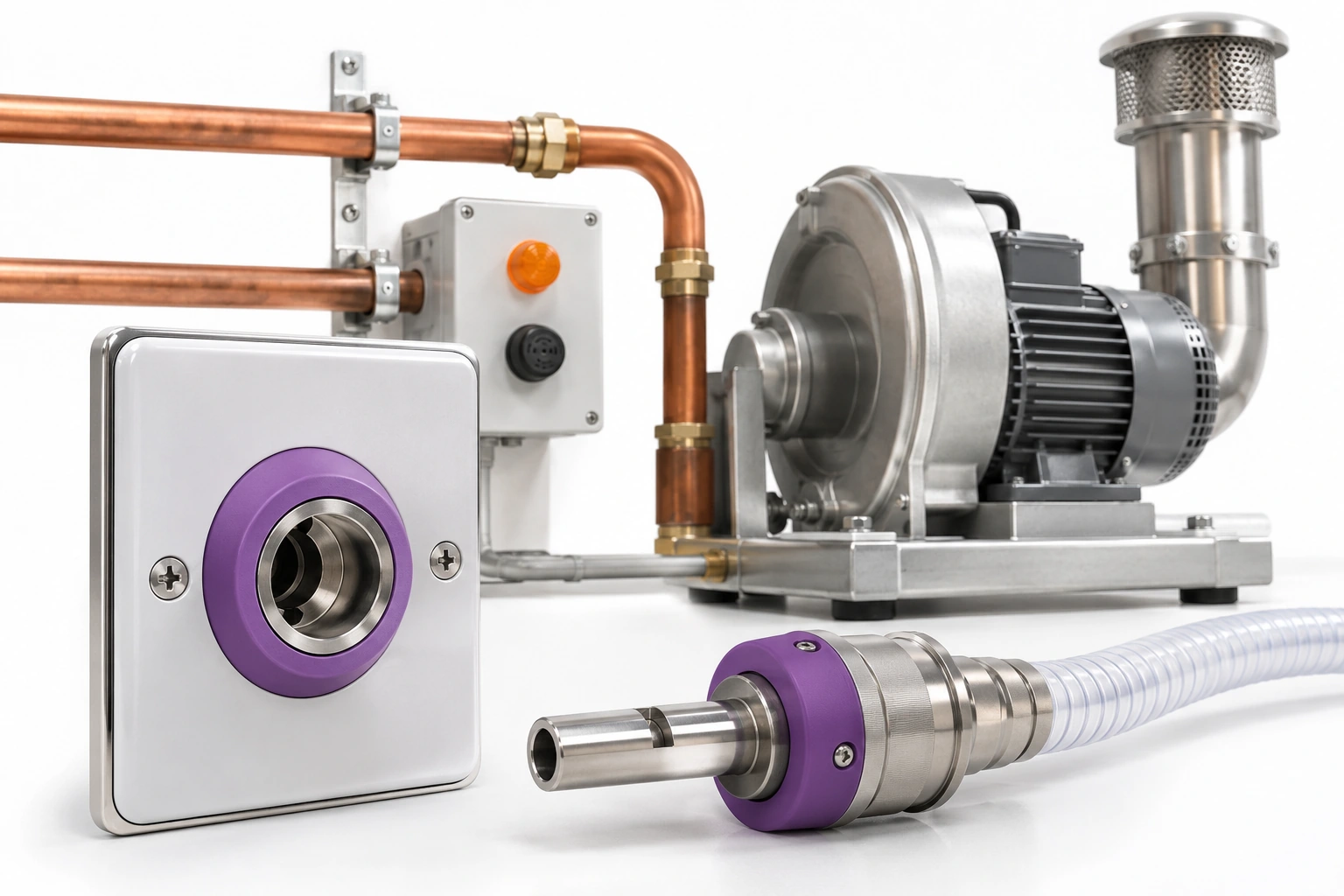
An anaesthetic gas scavenging system is not simply another medical vacuum outlet. It serves a different clinical hazard, with an interface and disposal path that should be specified independently from patient suction and compressed-gas delivery.
ISO 7396-2:2007 covers anaesthetic gas scavenging disposal systems, including design, installation, testing, commissioning, non-interchangeability and protection against cross-connection to other pipelines. ISO 9170-2:2008 covers the AGSS terminal unit and mating probe; it recognises two terminal types depending on the power-device arrangement. Both remain published standards as checked in November 2026.
Start with an end-to-end boundary drawing
Trace the system across the clinical interface, receiving/transfer system, terminal, piping, power device where applicable, final discharge and alarm/monitoring provisions required for the adopted arrangement. The project should identify who designs and validates each interface. A line item “AGSS outlet x 12” hides important system conditions.
| Boundary | Specify | Evidence to retain |
|---|---|---|
| Theatre interface | Designated receiving system and intended connection | Equipment and connection schedule |
| AGSS terminal | Type, probe dimensions and connection family | ISO 9170-2 model data/drawing |
| Distribution line | Route, segregation and identifiable endpoints | Approved schematic and installation record |
| Power device | Configuration, capacity and operational range | Technical performance/witness plan |
| Exhaust termination | Location and discharge arrangement in approved design | Site drawing and review |
| Commissioning | Required functional and performance verification | Qualified signed test record |
Two dangerous substitution assumptions
Assumption 1: a vacuum outlet will do. Patient suction and anaesthetic waste-gas disposal are separate functions. The ISO 7396-1 scope is not a substitute for Part 2. A vacuum outlet or regulator is not automatically an AGSS terminal.
Assumption 2: any AGSS terminal fits any receiving system. ISO 9170-2 distinguishes terminal types and prescribes relevant connections. Check the equipment's mating probe, design drawing and upstream/downstream arrangement rather than trusting colour or labelling alone.
How to review a theatre renovation
A hospital keeps existing anaesthesia workstations but replaces operating-room pendants and some disposal piping. Before buying pendants, map the existing AGSS receiving system and probe, the intended outlet type, the connection route and required power arrangement. If a supplier changes the outlet, the theatre equipment interface must be rechecked. Maintain a clear pre/post modification verification plan.
The 2026 Scottish SHTM 02-01 guidance provides a regional installation and operational framework. Apply the project's chosen national and regulatory hierarchy; do not copy local design values from a different hospital without professional review.
Procurement handoff
Issue an RFQ with the AGSS terminal type, probe family, installation format, service designation, piping interface, quantity, revision, and drawings. Require the contractor to reconcile the rest of the system, not the component supplier to certify the full installed plant.
BWC Medgas can help source specified medical-gas terminal components and installation accessories for an authorised design. The completed AGSS performance and occupational-exposure safeguards need project-specific acceptance.