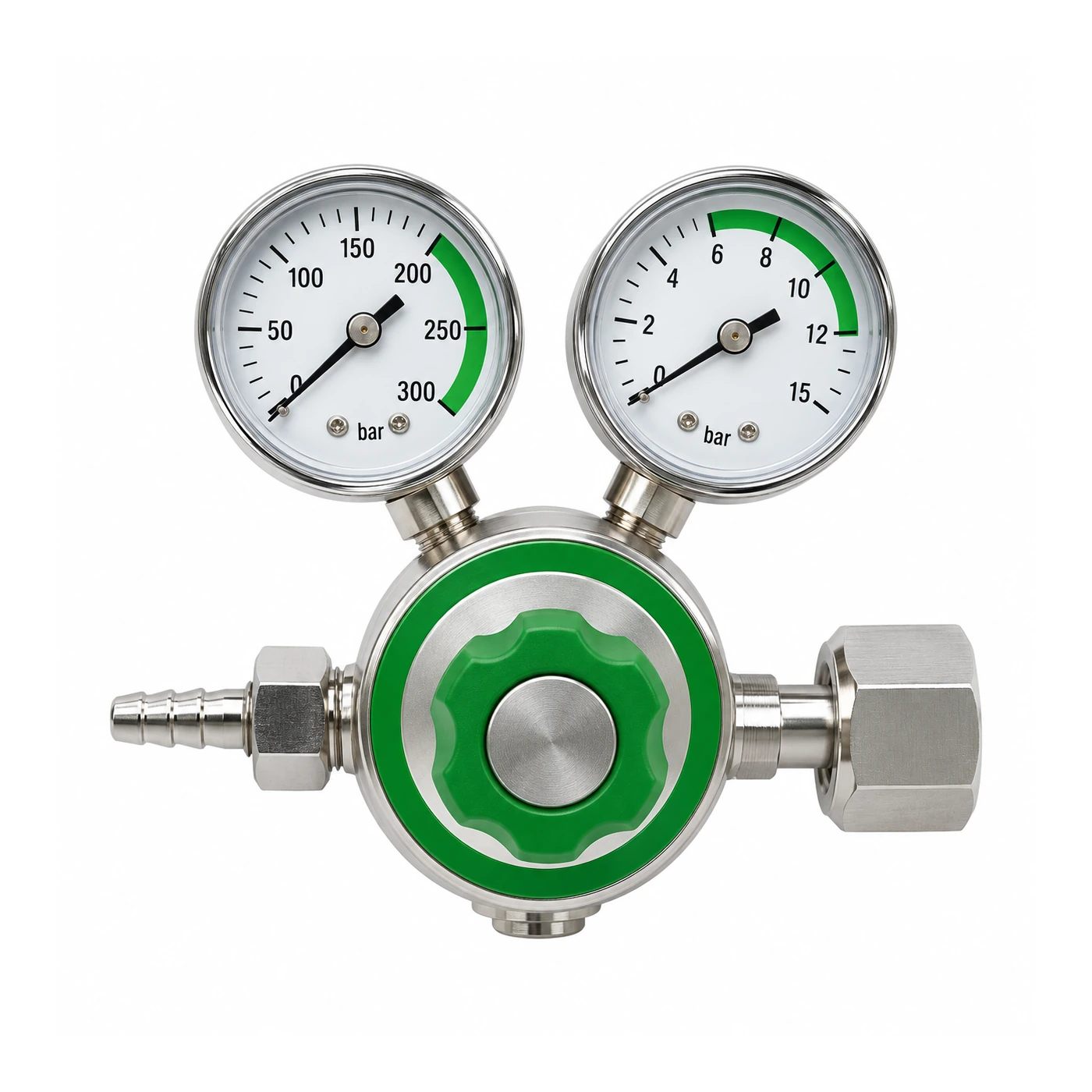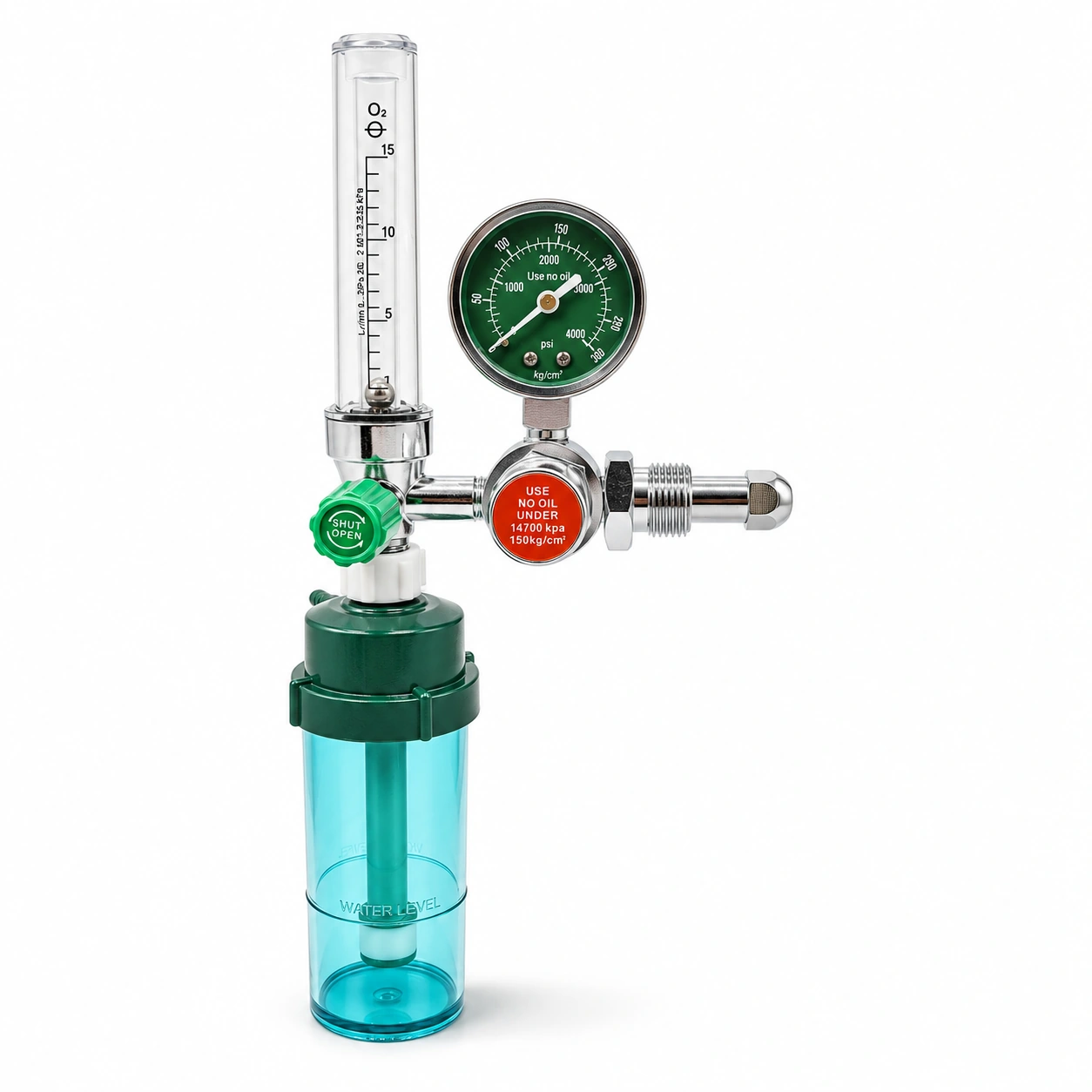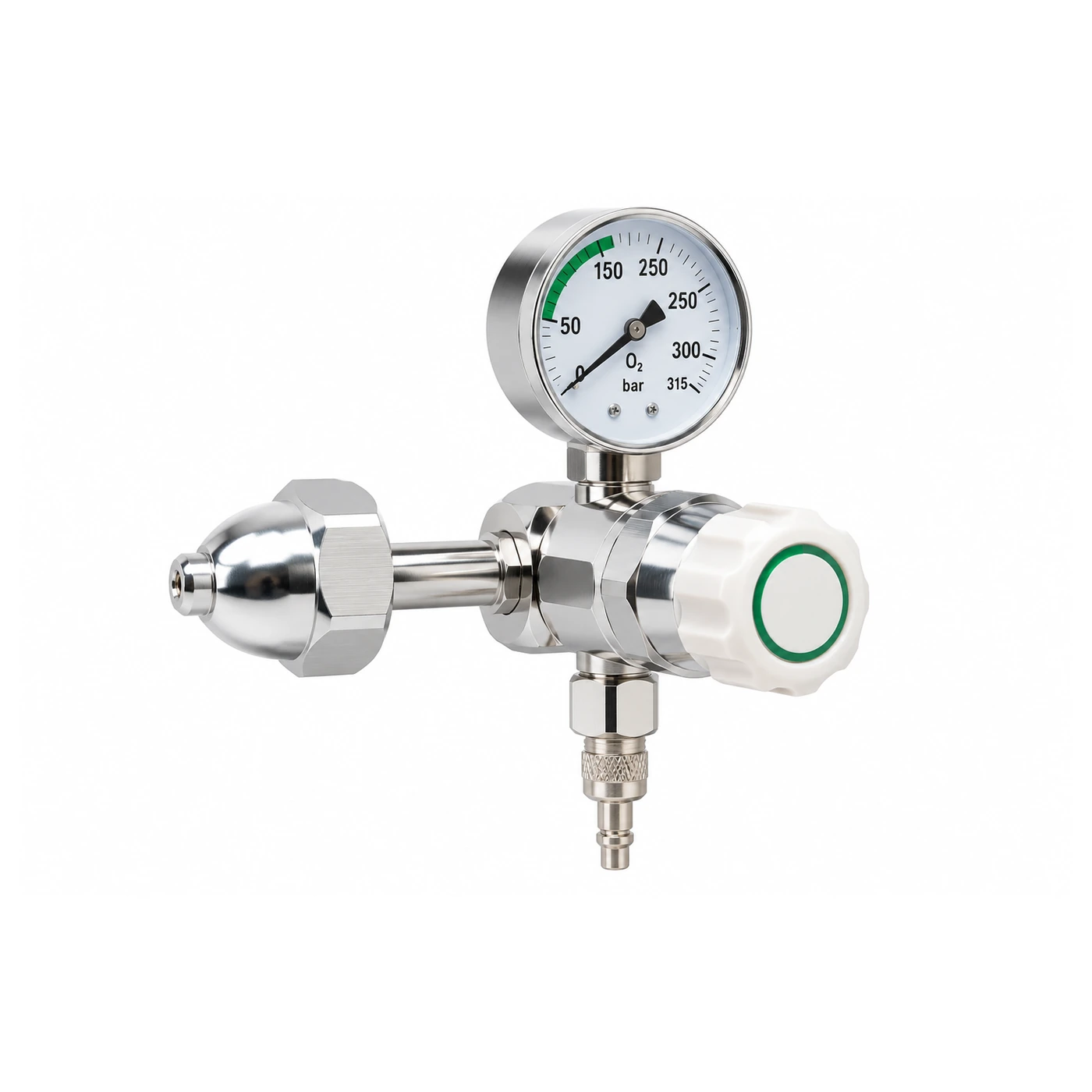

A medical gas regulator can appear in several different parts of a hospital's gas supply arrangement. A regulator on a cylinder is not the same product as a regulator incorporated into a manifold or installed downstream in a pipeline.
The ISO 10524 family distinguishes these applications across separate published standards. For procurement, this distinction is more useful than simply requesting a “medical oxygen pressure reducer.”
What does ISO 10524-1:2018 cover?
ISO 10524-1:2018 addresses pressure regulators and pressure regulators with flow-metering devices intended for specified medical gas applications.
The ISO abstract includes regulators connected to cylinders by an operator, regulators with integral flow-metering devices intended to connect to cylinders and regulators forming part of some medical equipment.
The product may have a pressure or flow outlet and can be adjustable or preset, depending on its design. That is why an enquiry should state what will be connected to the regulator and what outlet function is required.
What does ISO 10524-2:2018 cover?
ISO 10524-2:2018 covers medical gas manifold pressure regulators and line pressure regulators, including standalone regulators and relevant components incorporated within an assembly.
The official scope distinguishes regulators associated with a cylinder manifold from downstream line pressure regulators. These are different positions within an engineered supply arrangement, with their own intended input conditions and interfaces.
The published abstract also states that ISO 10524-2 is not for regulators used with vacuum pipeline systems; it points to ISO 10079-3 for that separate equipment subject.
For a buyer, this makes “manifold regulator” and “vacuum regulator” clearly different quotation lines.
What does ISO 10524-3:2019 cover?
ISO 10524-3:2019 addresses cylinder valves with integrated pressure regulators (VIPRs) for specified medical gas applications.
This is a different product architecture from an operator-connected detachable cylinder pressure regulator. The cylinder valve and regulator form an integrated assembly.
ISO identifies the 2019 edition as the currently published edition while a replacement is under development, so draft-edition wording should not be treated as a published requirement.
Which information belongs on the RFQ?
For a clear comparison, state:
- The equipment class: cylinder regulator, manifold regulator, line regulator or VIPR.
- Medical gas service and intended application from the project specification.
- Inlet and outlet connector families and drawing references.
- Required functional configuration and what instruments are included.
- Whether the component is supplied independently or inside a larger assembly.
- The exact technical edition and model-specific evidence requested.
- Whether gauges, hoses, fittings or other accessories are priced separately.
A catalogue description cannot prove that a regulator suited to one equipment class is interchangeable with a regulator from another.
BWC Medgas regulator and manifold sourcing
BWC provides medical gas regulators and pressure accessories and manifold-related components.
For project sourcing, send the regulator type, application and connection drawing. BWC can discuss components within its supply range; the existence of a standards overview is not a claim that BWC manufactures every type of integrated regulator assembly mentioned here.
Discuss cylinder, manifold and line regulator requirements with BWC.
Quick answers
Does ISO 10524-2 apply to medical suction regulators?
Its official scope excludes vacuum pipeline regulators; these belong to a different equipment category.
Can a detachable cylinder regulator replace a VIPR without a design change?
Do not assume so. The standards address different product architectures and connections.