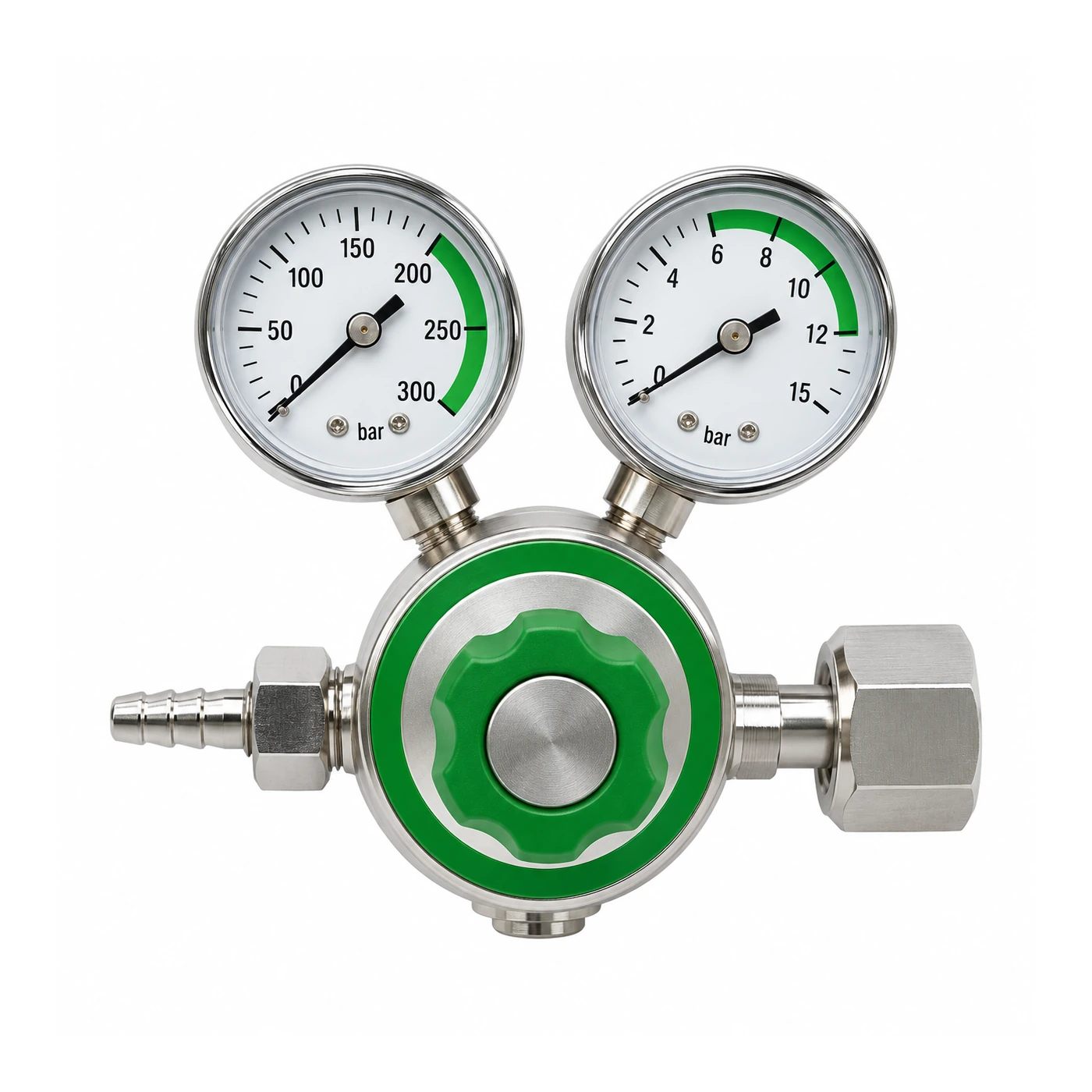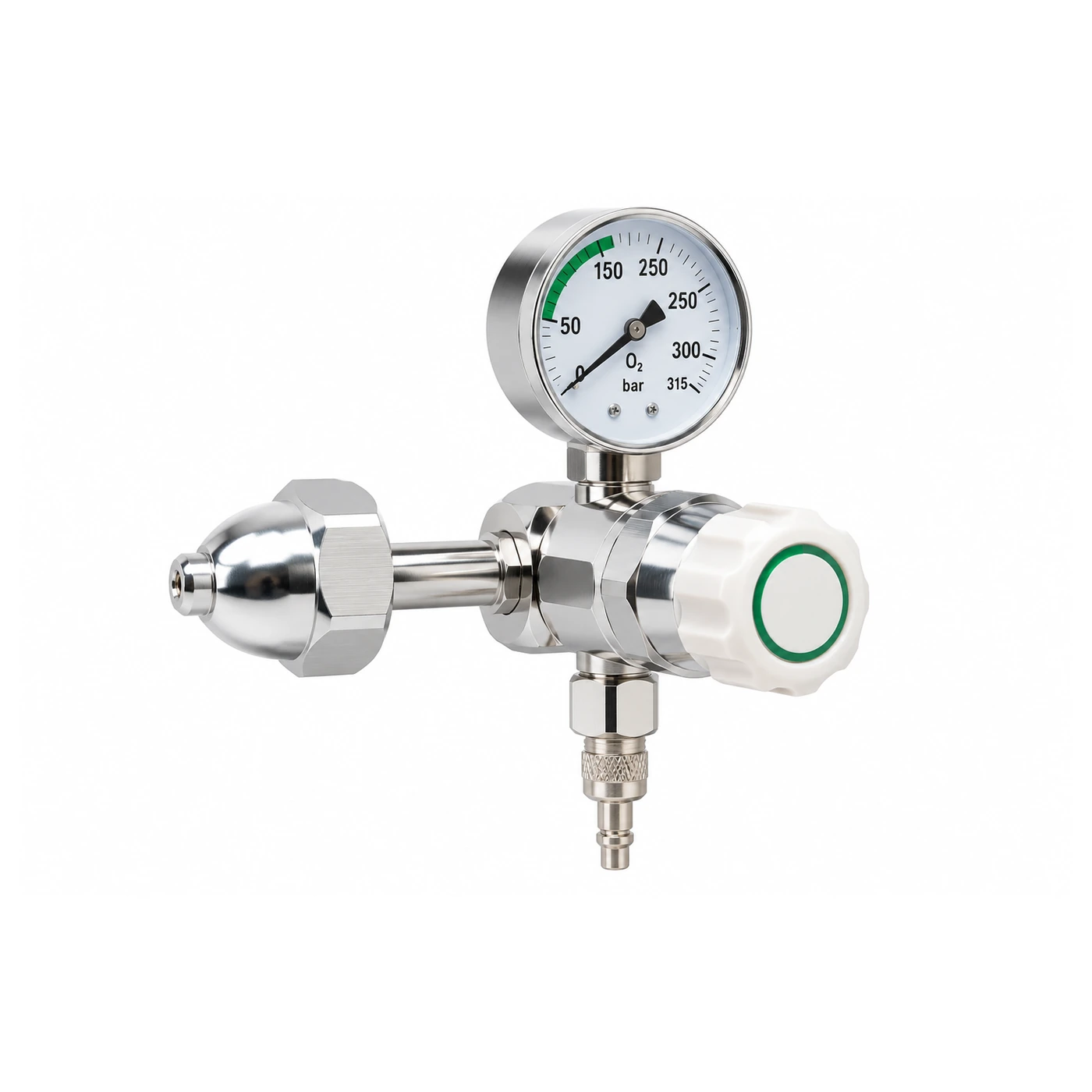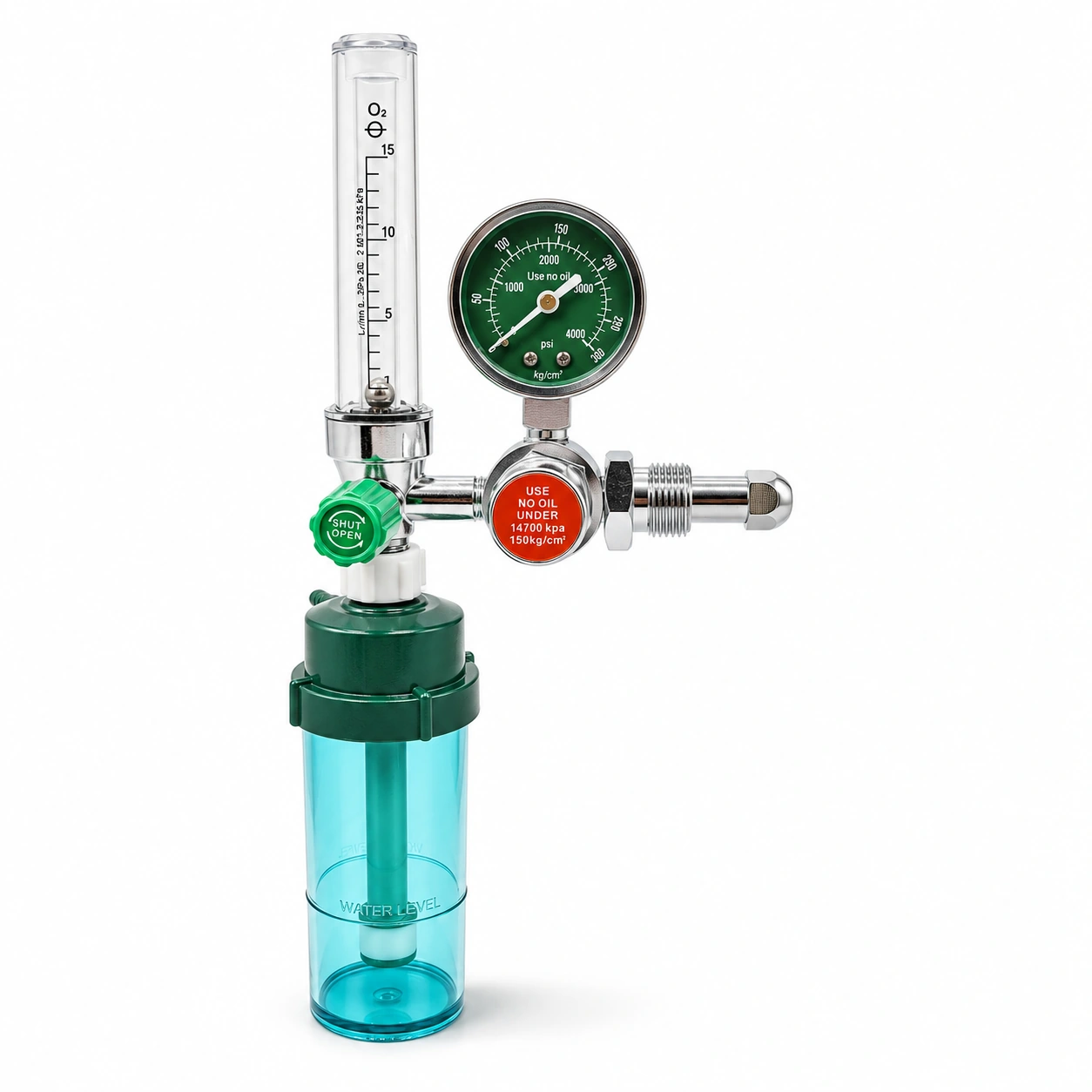

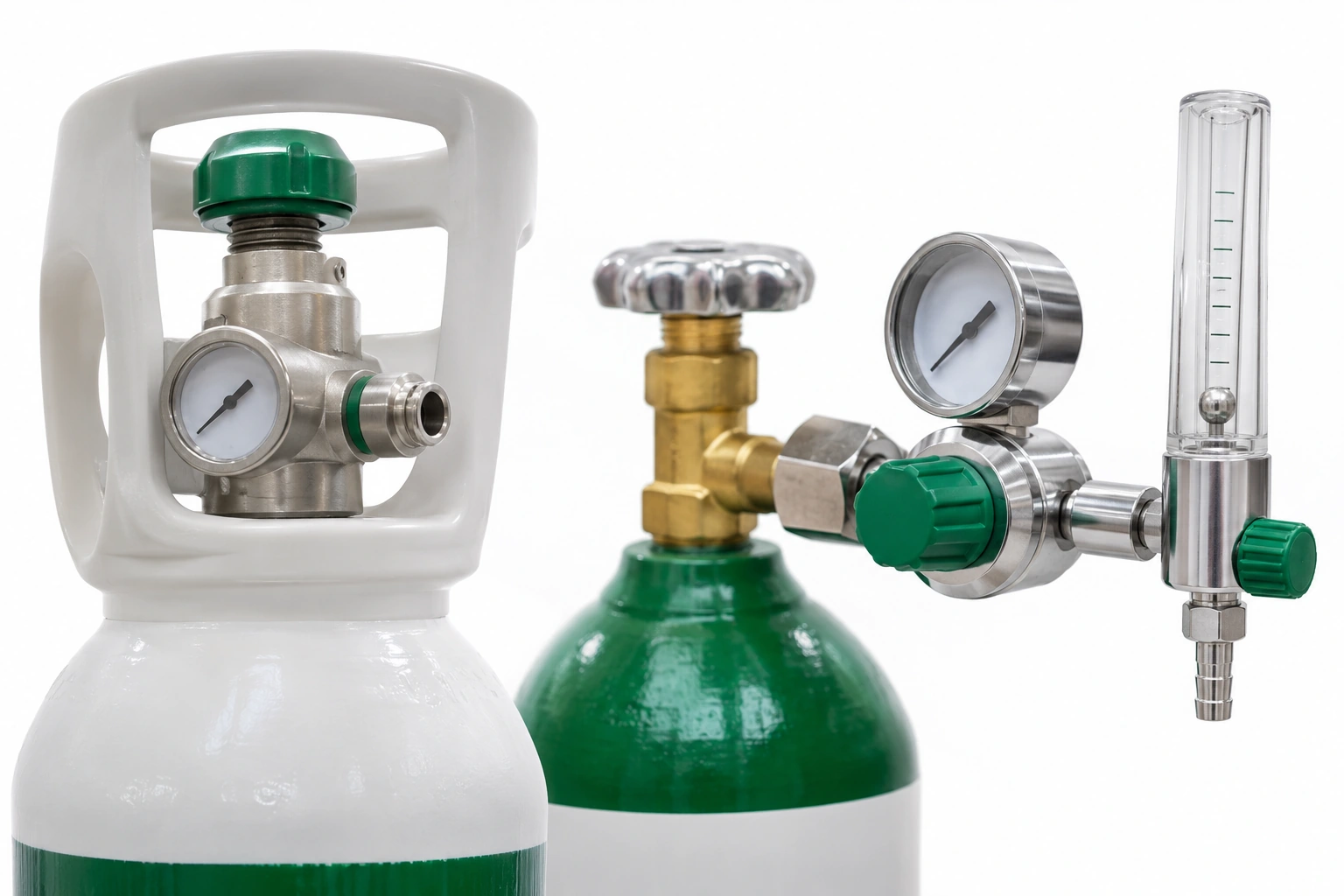
Portable cylinders, cylinder-bank regulators and valve-integrated pressure regulators can appear together in a hospital purchasing spreadsheet. A replacement item selected only by appearance or “fits oxygen bottle” may provide the wrong inlet connection, pressure outlet, fixed-flow connection or service configuration.
A controlled cylinder–regulator interface matrix prevents those mismatches. It is a specification and receipt tool, not a clinical instruction on connecting or operating high-pressure cylinders.
Name the actual device boundary
ISO 10524-1:2018, as amended in 2023, addresses pressure regulators—including those with integral flow-metering devices—intended to be connected to cylinders, and certain regulators integrated into equipment. ISO 10524-3:2019 separately addresses valves with integrated pressure regulators (VIPRs). A newer Part 3 edition was under development in November 2026, so do not label its final draft as the currently published edition.
A cylinder valve plus a separately fitted regulator is not functionally identical to a VIPR merely because their delivery pressure looks similar.
Define inlet and outlet as two independent decisions
The inlet interface concerns the cylinder valve and gas-specific connection design. The outlet may be a pressure outlet, an integrated flow-control outlet or more than one specified connection. A buyer must identify both.
Gas-specific national connection conventions differ. Avoid publishing a single universal cylinder thread or using adapter rings to override intended gas-specificity.
Compatibility matrix for the purchase order
| Field | Required source | What can go wrong |
|---|---|---|
| Cylinder / gas | Approved cylinder supplier and gas label | Gas-specific mismatch |
| Valve arrangement | Separate cylinder valve vs VIPR | Wrong replacement category |
| Inlet connection | Controlled model and national connection standard | Appears to fit but is not approved |
| Outlet function | Pressure outlet or designated flow outlet | Incompatible downstream device |
| Outlet connector | Approved gas-specific part/drawing | Wrong probe or hose |
| Pressure and flow | Manufacturer rated conditions | Clinical device duty not supported |
| Marking and traceability | Model, lot, service and manufacturer instructions | Untraceable mixed stock |
| Accessory boundary | Included vs separately approved flowmeter/hose | Missing or duplicated parts |
Do not accept the supplier's “universal oxygen fitting” description as proof of suitability.
Consider downstream flow control separately
ISO 15002:2023 applies to defined flow-control devices connected to specified terminal units, regulator pressure outlets or VIPR pressure outlets. The standard explicitly separates such accessories from devices integral to certain regulators/VIPRs.
A purchasing team should not count a bare regulator as a complete flowmeter kit unless the actual offered assembly provides the approved function.
Where a low-pressure hose is required, identify the applicable ISO 5359:2014 and gas-specific connection design; the newer version remained a draft in late 2026.
Example: two cylinders, one procurement error
A hospital replaces cylinders in part of a ward. The old inventory lists a detachable regulator with a pressure outlet. The new cylinders have a valve-integrated regulator with a different gas-specific outlet arrangement.
The procurement manager should obtain both model documents, confirm the approved downstream equipment connection and ask the designer and clinical equipment authority to accept the revised interface. Reusing an arbitrary adapter is not an acceptable shortcut.
Oxygen compatibility and delivery protection
Verify exact gas-contact materials, oxygen-compatibility controls, cleanliness evidence and protected handling under ISO 15001:2010 where applicable. A similar-looking industrial regulator is not automatically medical oxygen approved.
Damaged protective packaging or unidentified residue should be escalated through product quality procedures rather than remedied with ad hoc cleaning.
Train and hand over through the facility process
Operators require manufacturer-approved training, gas-specific identification and equipment instructions. The responsible hospital team controls allocation of the right cylinder/regulator assembly and any affected treatment equipment; this public article does not define operating procedures.
The asset register should retain the cylinder valve variant, regulator model, outlet connection family, acceptance evidence, compatible accessories and replacement policy.
Procurement and BWC scope
BWC Medgas offers selected oxygen cylinder regulators and flow-control accessories. Provide the approved cylinder valve configuration, gas, exact inlet/outlet drawings and downstream requirement rather than requesting a broadly described oxygen regulator.
Send your cylinder interface matrix to BWC Medgas.
Frequently asked questions
Is a VIPR simply a detachable cylinder regulator with a different knob?
No. An integrated cylinder valve/regulator is a distinct product and standard scope.
Can the same oxygen flowmeter always fit a separate regulator and a VIPR?
No. The specific outlet function and gas-specific connector must match.