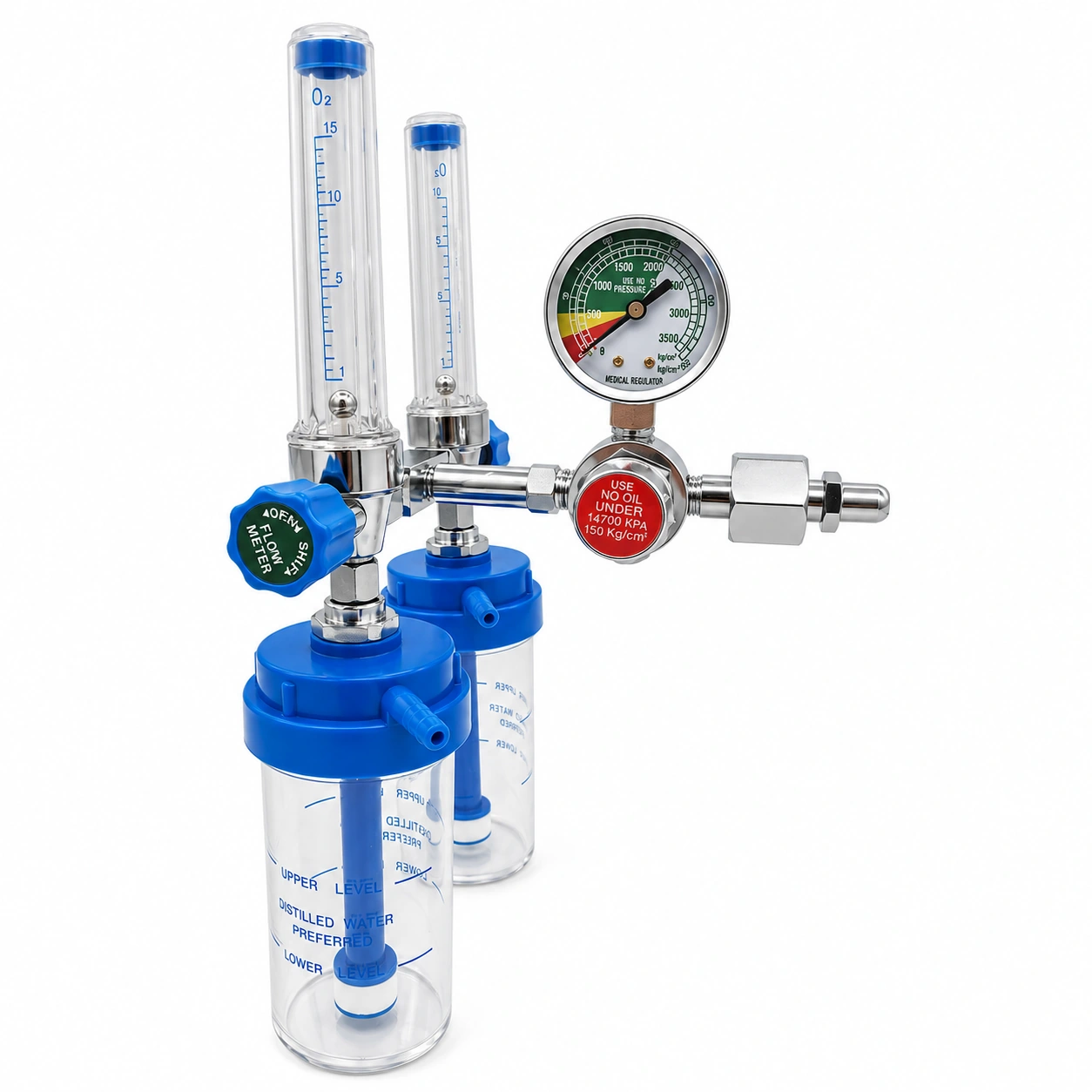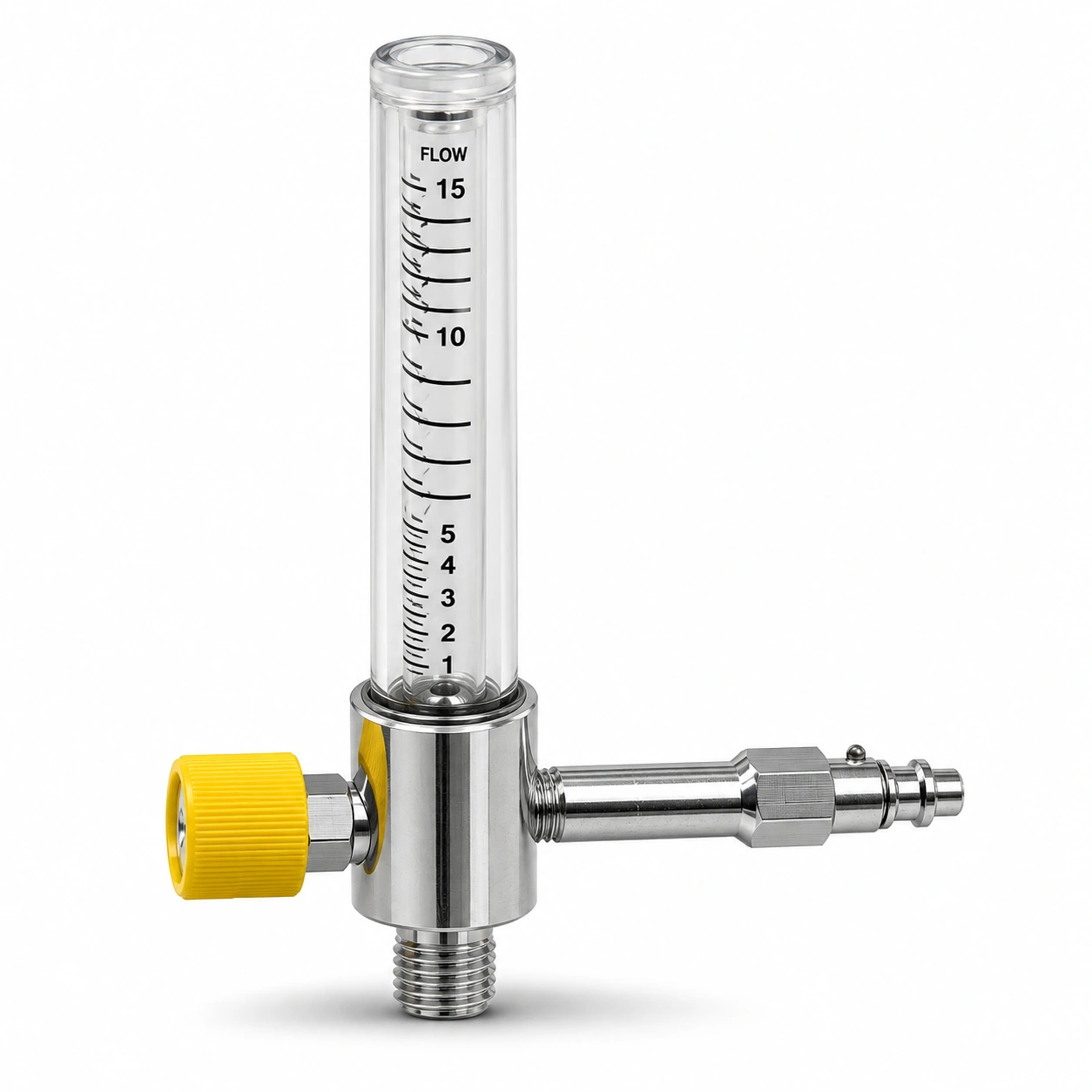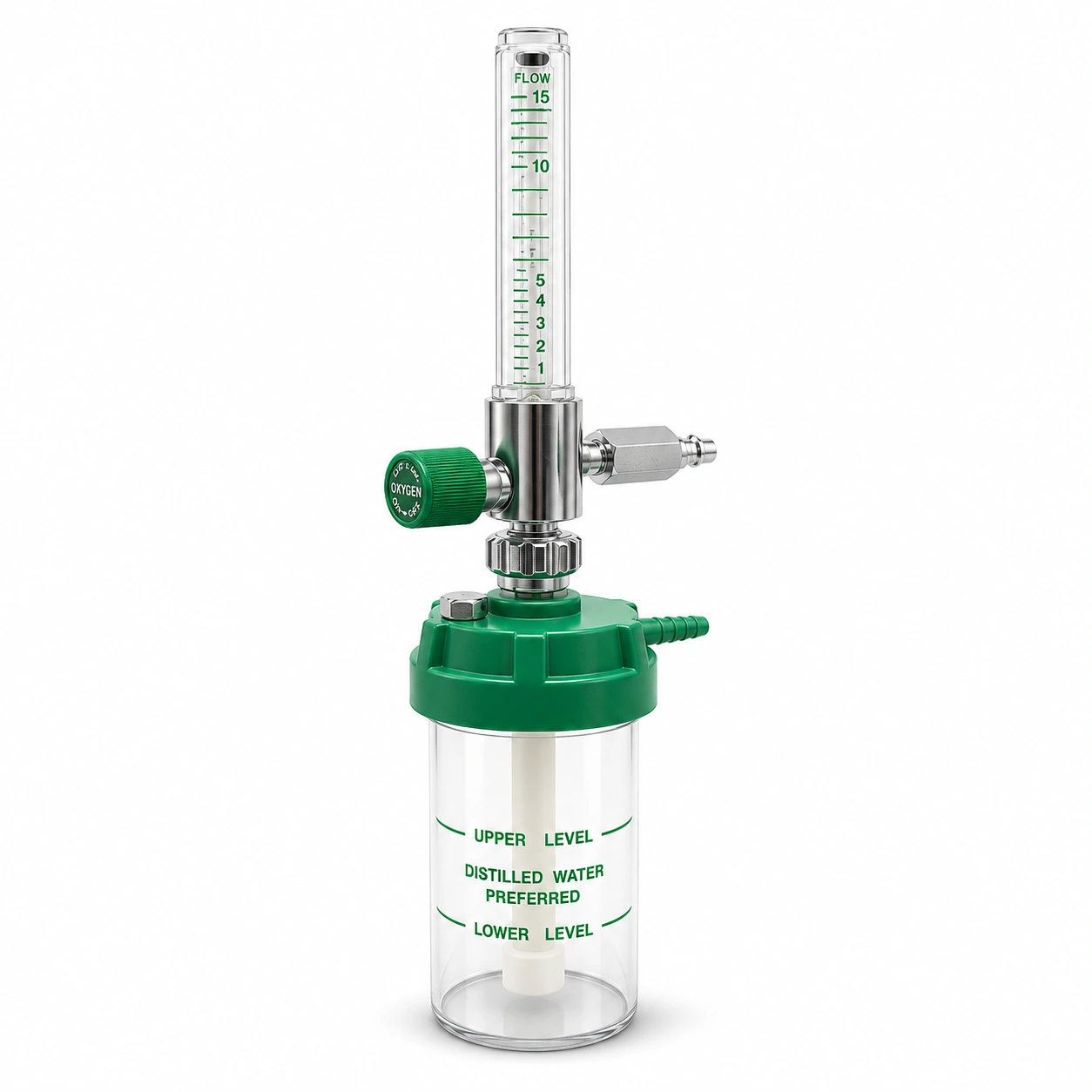
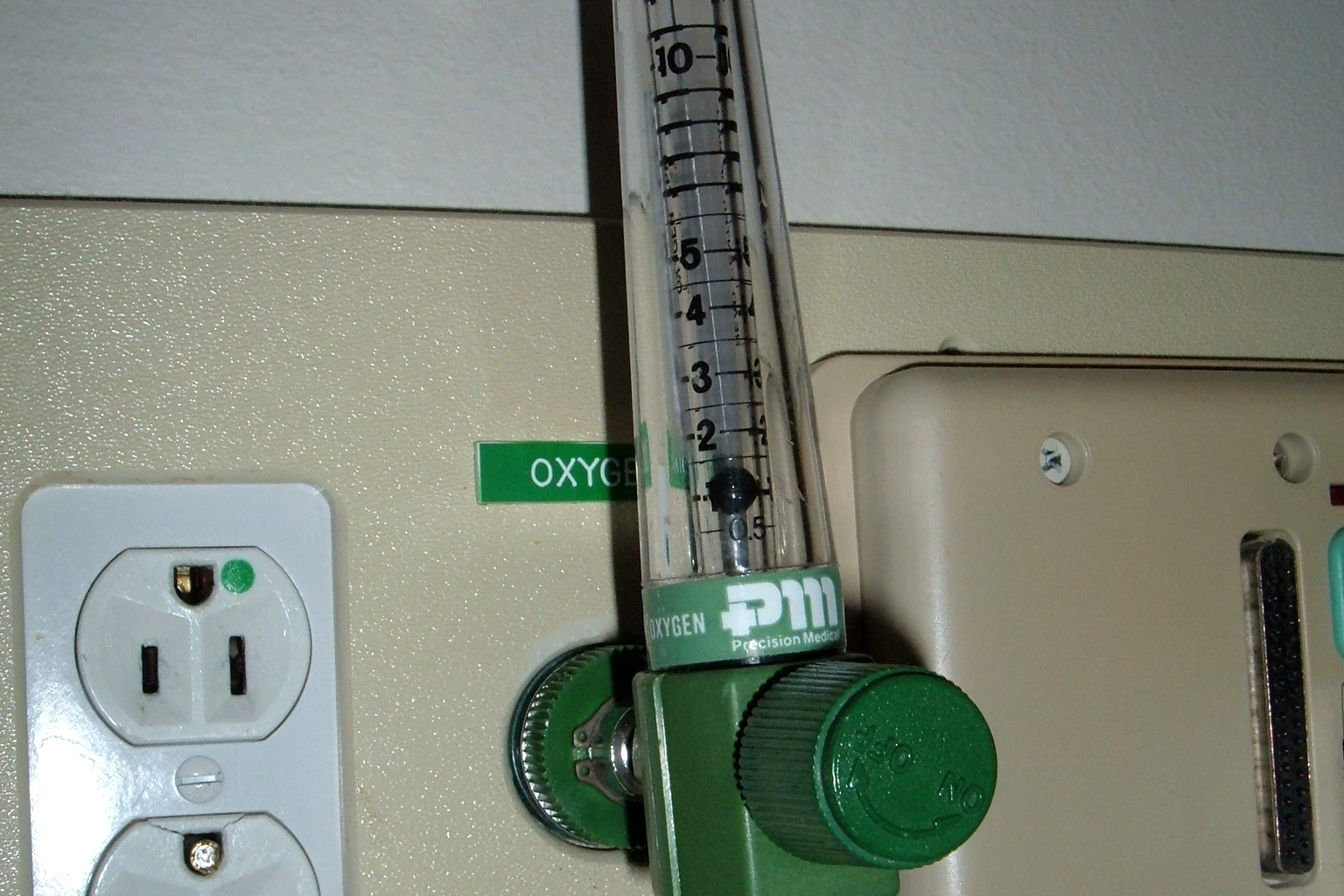
A hospital purchase order requesting “oxygen flowmeters” might combine devices that use different methods to control or indicate delivered gas flow. ISO 15002:2023 gives procurement teams a more precise language: flowmeters, flowgauge flow-control devices and fixed-orifice flow-control devices are separate categories within the published standard.
The distinction is useful when comparing BWC Medgas equipment, checking the correct connector for a ward and deciding which accessories are part of a quotation.
Which devices are covered by ISO 15002:2023?
The official ISO 15002:2023 record defines requirements for flow-control devices that users connect directly or indirectly to specified medical gas supplies. It names three product classes: flowmeters, flowgauge FCDs, and fixed-orifice FCDs.
The labels should not be used interchangeably in a bill of materials. A tender line should specify the intended product class, medical gas service, connection interface, requested measurement or control functions, and accessory package.
ISO 15002 also specifies that its scope includes oxygen, oxygen 93, medical air and several other designated gases. A buyer cannot assume the same product configuration is appropriate for all of those services merely because it looks like an ordinary wall-mounted flowmeter.
How can these devices connect to the gas source?
ISO's published abstract identifies three possible upstream arrangements:
- A compliant medical gas terminal unit on a pipeline system.
- The pressure outlet of a cylinder-connected pressure regulator.
- The pressure outlet of a valve-integrated pressure regulator.
Direct connections may involve an intended probe or gas-specific connector; the standard also describes indirect connection through a low-pressure hose assembly under ISO 5359.
This is why a buyer should request both the device class and its complete inlet interface. Ordering the correct flow-control body with the wrong connector can make the supplied product unusable at the intended location.
ISO 9170-1:2017 concerns gas-specific terminal units, while ISO 10524-1:2018 covers specified pressure regulators; those are related but different product standards.
What should be included in a flow-control device RFQ?
First state the gas service, intended patient-care or other approved use, the required FCD type and the source of supply. Then identify the inlet connection with a drawing or the exact terminal/probe type.
Next describe the requested output/interface, control or indication features and accessory package. If a buyer wants a humidifier, connector or mounting accessory, it must appear as an explicit item instead of being silently assumed included.
A precise request can therefore distinguish the flow-control device itself from a complete bedside package.
What does the standard exclude?
The public ISO 15002 scope does not cover flow-control devices used for gases driving surgical tools. It also excludes flow-control devices that are integral parts of specific cylinder regulators or VIPRs addressed by other standards.
For procurement, these exclusions mean that a vendor should not treat every device with a flow scale as the same regulatory or technical product class.
The standard's abstract provides scope, not clinical instructions, flow settings or a justification for modifying equipment supplying patients.
Common purchasing mistakes
One mistake is asking only for a colour-coded flowmeter without specifying the gas and mating connector. Another is comparing a device-only price with a package that includes accessories. A third is assuming an FCD designed for a wall terminal can be attached directly to a cylinder valve without its intended regulator/interface arrangement.
These issues can be prevented by a short, service-specific equipment schedule and manufacturer documentation for the exact model.
Related BWC Medgas products
BWC's relevant catalogue includes medical gas flowmeters and pressure accessories, gas-specific outlets and related connection products. Provide the intended medical gas, FCD category, inlet connector, accessories and quantities to receive a comparable component offer.
Send a hospital flowmeter schedule to BWC Medgas.
Frequently asked questions
Is ISO 15002 only for oxygen flowmeters?
No. The published scope includes other specified medical gases and three classes of flow-control devices.
Can a wall-outlet flowmeter connect directly to every cylinder?
No. The intended upstream connection and any required regulator must be specified for the actual equipment arrangement.