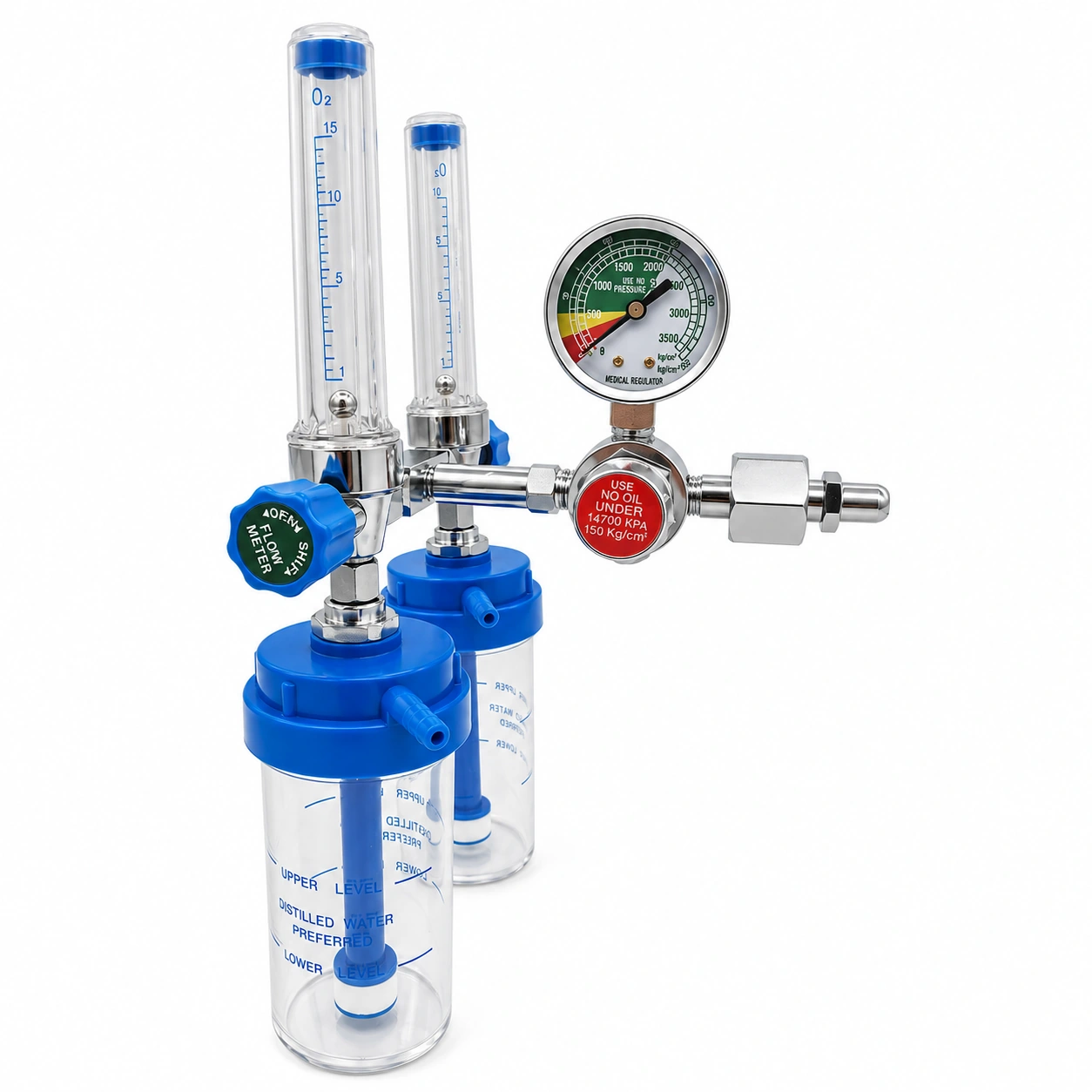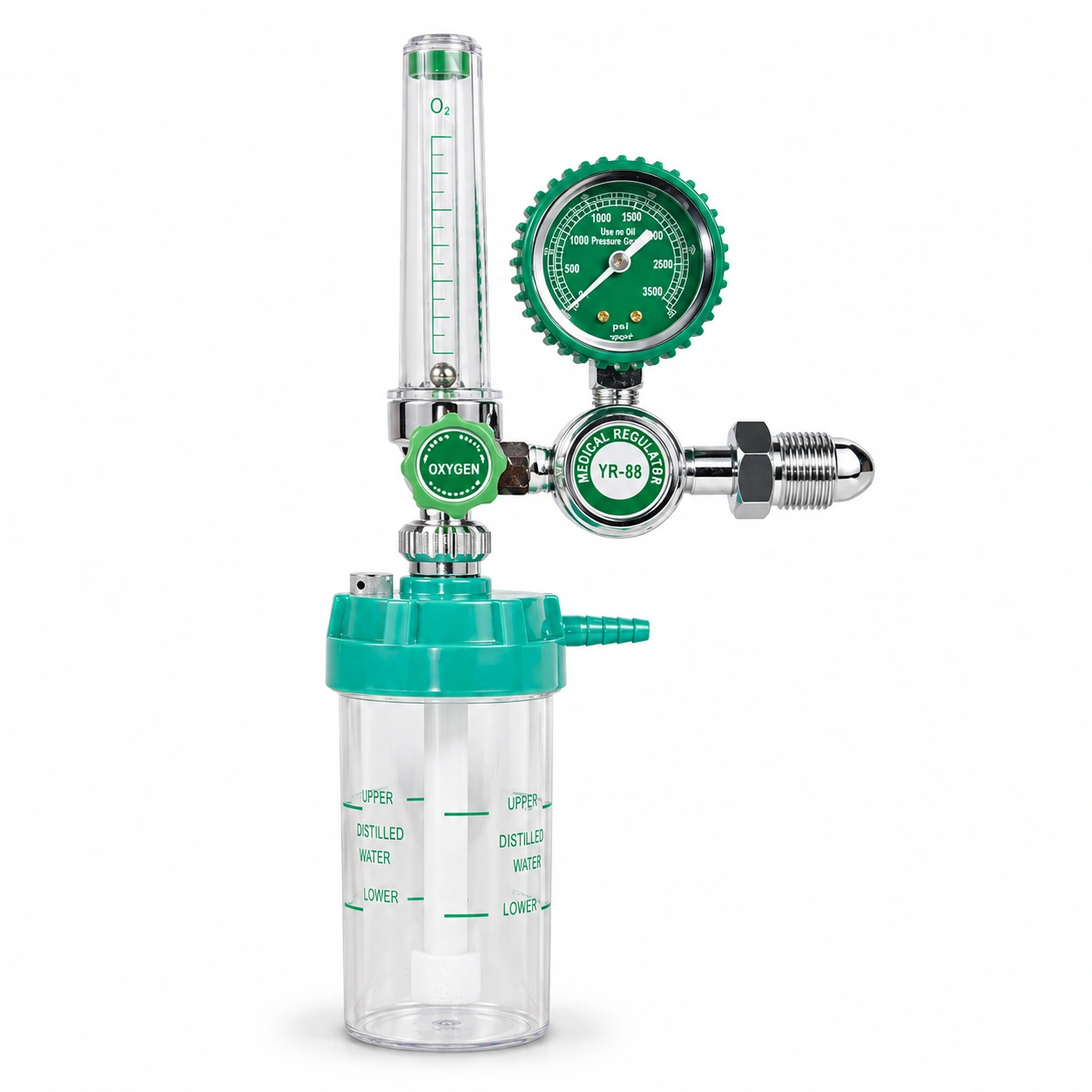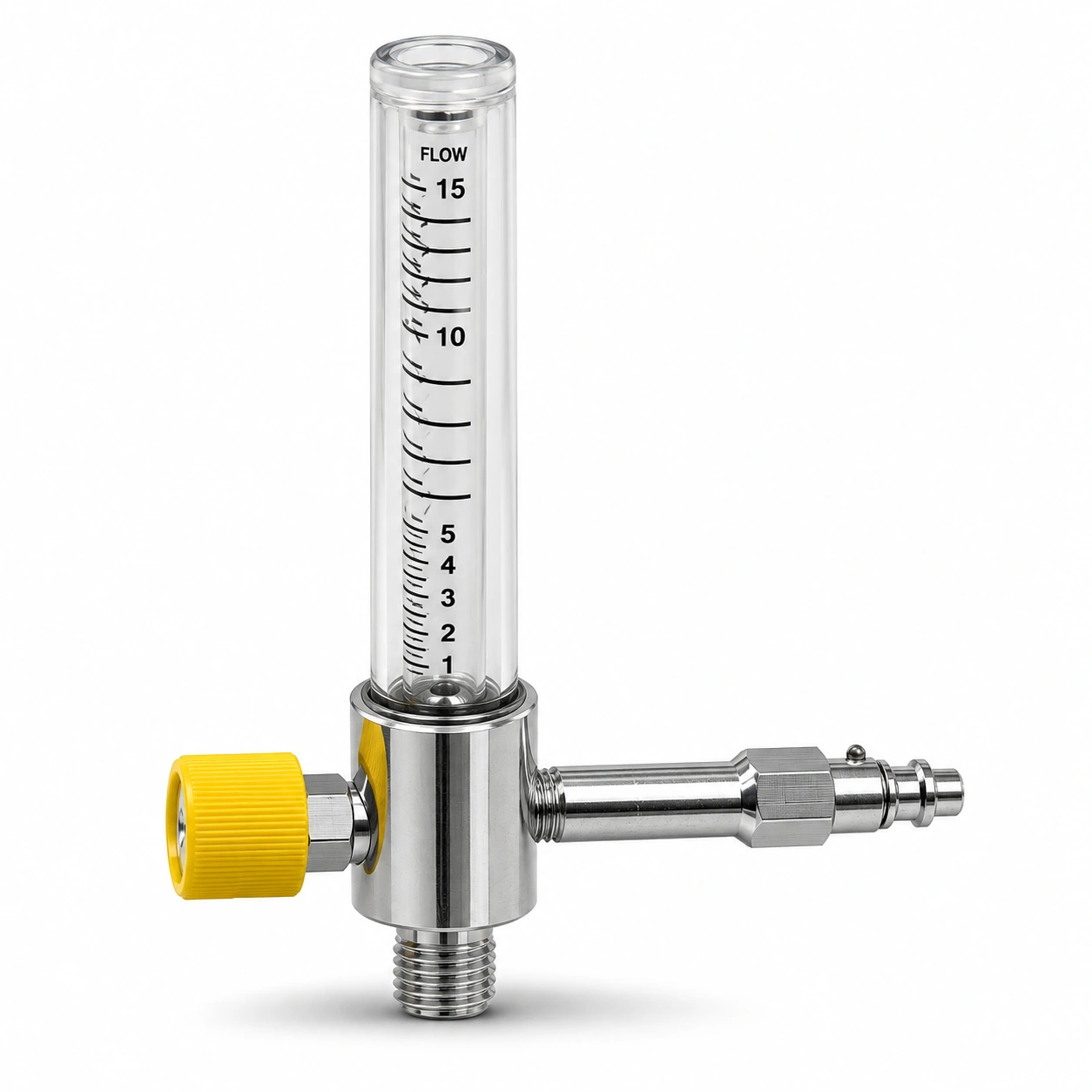

A hospital asks for “one oxygen flowmeter set” but does not clarify whether the supplier should include the wall-terminal connector, humidifier, bottle, tubing adapter or an integrated pressure regulator. Different vendors may bid different combinations while all claim to offer a complete set.
A precise connection-chain and responsibility schedule converts that ambiguous phrase into an identifiable set of compatible devices. The hospital clinical and infection prevention teams determine the permitted patient-side arrangement; a product supplier does not prescribe a universal humidification pathway.
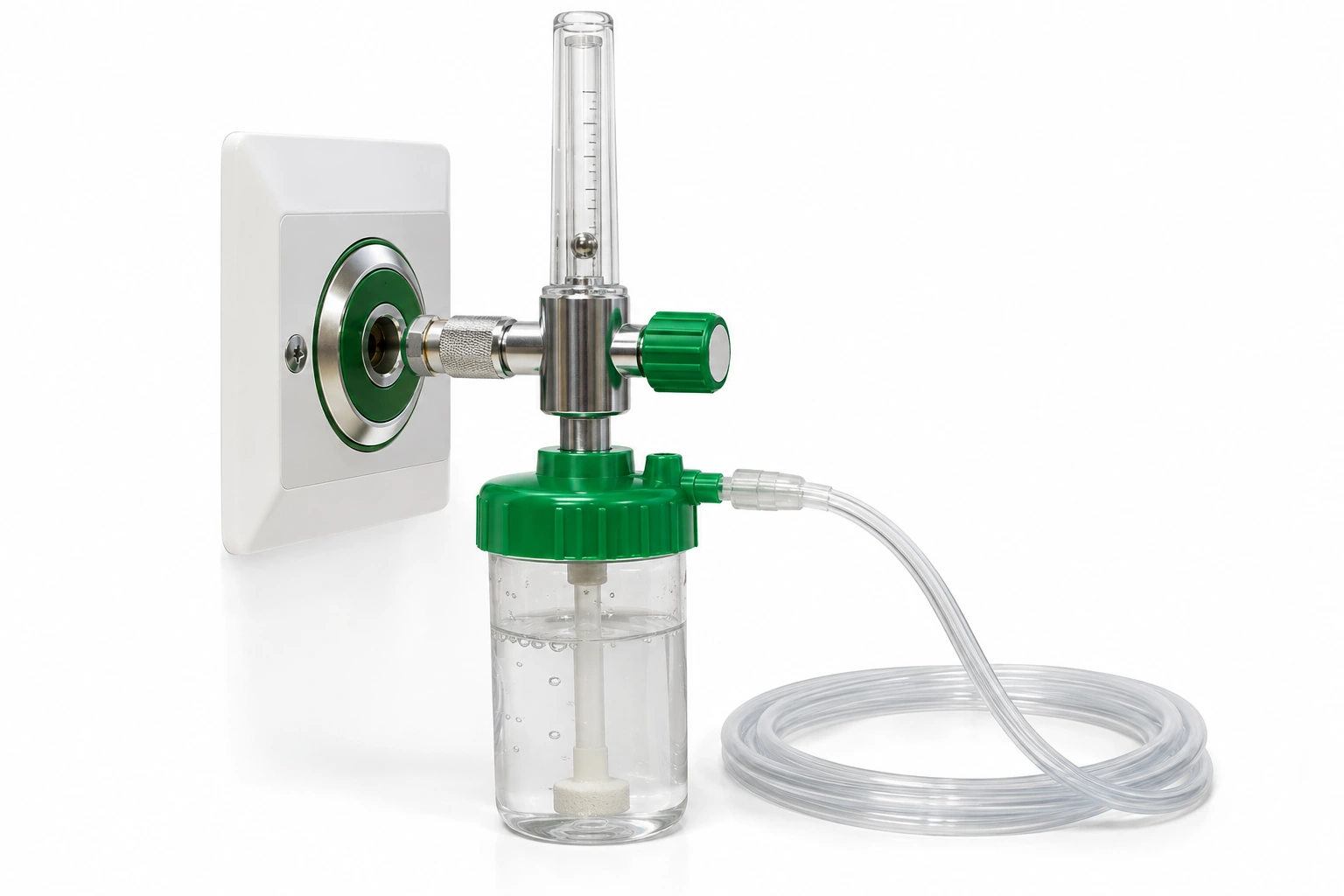
Map the chain from the actual supply point
An approved setup may involve a pipeline terminal, a regulator pressure outlet or a cylinder VIPR pressure outlet. The flow-control device connects at one approved location, then feeds the specified downstream clinical equipment and accessories.
ISO 15002:2023 applies to defined flow-control devices connected through eligible gas-specific interfaces. ISO 5359:2014 covers low-pressure hose assemblies in its scope. These are separate documents; not every piece of flexible patient tubing is automatically a hose assembly within ISO 5359.
Do not treat humidification as part of every meter
Some commercial products include a bubble humidifier and bottle; others provide only the flow-control unit. Whether humidification is clinically needed, and which type is appropriate, is a treatment and infection-control decision.
Procurement should record “included,” “not required,” or “separately supplied” rather than automatically adding a bottle to every flowmeter order.
Build an exact assembly bill
| Component | Define before award | Verification owner |
|---|---|---|
| Upstream supply | Wall terminal, cylinder regulator or VIPR | MGPS/biomedical team |
| Gas-specific inlet | Correct service and connector drawing | Engineering procurement |
| Flow-control device | Type, range, units, orientation, accuracy | Clinical equipment engineering |
| Regulator if present | Exact duty and relevant ISO 10524 part | Design/technical reviewer |
| Humidifier if specified | Approved model and patient-side purpose | Clinical/infection prevention |
| Bottle/cap/seal | Single-use or reprocessable status and approved parts | Infection prevention |
| Tubing/accessory outlet | Exact connection, pressure/flow suitability | Biomedical engineering |
| Instructions and spares | IFU, cleaning, replacement parts and stock ID | Maintenance/stores |
A photo cannot establish the status of reprocessing or a permitted patient-side use.
Distinguish a connection fit from an approved connection
A tube that can be pushed over a nozzle may still be incorrect for the supplied device or clinical application. Obtain the actual manufacturer connection drawings and the hospital's equipment-use requirements.
If two suppliers use different outlet forms, ask the biomedical authority to approve the exact integration rather than inviting site staff to fabricate an adapter.
Example: missing parts despite a competitive price
Vendor A offers a flowmeter with no humidifier; Vendor B includes a bottle and cap but not the necessary matching outlet adapter. The buyer must identify what the clinical specification actually requires and price the complete compliant configuration.
An extra accessory is not necessarily a benefit. Unneeded items add cleaning, handling, storage and procurement complexity.
Infections, replacement and maintenance responsibilities
The facility should assign manufacturer-directed cleaning, inspection and replacement actions to trained people. Distinguish patient-side accessories, reusable flow-control assemblies and pipeline components in asset management.
Never claim a humidifier bottle is safely reusable merely from its transparent material or an online product image. Check the actual IFU and accepted infection prevention process.
Pressure and performance boundary
A Part 1 cylinder regulator and a Part 4 low-pressure regulator occupy different engineering scopes. Flow-control performance depends on its intended upstream supply and the accepted device configuration.
The chain must match service, rated pressure, flow range and gas compatibility. A suitable component in isolation may still be wrong for an assembled system with incompatible ends.
Handover record
Keep one assembly reference linking the exact upstream interface, flow-control model, optional humidifier or accessory, outlet/tubing system, manufacturer instructions, service part numbers and clinical department approval.
BWC Medgas can quote specified oxygen flowmeters, regulators and accessories as component supply. The hospital approves clinical accessories and their safe use.
Send the complete approved connection-chain schedule to BWC Medgas.
Frequently asked questions
Does every medical oxygen flowmeter require a humidifier bottle?
No. The decision depends on approved clinical use and device configuration.
Is an apparently fitting tubing connection evidence of safe compatibility?
No. Intended interface, materials, ratings and approved usage must be reviewed.