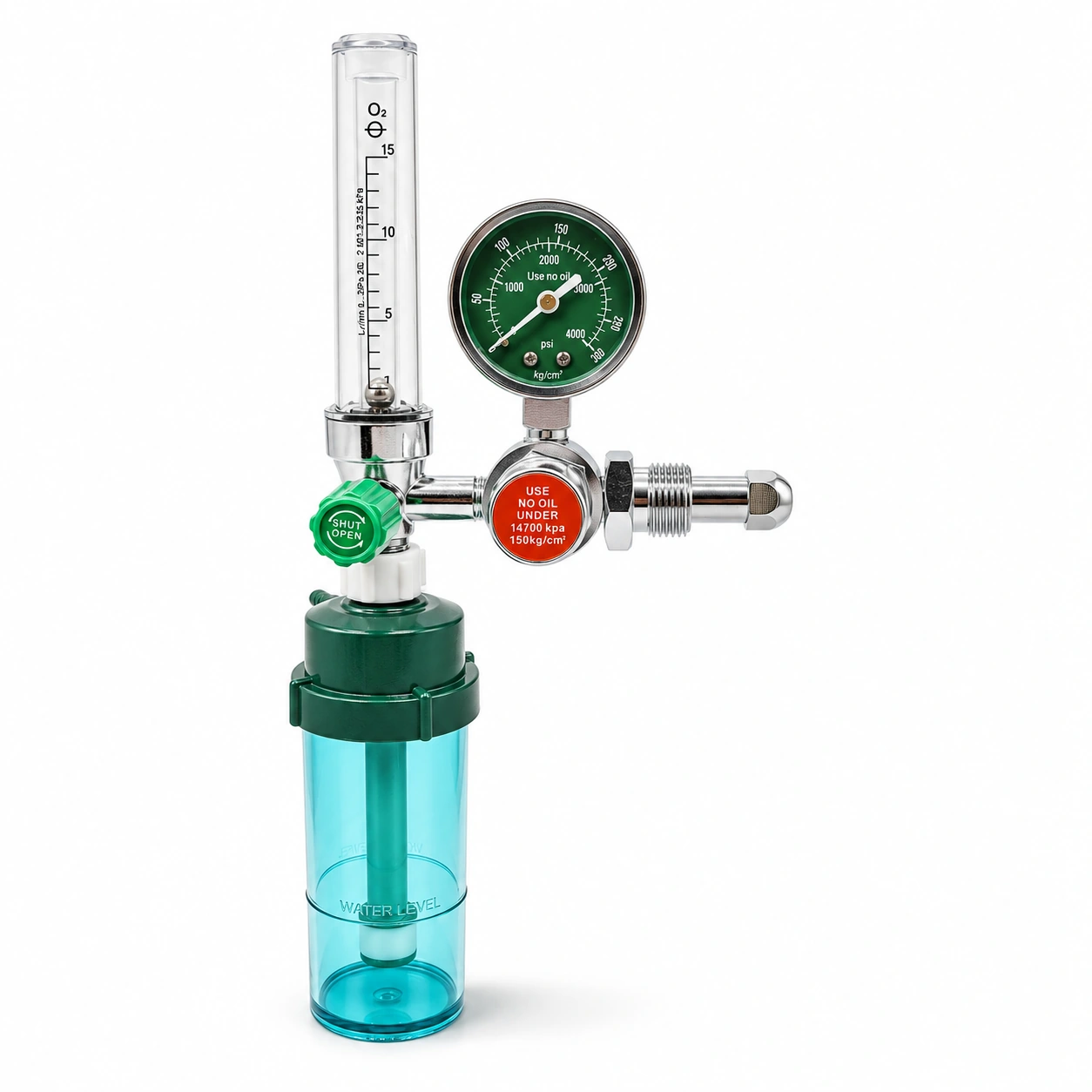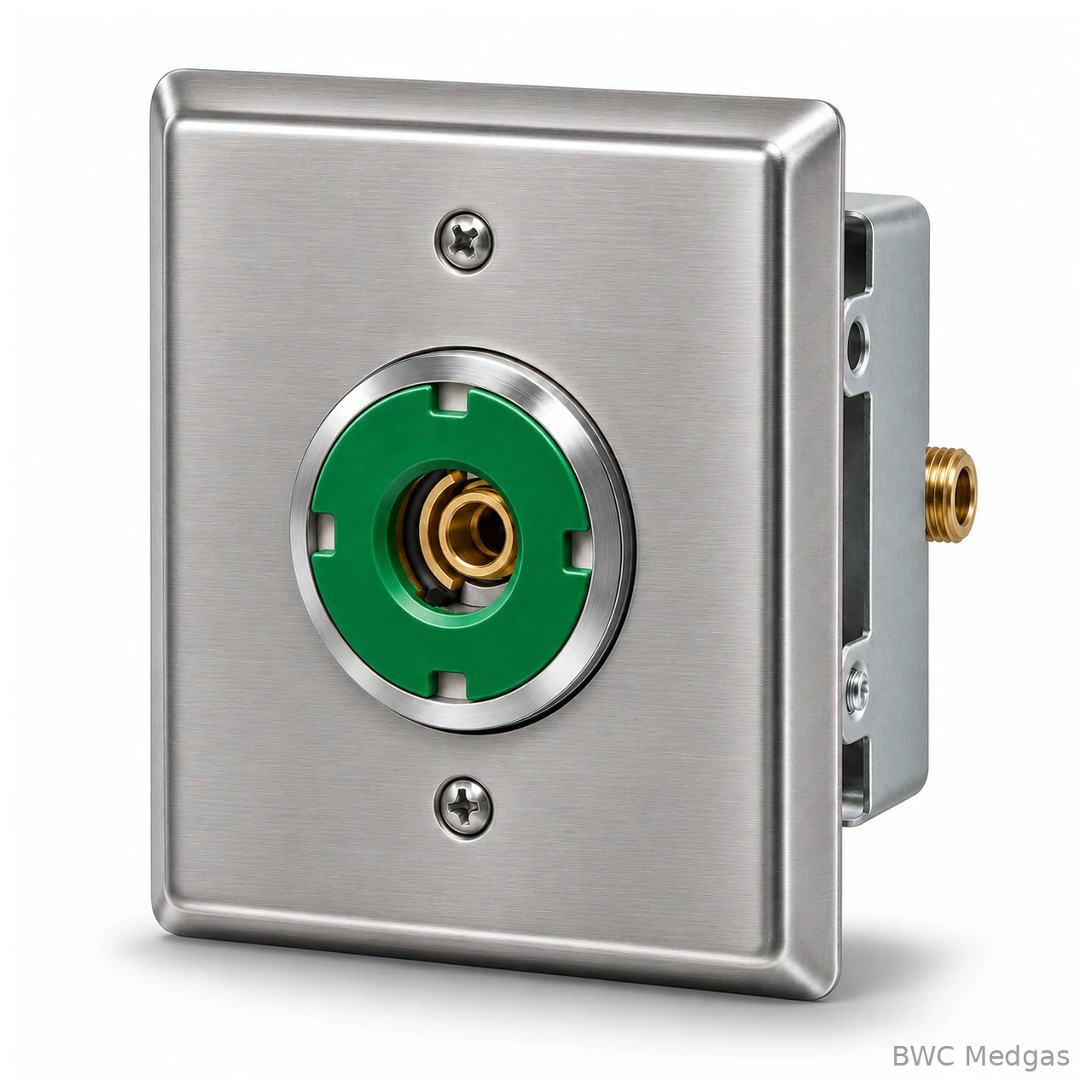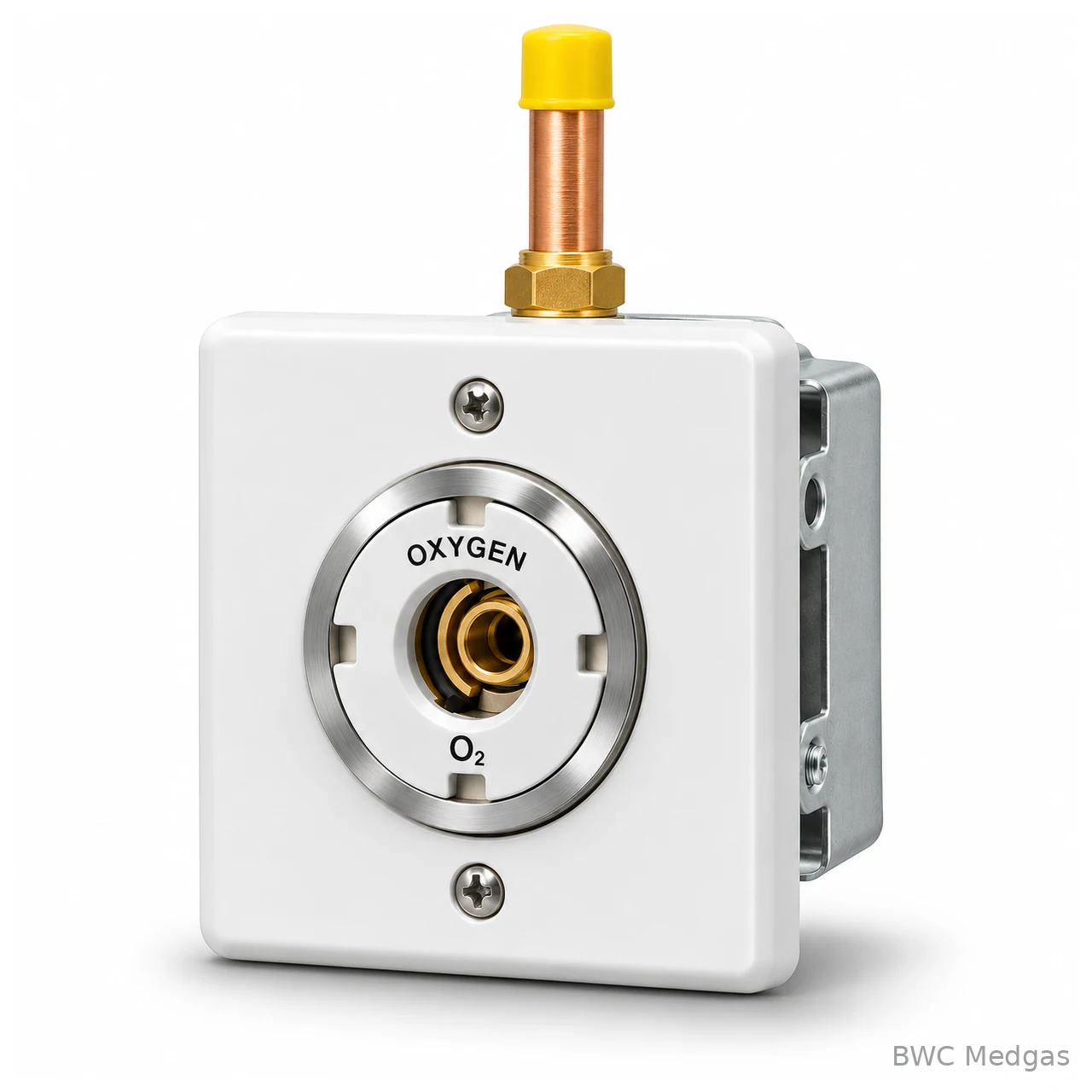

Two medical gas terminal units may have visually similar front plates and still differ in how they connect, mount and perform. In procurement, an outlet should be evaluated as a gas-specific functional component, not simply as an oxygen-labelled metal fitting.
The published scope of ISO 9170-1:2017 identifies several different technical performance subjects for terminals: gas-specific assembly, mechanical resistance, flow, leakage and pressure drop.
These terms make a more useful supplier evaluation framework than comparing only product photographs.
What does ISO 9170-1 actually specify?
The official ISO 9170-1:2017 abstract covers terminal units for compressed medical gases and vacuum in its stated applications.
The published scope emphasises correct gas-specific assembly and prevention of interchange between different gases and services. It also addresses mechanical resistance and functional aspects including flow, leakage and pressure drop.
These are separate areas of evaluation. A component's connector may have the intended shape but the buyer still needs model information relevant to the other requirements in the actual product specification.
This website article describes the standard's public scope; it does not reproduce technical acceptance figures from the licensed full document.
Why are flow and pressure drop not the same thing?
In engineering terms, flow describes gas movement through a device under specified conditions, while pressure drop concerns the difference in pressure across that device when gas flows.
For a particular terminal, both characteristics depend on the defined test or operating conditions. It is not meaningful to compare a pressure drop from one product with an unqualified flow number from another without knowing the stated conditions.
This is why engineers should request a manufacturer's actual product performance information rather than the marketing phrase “high flow outlet.”
A hospital's approved design determines whether the selected terminal is appropriate for its specific system.
What about leakage and mechanical resistance?
A terminal must maintain its intended performance when used in the specified application. Leakage and mechanical resistance are distinct considerations from the appearance of the front cover.
A product datasheet or technical document should identify the exact model and relevant construction and functional attributes. A generic product-family claim is less helpful for comparing replacement items than information for the model actually supplied.
Do not assume that replacing only the removable faceplate proves the underlying terminal assembly has equivalent characteristics.
Are connector dimensions defined in ISO 9170-1?
The ISO standard states that it does not prescribe dimensions for all gas-specific connection points and probes. National or regional standards may define the actual mating geometry.
A buyer therefore has two separate questions: does the product address the required terminal performance scope, and does its actual connector match the project or existing installation?
This is especially relevant for multinational distributors supplying hospitals in Europe, the Middle East and Australia.
A terminal datasheet checklist for RFQs
Request the exact model, gas service, terminal and mating probe family, mounting and rear-connection drawing, supply package and the performance evidence required by the equipment specification.
If the outlet is to be fitted into a bedhead or panel assembly, identify the mounting envelope and any relevant interface constraints. The product's installed location does not remove its gas-specific functional requirements.
ISO 7396-1:2016 addresses the wider medical gas distribution system. NHS England HTM 02-01 (2026) separately addresses design, installation, validation and verification in Part A; these system documents should not be confused with an individual outlet product datasheet.
BWC Medgas outlet products
BWC supplies medical gas terminal units and related valve/connection components.
For an accurate product comparison, submit the gas service, mating probe and mounting drawings alongside the performance/documentation requirements named by the hospital.
Discuss medical gas outlet technical specifications with BWC.
Frequently asked questions
Does a compatible connector guarantee a suitable medical gas outlet?
No. Connector compatibility is only one aspect of the full terminal product specification.
Does ISO 9170-1 alone define every national probe dimension?
No. It expressly recognises the role of national and regional dimensional standards.