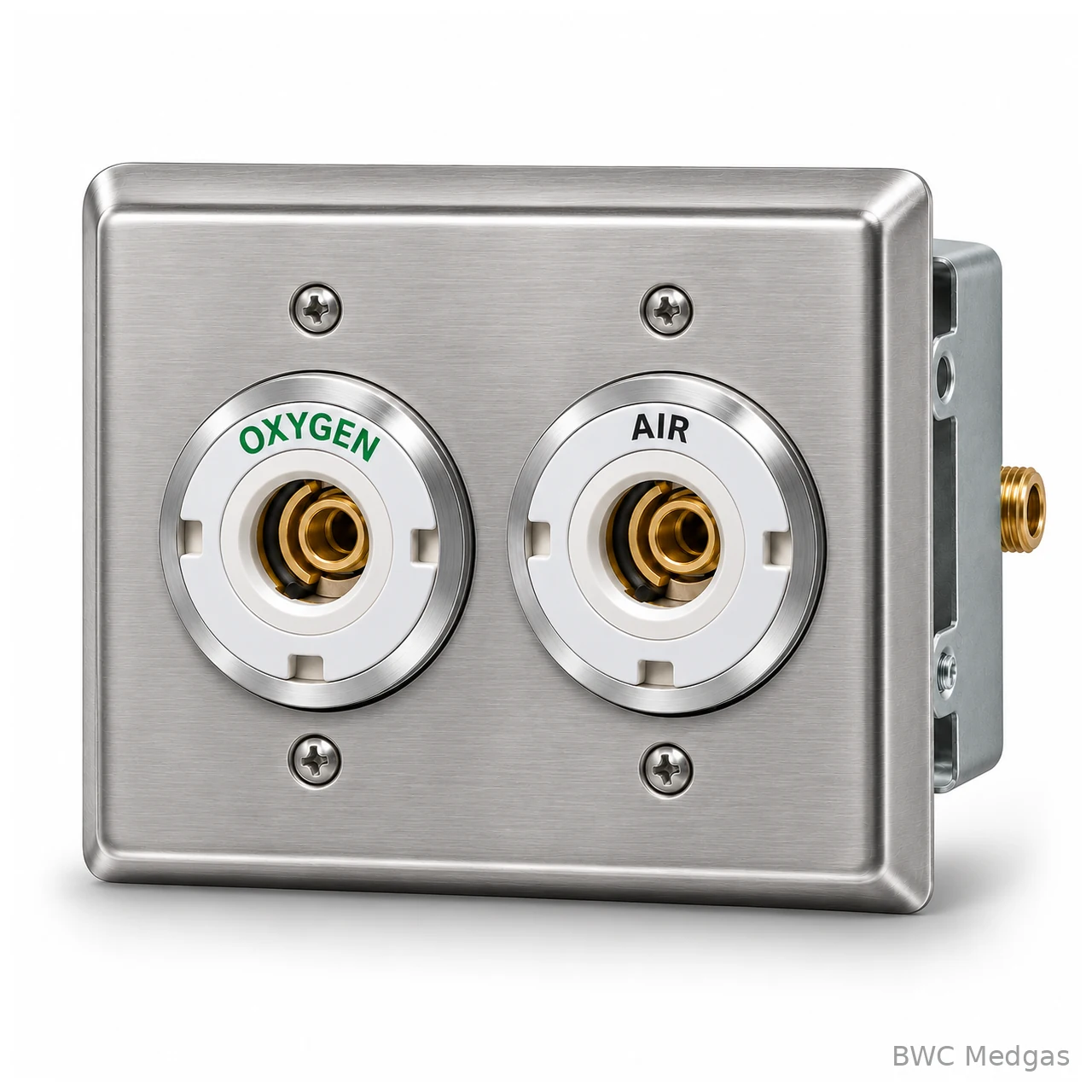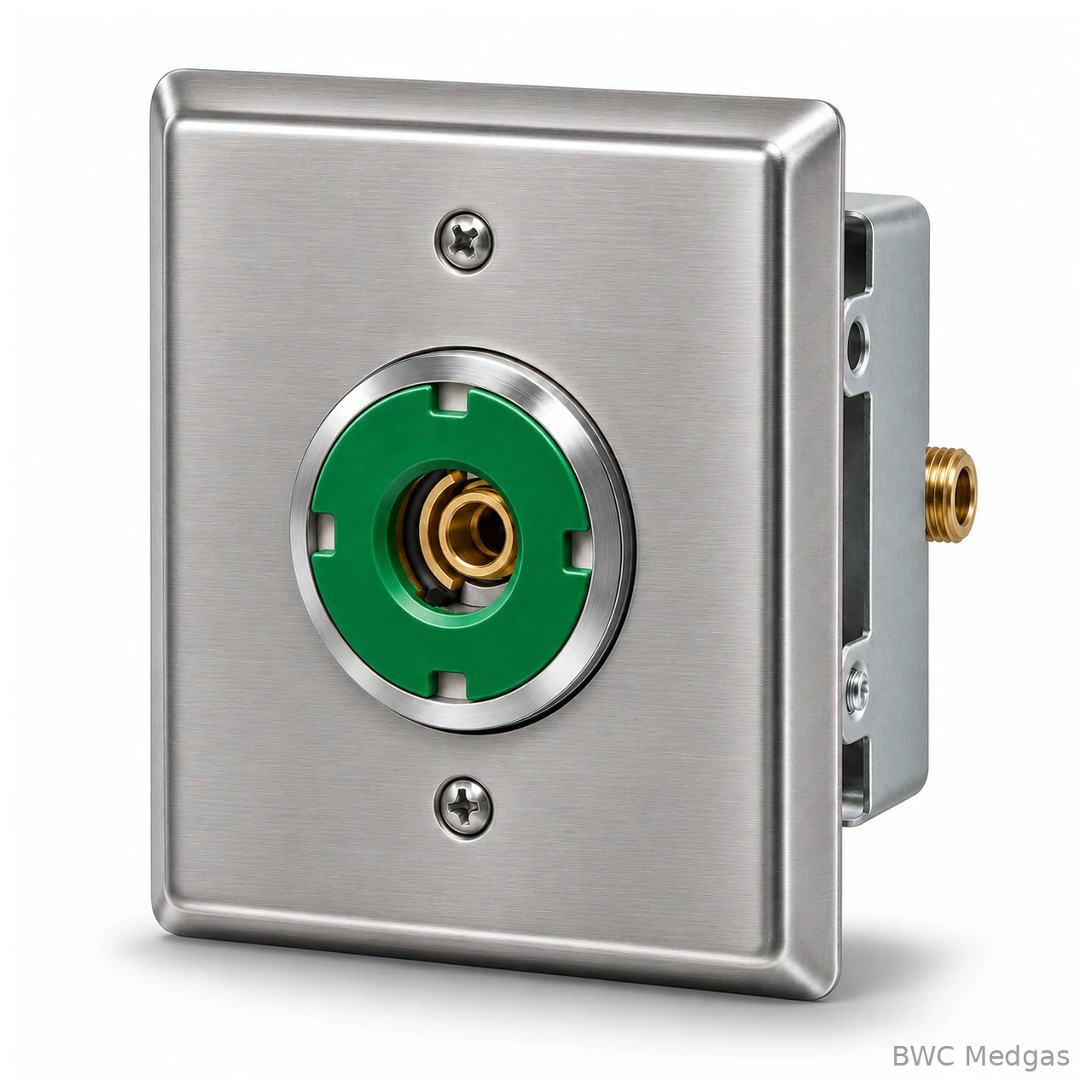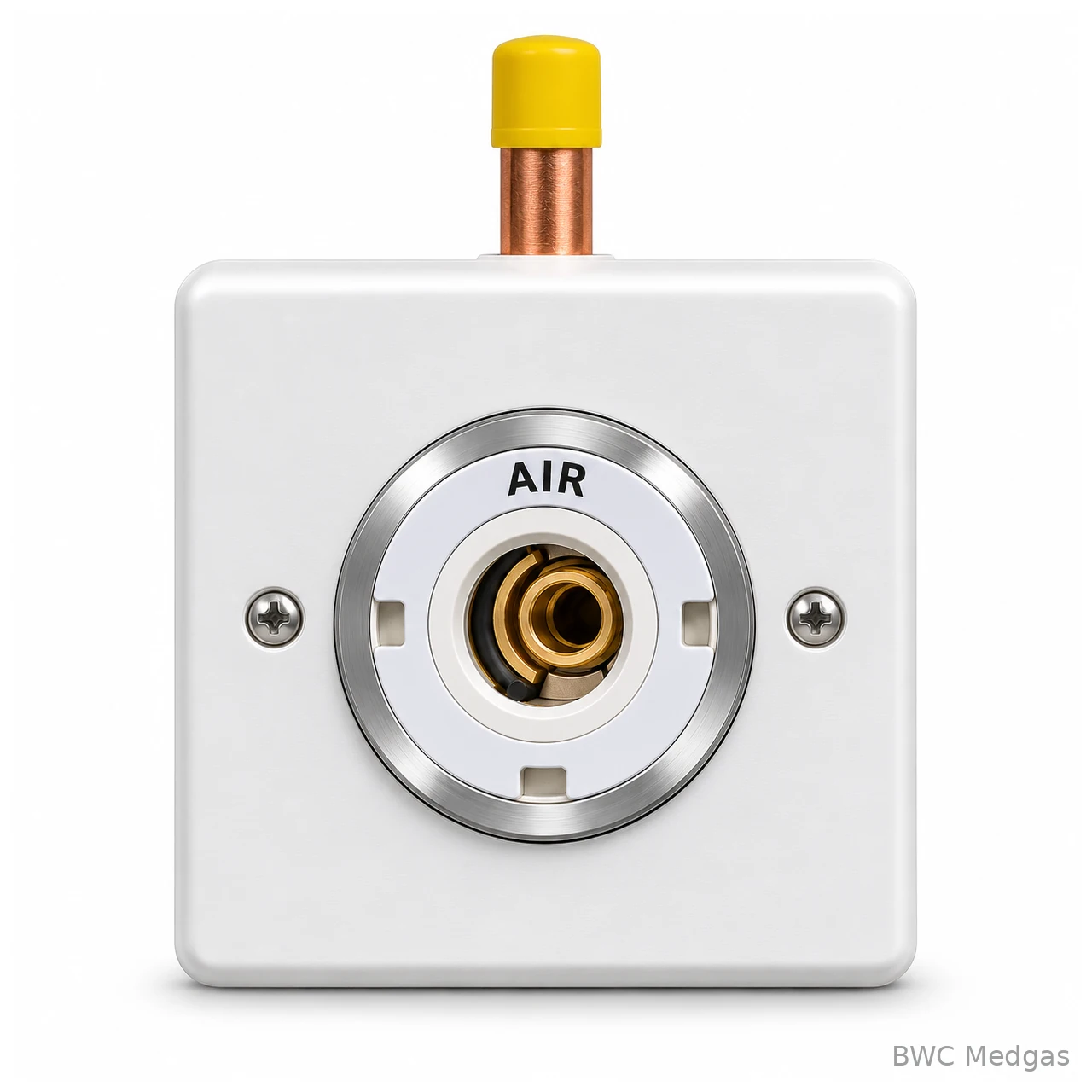
Hospitals are often built or expanded over decades. A single campus may contain multiple medical gas terminal generations from different manufacturers and contract periods. An outlet can continue to function while its original part number becomes unavailable, creating pressure to purchase an apparently similar replacement without a full compatibility review.
A terminal lifecycle and spare strategy reduces that risk. It is more than buying extra wall plates; it maps supported product families, critical spare modules, authorized replacement routes, supplier commitments and site acceptance implications.
Start with a verified installed-product inventory
For each installed terminal record service, location/zone, connector family, original manufacturer, exact assembly and component models, approximate age if known, service documentation and installation/upgrade history.
Do not assume that a campus is standardized because most visible front rings look alike. Hidden rough-in bodies, internal mechanism revisions and national profile variants can differ.
An asset survey by qualified personnel may be needed before assigning a replacement part. Record unknowns as unknowns rather than filling them with guesses.
Assign spare and replacement pathways
Group assets into three evidence-backed states:
- Current and supported: manufacturer identifies a compatible replacement part and service procedure.
- Supported by approved upgrade: a defined manufacturer-approved conversion or upgrade kit with project-specific verification requirements.
- Obsolete or unsupported: no adequate compatible path has been demonstrated; needs engineering disposition before procurement.
A supplier claim that a “new version is backward compatible” must be supported by precise model and service-specific documentation.
Build a lifecycle part register
| Asset group | Required information | Purchasing implication |
|---|---|---|
| Terminal model family | Manufacturer and exact variants | Separate SKUs by gas and connector |
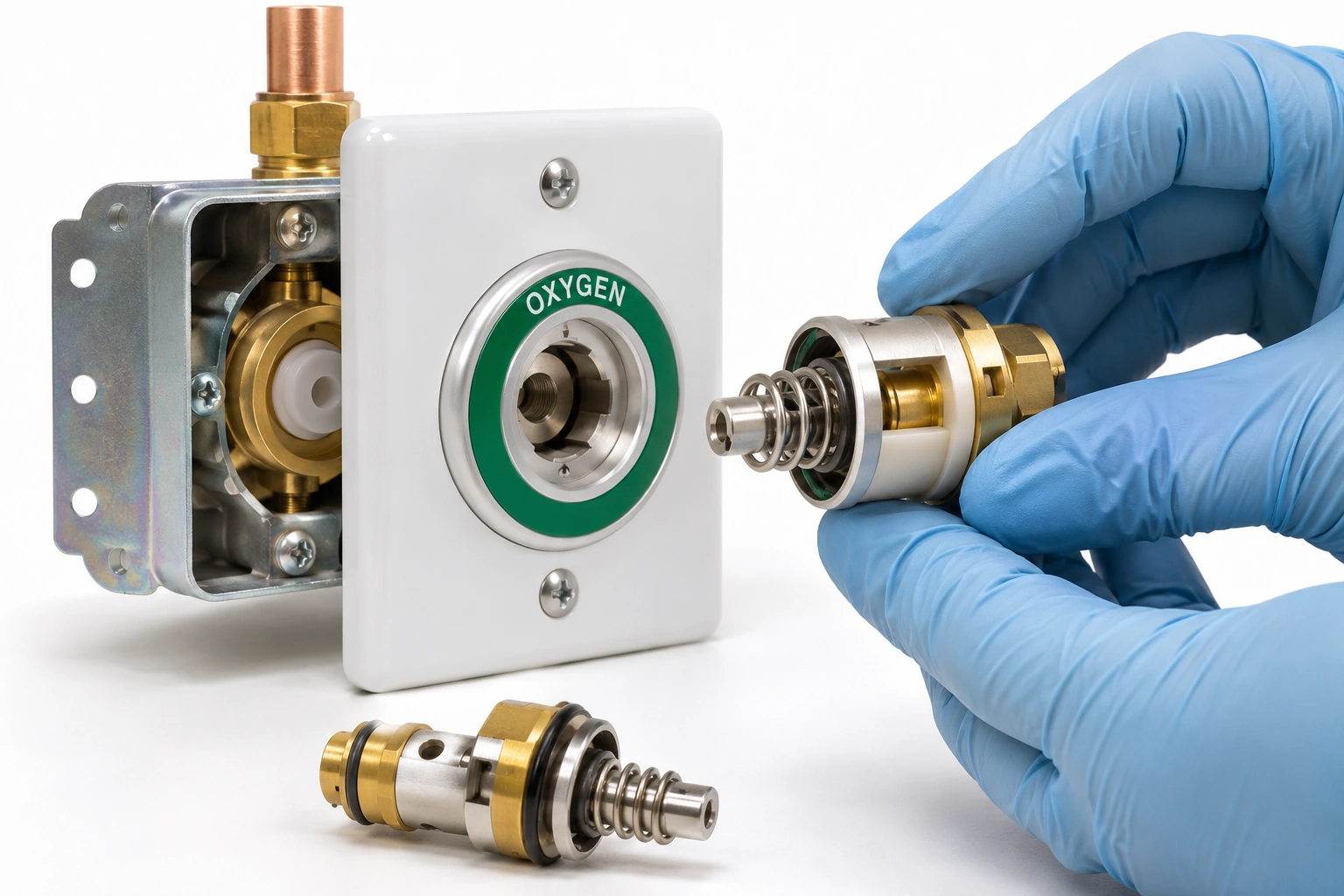
| Spare module | Compatible assembly and service | Approved item and inventory |
| Approved substitute | Drawings and acceptance decision | Controlled replacement |
| Technical document | Instructions, model revision, conformity evidence | QA gate |
| Supplier availability | Typical lead time and support term | Contract or stock planning |
| Obsolescence notice | Product/date/change reference | Engineering and budget planning |
| Installed verification | Required records after change | Authorized acceptance |
The hospital's policies determine which spares to hold and how promptly they must be available; there is no universal public stock percentage.
Evaluate a support contract, not only unit price
Ask vendors about availability of gas-specific internals, seals or service cartridges where permitted; time-to-notify of changes; access to updated drawings; replacement compatibility evidence; trained support; and an orderly product end-of-life plan.
A low-price terminal family may not have a low total lifecycle cost if every future defect requires changing concealed wall bodies or multiple connected fittings.
Compare the full scope and explicitly budget any design review, installation and site verification requirements for future replacements.
Handle mixed generations without defeating gas specificity
A hospital might wish to standardize on one outward appearance, but visual consistency must not be allowed to obscure incompatible gas service or connector families.
Keep product selection constrained by the exact installed and approved interface. Don't introduce universal adapters or user-made faceplate modifications to disguise a mechanical mismatch.
ISO 9170-1:2017 provides a product performance/gas-specificity framework; system changes and site testing are addressed under ISO 7396-1 and local adopted rules.
A practical obsolescence scenario
A supplier announces that an outlet mechanism will be discontinued in 12 months. The hospital has 60 installed units of several gas-service variants. Before ordering 60 replacements, the estate manager should determine which are currently supported, what spares are actually service-specific, whether upgraded modules exist and which items require new engineering approval.
A documented transition plan can stagger purchasing and avoid mixing unapproved variants. Financial timing does not replace technical acceptance.
Control use of surplus or refurbished components
A salvaged outlet that looks undamaged is not necessarily a suitable spare. Without adequate history, traceability, service compatibility and approved refurbishment evidence it may pose unacceptable risk.
The project team should have a controlled disposition for old modules and clear inventory labeling. Do not reintroduce rejected or obsolete components simply to avoid procurement delays.
Connect lifecycle records to approved work permits
Future work can require access to clinical rooms and potentially affect the medical gas source/zone. Maintain the relevant operational permit pathway, clinical notifications, qualified personnel and post-work verification requirements as part of the lifecycle strategy.
NHS England's HTM 02-01 (2026) Part B and Scottish SHTM 02-01 (2026) are useful operational-management references. They are not substitutes for a hospital's actual site procedures.
BWC Medgas scope
BWC offers selected medical gas terminal products. For replacements or a new framework contract, share a verified installed-product inventory, separate gas-specific variants and documented support needs.
Discuss terminal-unit lifecycle supply with BWC Medgas.
Frequently asked questions
Can one repair kit fit every outlet with the same front plate?
No. Correct internal mechanism, service and model compatibility must be documented.
Does storing more spare outlets solve an obsolete standard?
No. Engineering compatibility, supporting documentation and operational verification are still required.