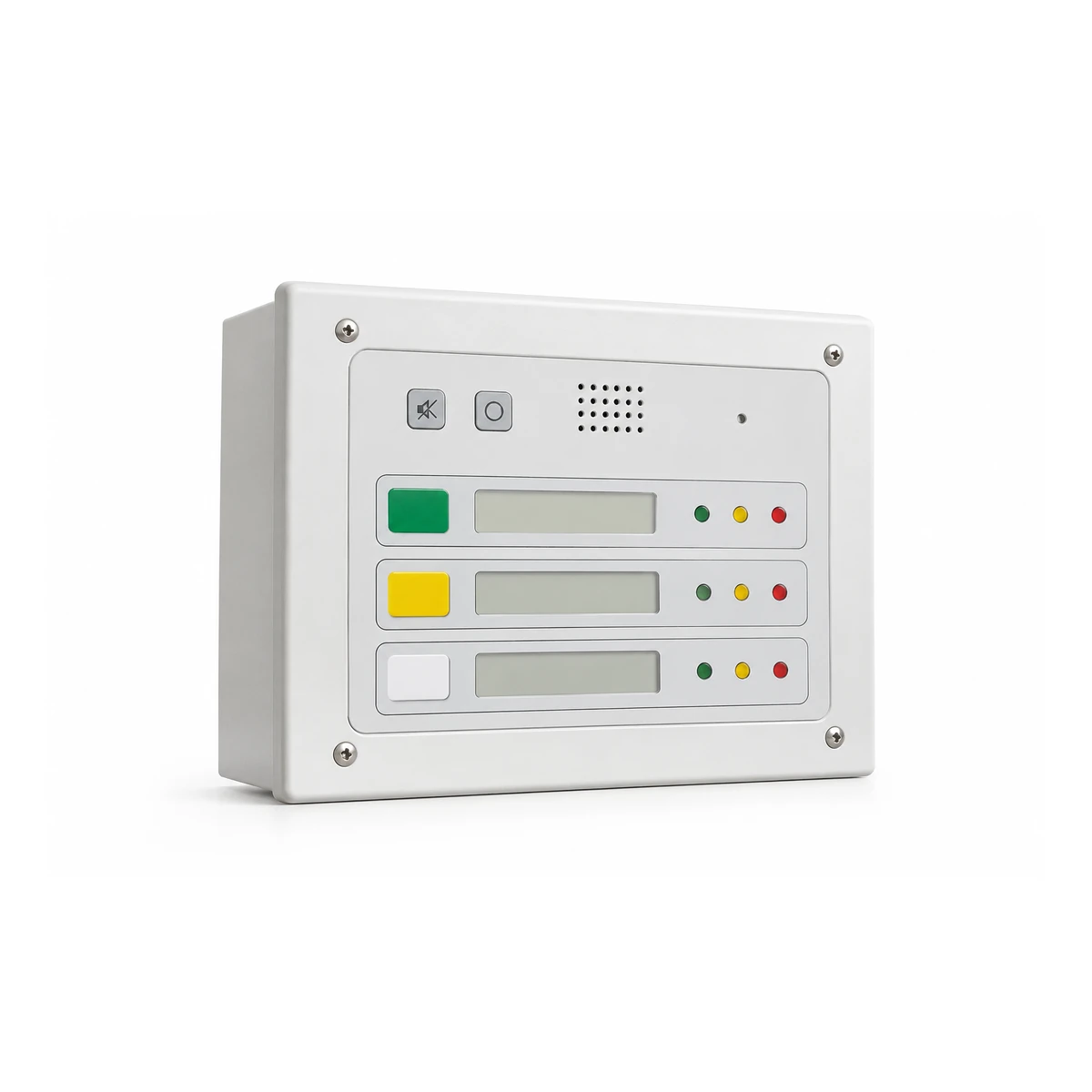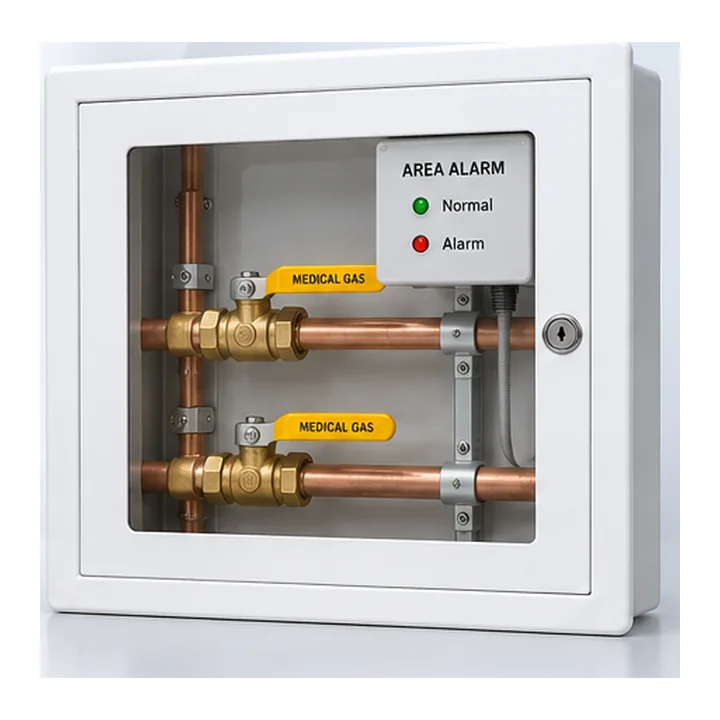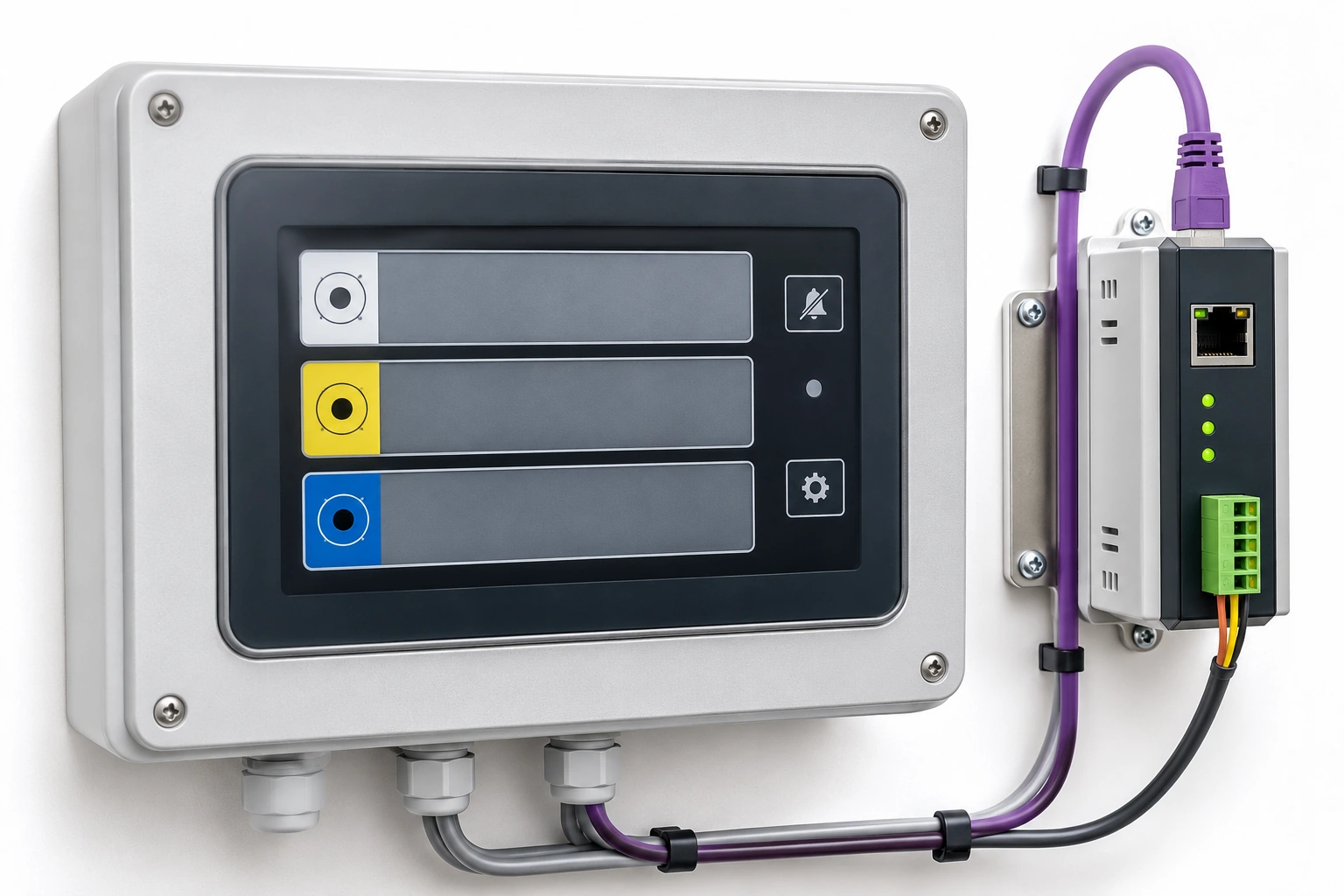
Hospitals increasingly ask for medical gas plant and area status to appear on a building management system (BMS), SCADA dashboard or remote maintenance platform. The request sounds straightforward—“connect alarms to our network”—but it can conceal an important architectural decision: which functions are medical-gas safety alarms, and which are secondary monitoring conveniences?
Treat BMS integration as a controlled technical interface, not as proof that the receiving hospital alarm obligation has been satisfied. The system design authority and healthcare operator must approve the final architecture under their adopted code.
Establish the medical-gas alarm boundary
Prepare an approved point inventory identifying mandatory on-site area and central alarms, plant/source indications, noncritical engineering values and optional analytics. Decide which functions must remain available independent of a building-network or remote-service failure.
ISO 7396-1:2016 covers the monitoring and alarm system within the MGPS design/commissioning framework. HTM 02-01 (2026) and Scottish SHTM 02-01 provide contemporary healthcare engineering and operational guidance.
A BMS display cannot be assumed to replace a required alarm panel merely because it shows the same numbers.
Describe the direction of information flow
A project may want to observe medical gas equipment without allowing an external IT system to control it. Specify read-only status exchange where appropriate and separately evaluate any intended command interface under the approved risk analysis.
Do not grant remote commands or alter alarms, valves, pressure settings or controller logic by default. The user authorization model, cybersecurity review and medical-gas technical approval are prerequisites for any control functionality.
Build an interface contract
| Interface dimension | Buyer/designer decision | Evidence |
|---|---|---|
| Point ownership | Which original alarm system owns the value/state? | Controlled I/O list |
| Direction | Read-only status or approved command path | Architecture diagram |
| Protocol and addressing | Accepted interface and network details | Supplier protocol mapping |
| Data quality | How missing, stale or invalid values appear | Communication specification |
| Time reference | Clock/timezone expectations across devices | Event-time policy |
| Security boundary | Segments, identity, permitted traffic and access | OT risk assessment |
| Loss of BMS | Which mandatory medical gas alarms remain available? | Failure-mode and test record |
| Change management | Who approves map, firmware or gateway changes? | Site modification procedure |
Do not let one numerical “oxygen pressure” tag substitute for separate engineering value, status/alarm state and communication-health indications when the specification requires them.
Cybersecurity is also an availability topic
[NIST SP 800-82 Rev. 3](https://csrc.nist.gov/pubs/sp/800/82/r3/final) is final guidance for operational technology (OT) security, covering networks, remote access and devices that monitor physical processes. In September 2026 NIST released Rev. 4 as a draft, not a new final edition.
For the hospital project, assess the practical consequences of gateway misconfiguration, unauthorized remote access, weak authentication, shared vendor accounts or software updates that interrupt communication. Preserve the required medical-gas safety function independently as specified by the approved architecture.
It is not enough to write “cybersecure” in a vendor brochure.
Test stale data rather than trusting a green screen
Some dashboards continue to show the last received normal value when the connection is lost. The approved interface should make data quality and communication loss visible as appropriate to the design.
A qualified FAT/SAT plan should verify which information is received under accepted conditions and how the defined loss modes are represented. Do not instruct hospital staff to disconnect live equipment or experiment with network access; tests require approved procedures.
Example: an old status becomes misleading
A BMS panel shows normal values for a source plant, but the alarm gateway has stopped updating after a configuration change. Users are unaware of the stale link because the screen has no timestamp or communication-health state.
The engineering review should identify the data-quality control, which system is authoritative, and how the service desk is notified of faults. A new dashboard theme cannot fix missing source status semantics.
Buying an integration package
Request the gateway/controller model, supported protocols and versions, complete data-point dictionary, status quality flags, mandatory alarm independence statement, network diagram, authentication/update policy, installation boundary and acceptance tests. Price engineering and documentation separately from an unqualified “BMS enabled” checkbox.
Agree with the hospital IT/OT and MGPS teams on remote vendor access rules and maintenance windows. The approved system remains a healthcare infrastructure component, not just a software subscription.
BWC Medgas role
BWC supplies selected medical gas alarm and monitoring components that may be considered against a defined interface scope. Compatibility and installation responsibilities must be assessed for the exact offered models and approved site architecture.
Send your monitoring point list and BMS boundary to BWC Medgas.
Frequently asked questions
Can BMS replace the installed medical gas area alarm?
Not by assumption. Required dedicated indications and their accepted receiving functions must be evaluated under the adopted standard.
Is Modbus or BACnet compatibility proof of cybersecurity?
No. A protocol and a secure, reliable system architecture are different questions.
Primary technical references
- [NIST SP 800-82 Rev. 3 — OT security, 2023 final](https://csrc.nist.gov/pubs/sp/800/82/r3/final)
- ISO 7396-1:2016 — Medical gas system alarms and monitoring
- NHS England — HTM 02-01 (2026)
- NHS Scotland — SHTM 02-01 (2026)
- NFPA 99 — Health care facilities code