Alarm commissioning is not complete because an electrician can demonstrate a lit screen or a controller's self-test. Hospital acceptance must show that the installed signal originates at the intended device, indicates the right condition and reaches the proper location under the approved test method.
The 2026 NHS Scotland guidance conveniently distinguishes Form A14 — Area alarm panel test and Form A15 — Central alarm panel test. These provide a useful framework for separating evidence, but actual test actions and criteria remain those authorized for the specific project and jurisdiction.
Define separate verification boundaries
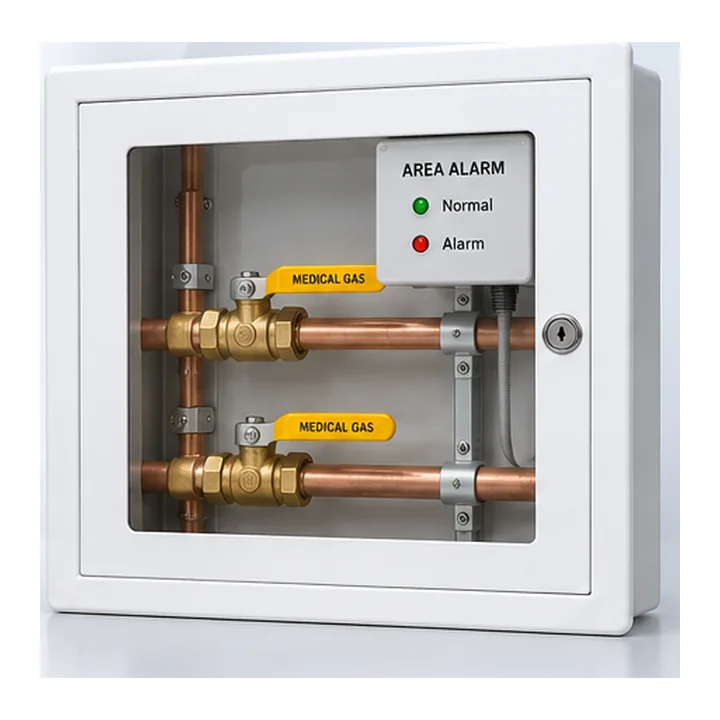
An area alarm has a defined clinical/departmental monitoring responsibility, while a central panel normally brings together the specified wider operational source or plant conditions. Some systems repeat status at multiple locations.
A single device may share electronics, but the acceptance register should still identify each required area and central function independently. The ISO 7396-1 system scope includes monitoring, alarms, commissioning and documentation.
Create a test-point register before the witness visit
| Field | Minimum controlled record |
|---|---|
| Test ID | Unique ID linking source signal and expected panel |
| Physical service | Gas/vacuum and installed sensing point |
| Source tag | P&ID and transmitter/switch identifier |
| Receiving panel | Exact panel, location and channel |
| Expected indication | Approved event text and response behavior |
| Test method reference | Qualified test procedure and approval |
| Observed result | Recorded actual display/indication and time |
| Witness/date | Designated commissioning/verification personnel |
| Exception/closure | Defect, corrective work and accepted retest |
Do not use the same test ID for unrelated sensors or different hospital zones.
Keep product FAT separate from installed SAT
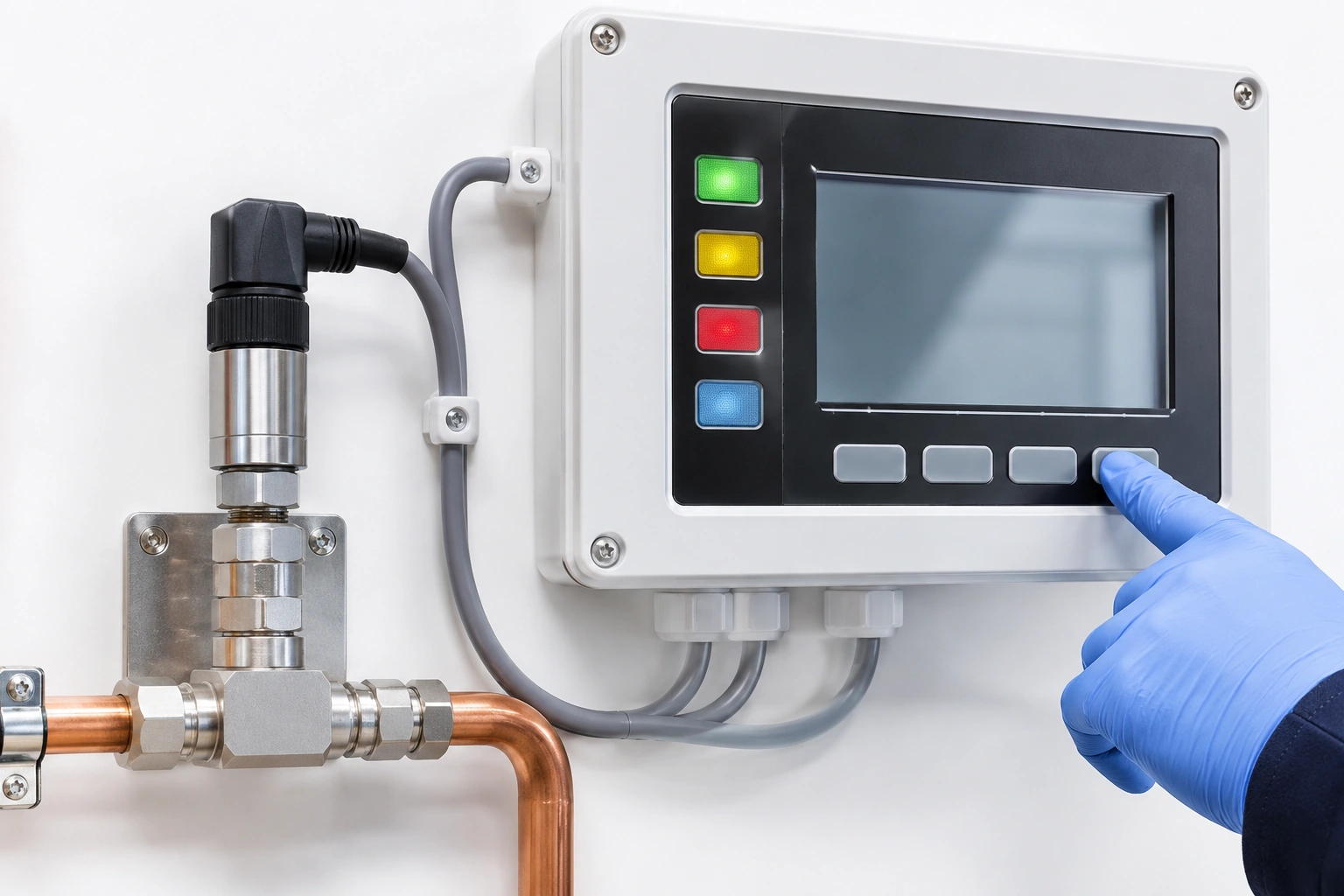
A factory acceptance test can establish that a configured controller and display perform under controlled conditions. It cannot prove the installed sensor taps into the correct branch or that a remote alarm reaches the designated hospital location after field cabling/network work.
Build a coverage map listing factory-tested functions, the site-only interfaces and the specific evidence required to close each one. Allow for manufacturer scope boundaries and independent verification responsibilities.
Confirm normal, abnormal and fault reporting
The designer should specify how each event is indicated and how communication loss, faulty inputs or power problems are represented where required. Tests need to verify those approved failure states without risking clinical gas availability.
The test plan must not tell untrained personnel to close valves, interrupt oxygen or simulate unsafe low pressure. Qualified testers must use the accepted methods and clinical permits.
Example: two displays, one wrong label
An area panel and central repeater both show a response to a sensor input, but the central display calls the signal “Medical Air West” while the source is an oxygen zone. A generic “alarms worked” result is incorrect.
Record the mismatch, correct the controlled channel mapping, obtain review of the actual service and repeat the applicable authorized tests. Preserve both the failed observation and closure evidence.
Manage partial acceptance
In a phased project, some zones may have complete alarm records while other wards or source signals remain pending. The handover index must state the precise commissioned boundary, not mark an entire building ready because one panel passed.
Keep the event list and the alarm drawings consistent with final as-installed locations. An accepted panel function is not a substitute for the full MGPS site release.
Use the Scottish forms appropriately
The SHTM 02-01 (2026) publication page provides downloadable A14 and A15 exemplars. NHS England's HTM 02-01 (2026) provides its own updated design and operations documents and editable B-forms. Project authorities determine the applicable forms and required approvals.
For US projects, confirm the locally adopted NFPA 99 edition; do not label a UK evidence checklist as US code certification.
Assemble the final witness dossier
Include controlled site signal and area mapping, approved test plan, panel/firmware versions, factory records where relevant, independent site observations, instrument references, deviations/closures, required alarm receiving locations and final qualified sign-off.
This dossier is useful for future extensions because it shows which system mapping was actually accepted rather than what the original tender intended.
Related BWC products
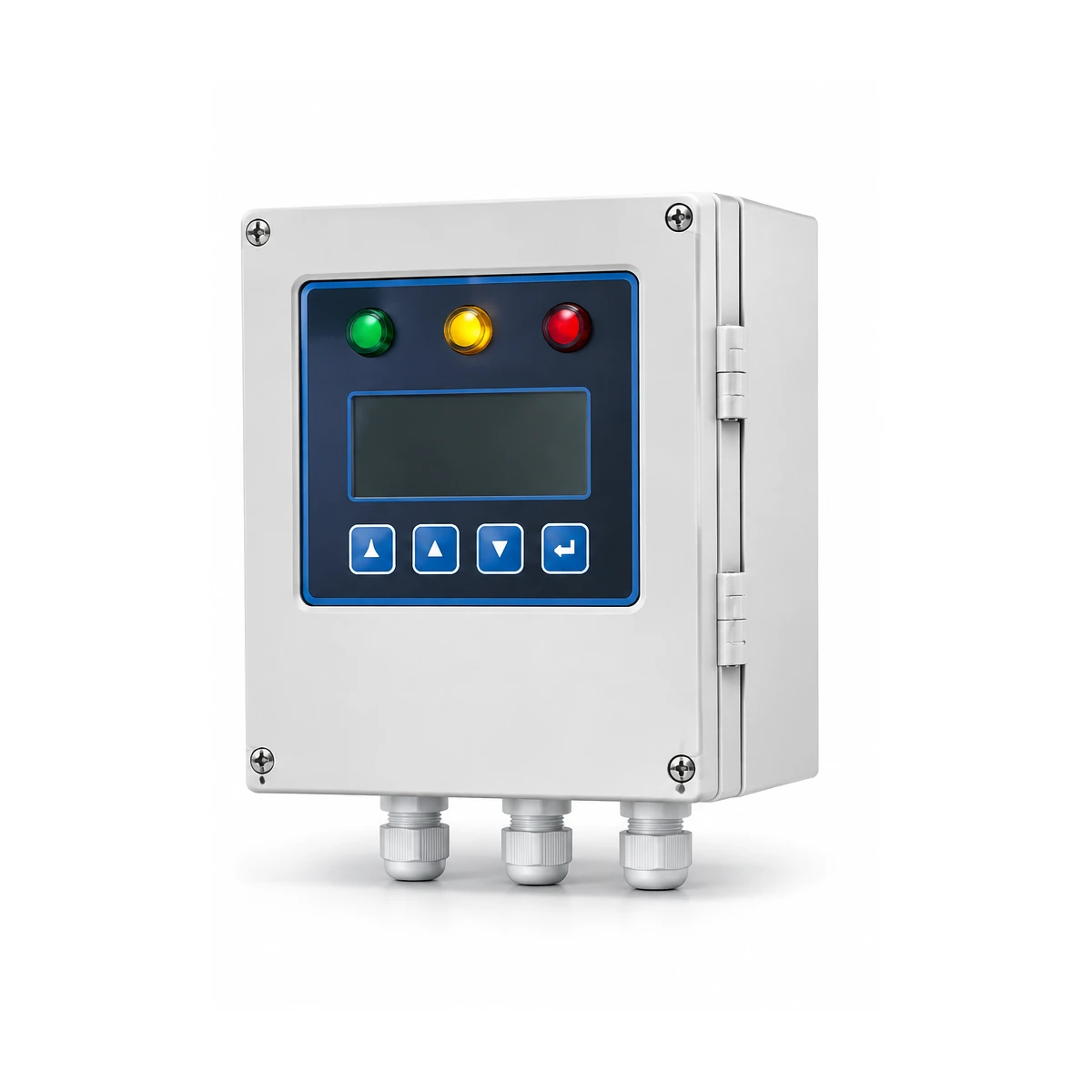
BWC Medgas supplies selected area gas alarm panels and control components. Provide the approved source-to-panel channel schedule, panel configuration and acceptance requirements when requesting a quotation.
Send your alarm witness test and device schedule to BWC Medgas.
Frequently asked questions
Can a factory screen test count as the hospital's area alarm site test?
No. It does not verify the installed end-to-end interfaces.
Should a defect simply be overwritten with a later pass?
No. Maintain the documented original observation, corrective work and accepted retest.