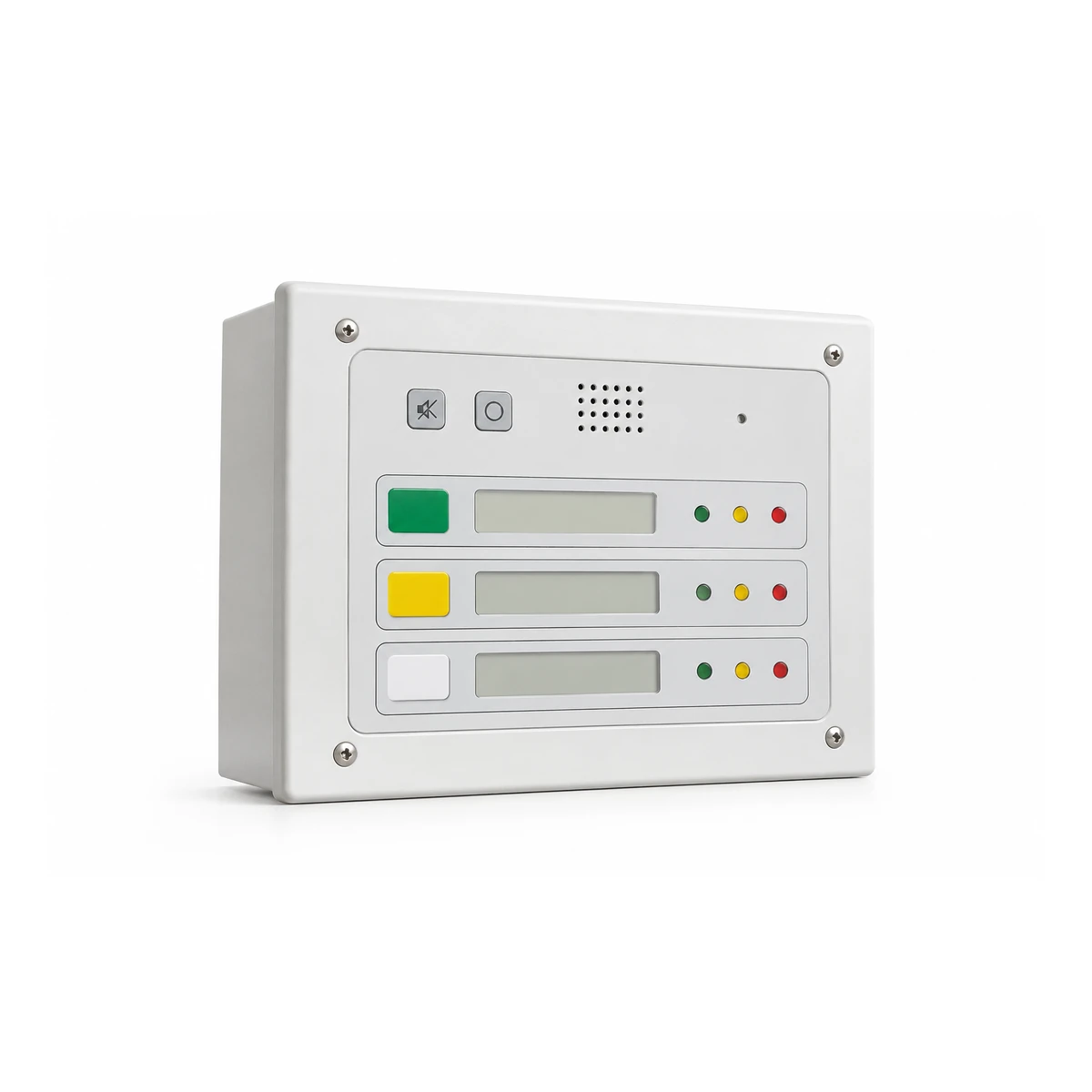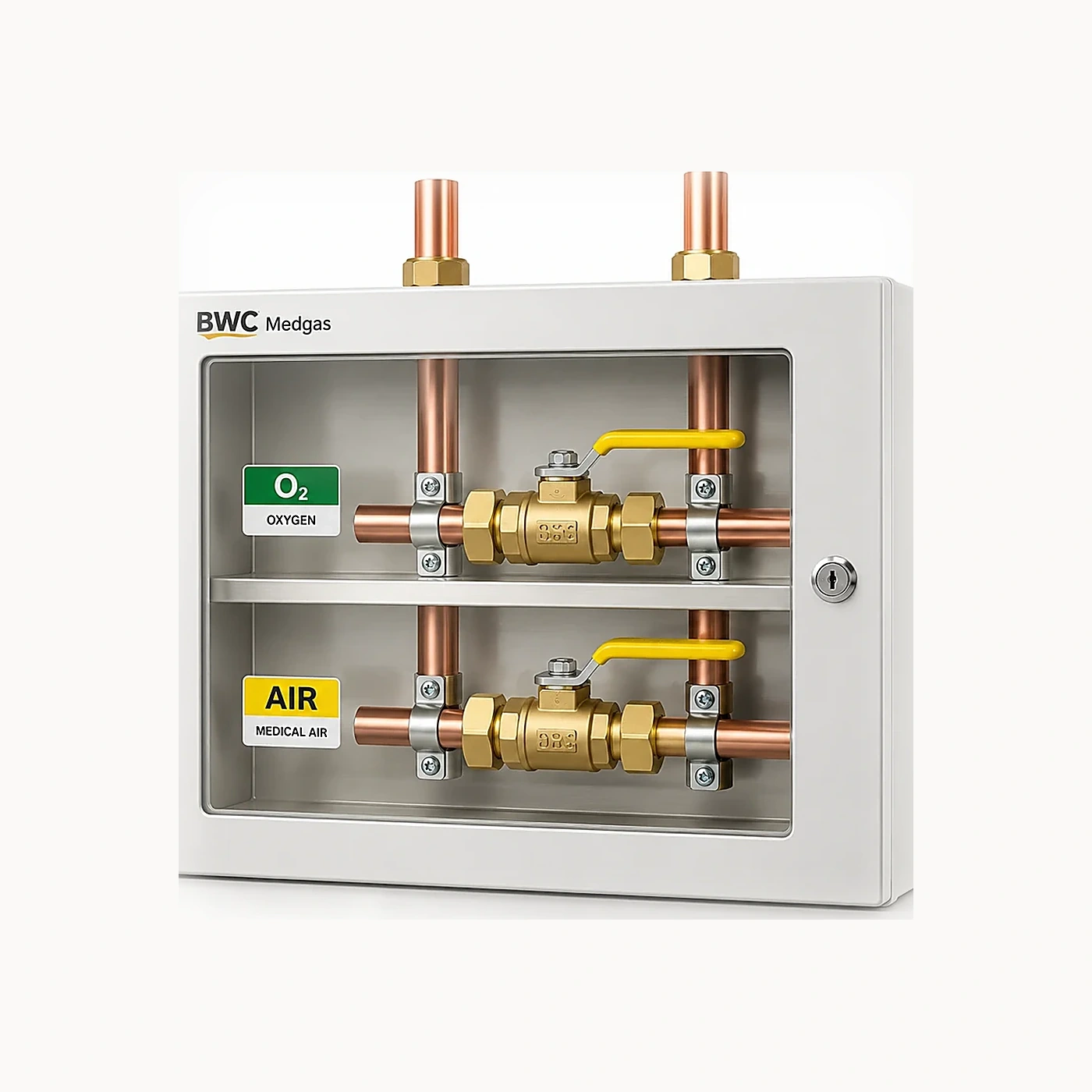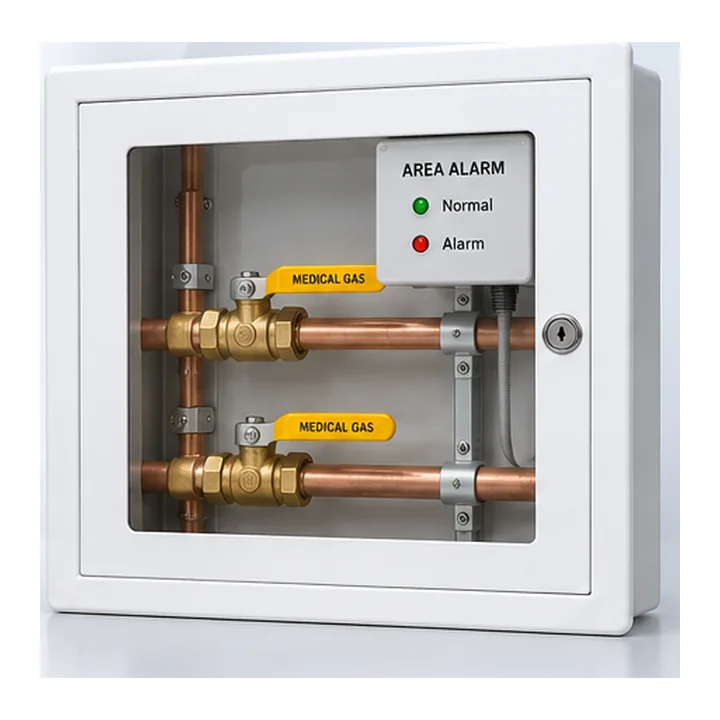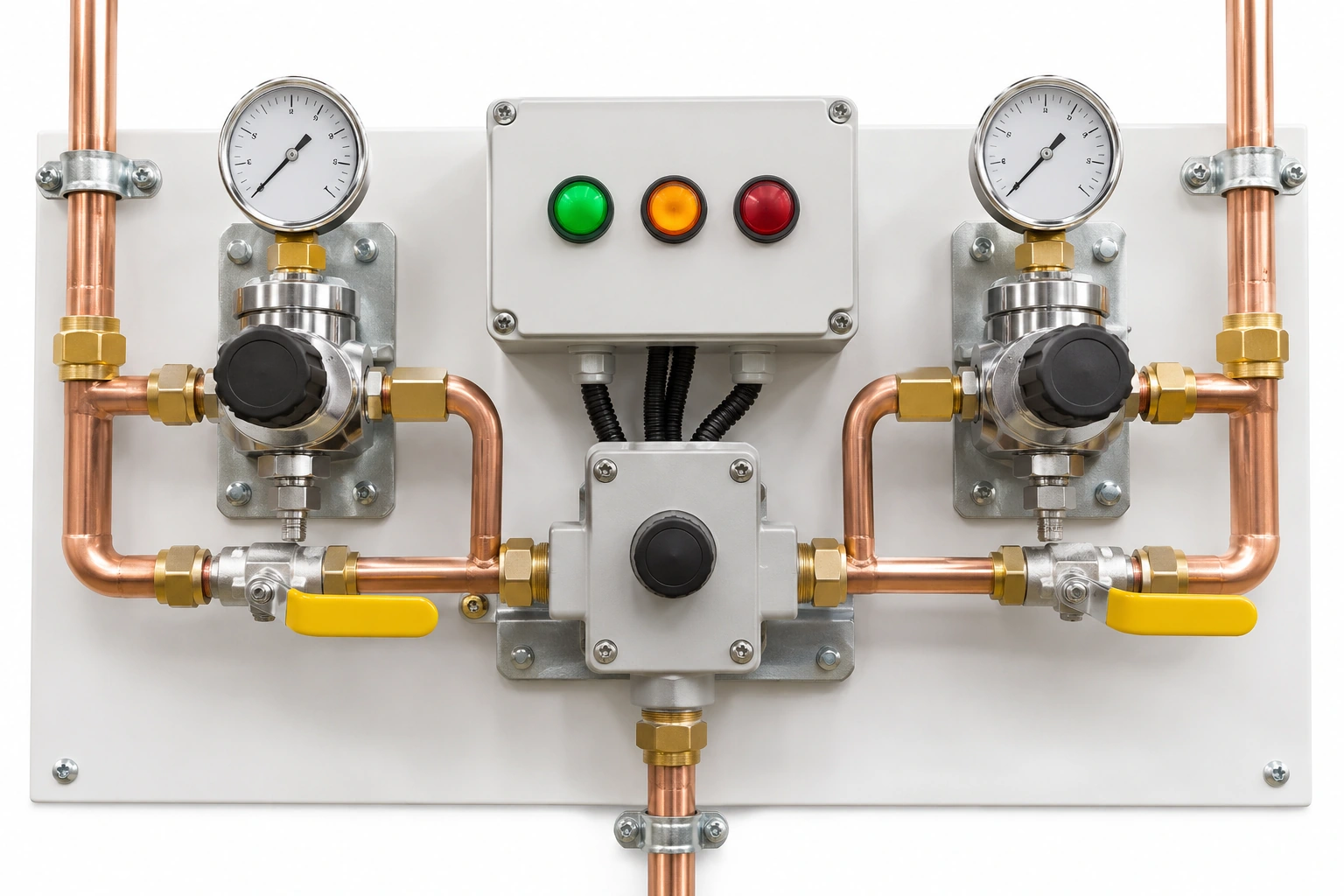
A hospital's oxygen system may have multiple source arrangements and reserve provisions. The operator needs to know not only the measured pipeline pressure but also which approved source status and reserve conditions require an engineering or clinical warning.
A source changeover indication is not the same thing as a downstream ward pressure alarm. Conflating them can lead to an incomplete tender or a handover dossier whose signals cannot be reconciled to the actual plant configuration.
Start with the approved source architecture
The hospital's MGPS designer identifies whether oxygen is supplied through an approved arrangement involving liquid bulk, cylinders, on-site oxygen generation or other specified systems. Each configuration can have its own source-monitoring conditions and reserve strategy under the adopted code.
Obtain the current P&ID, source/standby/backup description, accepted controller functionality and hospital operations plan. Do not invent a generic “two-bank automatic changeover” sequence for a different source type.
ISO 7396-1:2016 covers the required system-level source, control, monitoring and alarms. It includes oxygen and oxygen 93 source arrangements within its scope.
Distinguish source status, monitoring and clinical distribution
Source status: engineering information concerning the supply configuration or operational state.
Source alarm: approved abnormal or reserve condition requiring designated engineering notification and sometimes other notifications under the design.
Area alarm: required clinical-zone condition at the relevant branch or served area.
These categories may be linked, but none should be inferred solely from a dashboard reading marked “normal oxygen.” A source transition can deserve a particular approved indication without necessarily producing an area pipeline anomaly.
Prepare an oxygen-source point register
| Register field | Why it is required |
|---|---|
| Source equipment ID | Physical plant and actual supply path |
| Signal/function | Actual manufacturer controller state or measured condition |
| System role | Primary/secondary/reserve role under approved design |
| Alert category | Defined engineering/clinical alarm responsibility |
| Alarm destination | Designated central, area or other receiving point |
| Electrical interface | Model-specific contact/signal and fail behavior |
| Timing/reset | Accepted functional specification, not a guessed delay |
| FAT evidence | What manufacturer demonstrated |
| Site test | What completed system verified |
| Operations owner | Who acknowledges, investigates and closes events |
A vendor's line-item count for alarm contacts is not a substitute for this mapping.
Separate transition function from warning function
An automatic source controller may have internal logic that changes which equipment supplies gas under defined conditions. The monitoring system observes approved status and warning functions; the actual changeover control is engineered and certified as part of its source arrangement.
The purchasing team should not assume that an alarm panel is responsible for making a changeover decision merely because it displays bank status. Nor should a monitoring integration modify source controller behavior without formal design and safety approval.
Test the right boundary
Manufacturer FAT may demonstrate controller outputs and source equipment behavior under permitted test conditions. Site acceptance must also establish required interfaces, receiving locations and installed-source conditions using authorized procedures.
NHS Scotland SHTM 02-01 (2026) has separate Form A9 for bulk liquid oxygen, A10 for manifolds, A14 for area alarm and A15 for central alarm. Different equipment types and alarm destinations need their own evidence where applicable.
An example of a missing reserve signal
A central panel displays “oxygen source available” from a controller. The engineering specification separately requires notification of a defined reserve-related condition, but the supplier has quoted only a generic source healthy contact.
Before award, reconcile the exact source controller outputs with the approved alarm schedule and hospital operational needs. Do not assume the extra condition can be derived from a single contact or another pressure sensor.
Treat oxygen 93 carefully
An oxygen 93 source design has specific requirements and the gas concentration context differs from traditional >99% oxygen arrangements. The system engineering and equipment acceptance must determine appropriate source monitoring. A generic alarm point list cannot simply be copied across different production architectures.
This article does not claim BWC supplies complete oxygen production plants or specifies clinical gas quality.
Handover without losing signal meaning
The final source dossier should include the actual controller model/firmware, source P&ID, alert descriptions, implemented I/O, central/area receiving mappings, verified tests, open issues, authorized maintenance contacts and relevant changes to facility operations.
An engineering owner should be able to trace each displayed alarm to an actual source state and required process, rather than inferring meaning from its color or a sales brochure.
BWC Medgas product interface
BWC can quote specified manifold components and medical gas alarm interfaces as applicable. Source plant design, changeover controller commissioning and hospital service release remain with the relevant specialist parties.
Send an approved oxygen-source signal and monitoring list to BWC Medgas.
Frequently asked questions
Does a “source normal” status prove the reserve alarm is represented?
No. The actual required source states and their distinct signals must be identified.
Can area alarm testing replace source controller and central alarm evidence?
No. Equipment/control and receiving boundaries need separate approved verification.