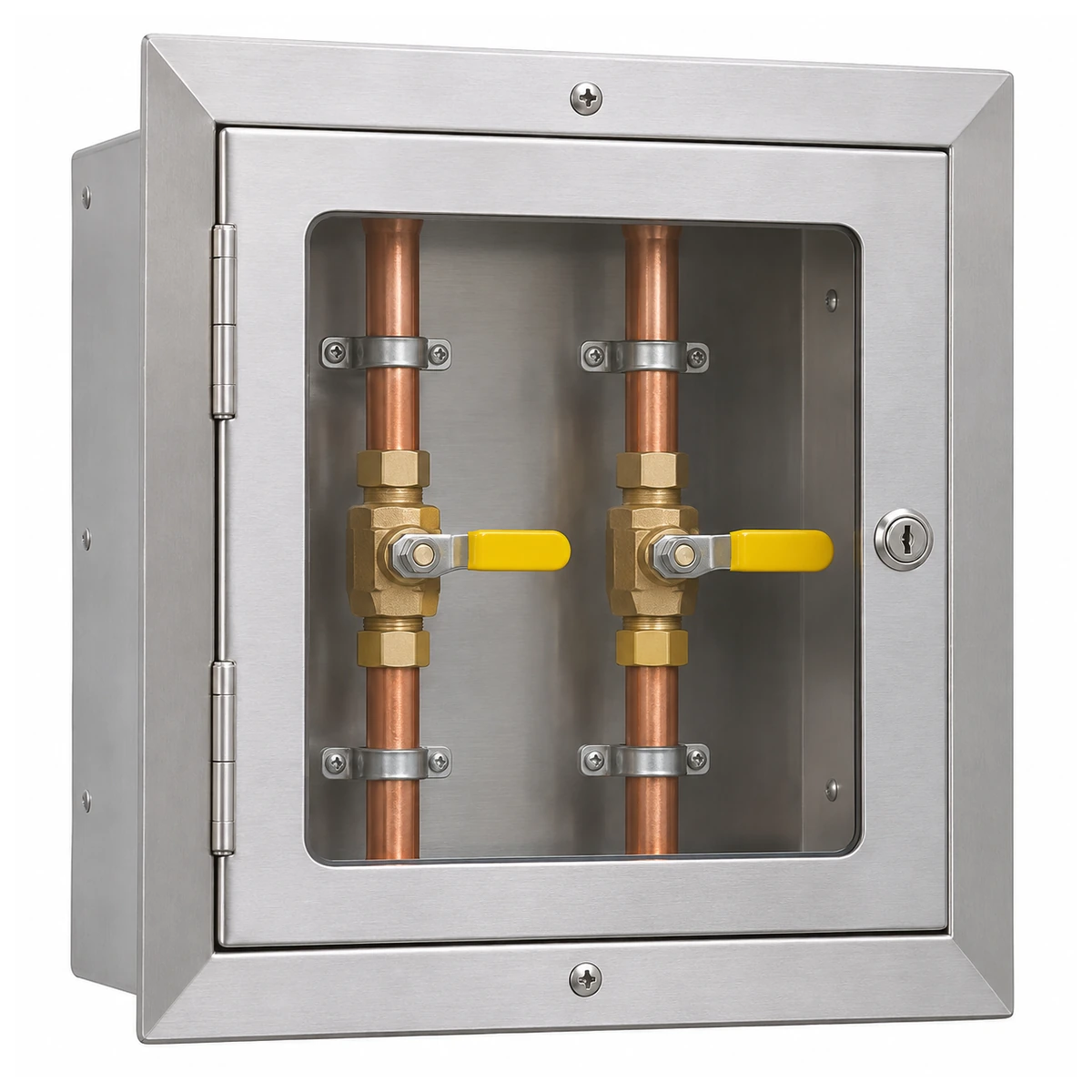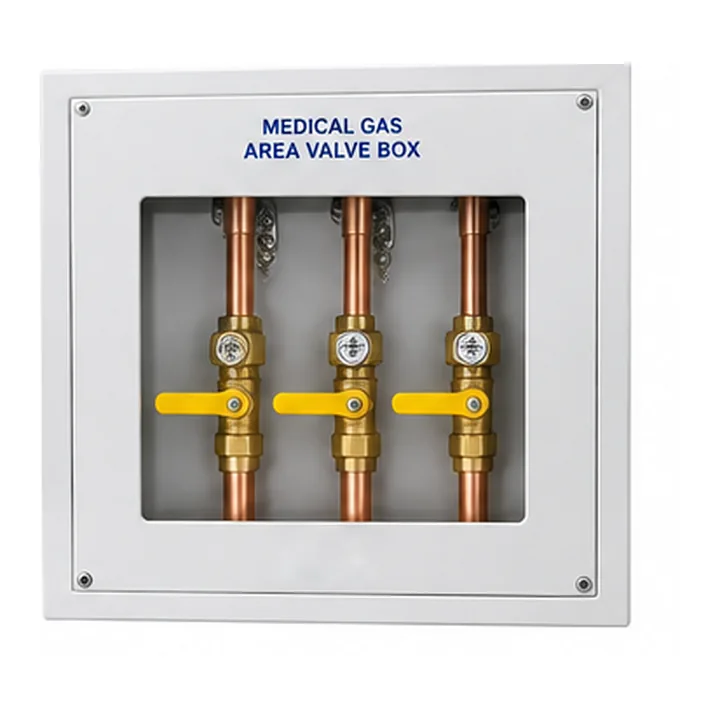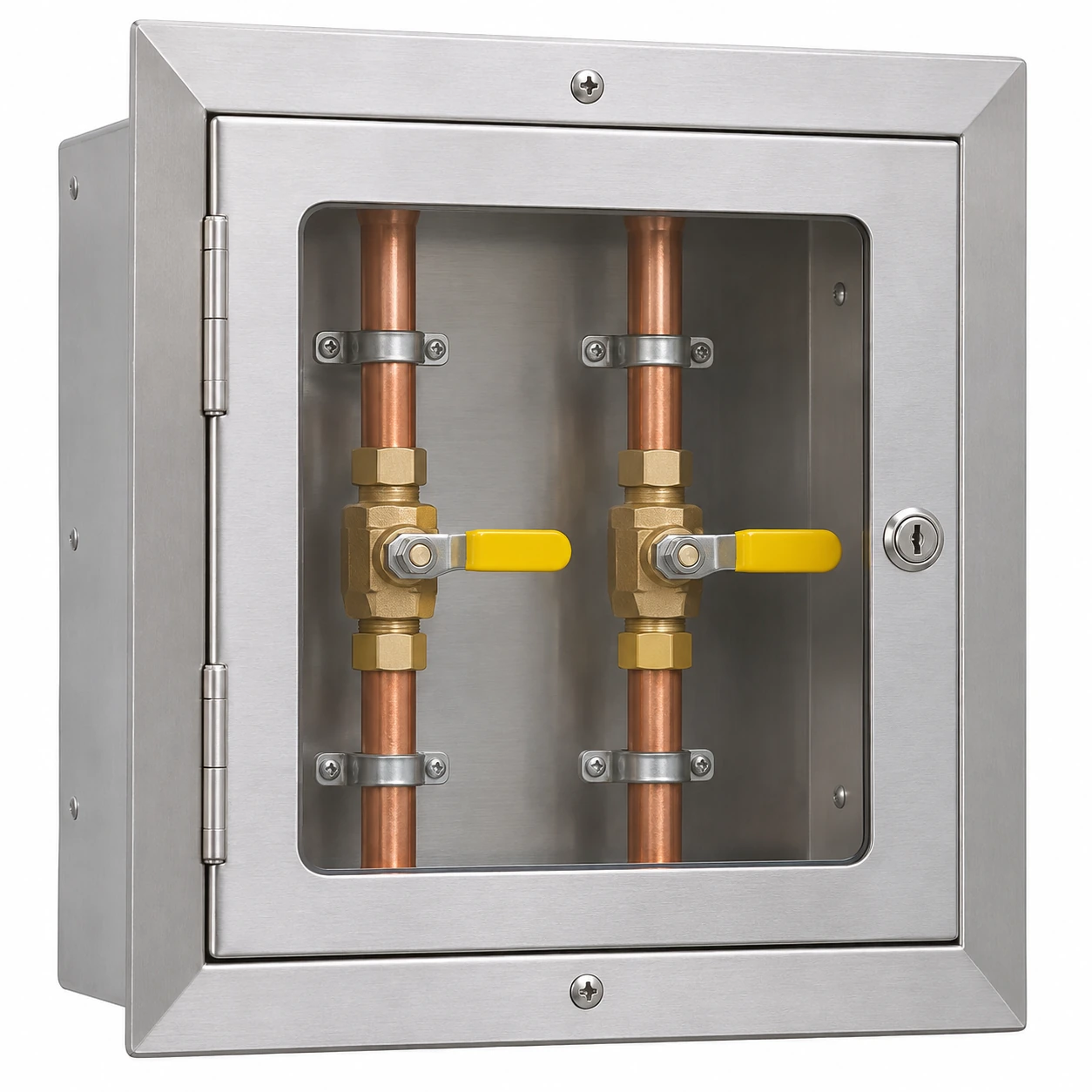

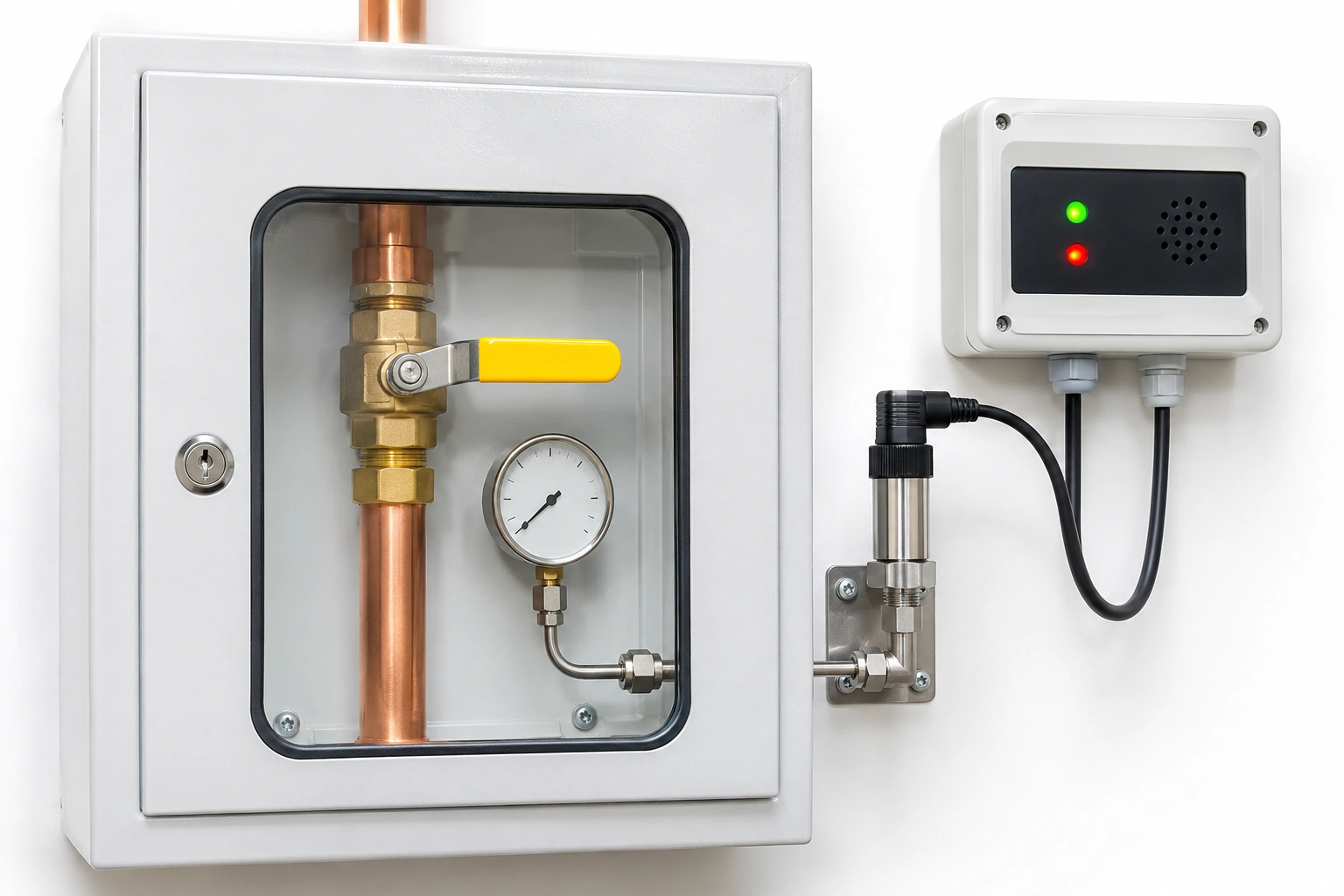
Some area valve boxes are sold with a small pressure gauge; others include a sensor port or a combined alarm display. These photographs can give the impression that pressure monitoring and emergency alarms are automatically included in the valve box purchase.
The correct procurement question is which component actually senses each condition, which system generates the required alarm, and where the signal is received. A gauge visible behind a box window is not necessarily an electronic monitor, and a remote building management dashboard is not automatically a compliant medical-gas alarm.
Separate hardware functions
A shut-off valve provides the intended mechanical isolation function. A pressure gauge provides local indication according to its specified capability. A sensor or pressure switch can produce a monitoring signal. Alarm equipment processes and displays relevant conditions to designated recipients.
These functions may be supplied by different vendors. They should remain separate lines in the equipment and I/O schedules even where a manufacturer offers an integrated assembly.
ISO 7396-1:2016 addresses monitoring, alarms and pipeline systems. The current UK HTM 02-01 and SHTM 02-01 contain more detailed healthcare design and test guidance; the adopted local code remains decisive.
Prepare a service-by-service signal register
| Signal-related item | Design question | Deliverable |
|---|---|---|
| Valve asset and gas | Which approved valve and gas service are monitored? | Device and zone register |
| Measurement point | Where is the relevant sensor connected? | Approved P&ID and location |
| Local indication | What does the operator see and under which circumstances? | Manufacturer technical data |
| Alarm condition | What approved physical state triggers the required notification? | Engineering alarm schedule |
| Local destination | Which clinical or estate staff must receive the information? | Area alarm panel map |
| Remote destination | Which central panel or other system receives it? | Approved signal interface |
| Supply and fault behavior | What happens when power or communication is unavailable? | Functional description/test plan |
| Acceptance record | How will the end-to-end function be evidenced? | FAT/SAT and approved test sheet |
A general phrase such as “pressure alarm included” leaves most of these questions unanswered.
Do not infer sensor settings from another project
The needed normal and abnormal conditions vary by service and system design. An oxygen source arrangement, medical air distribution and vacuum line require distinct approved operating expectations. The supplier should not invent alarm thresholds to fill out an RFQ.
Record the design-approved values, the responsible engineer's revision and the correct pressure/unit basis. Separate intended measurement range from actual alarm setting and from the manufacturer's device limit.
Distinguish indication from actionable alarms
A local dial does not notify clinical personnel away from the cabinet. Likewise, an electronic value displayed in a building management system may be suitable for information but not replace the medical-gas safety alarm specified by the hospital.
Use the adopted rules to identify which signals have to be clinical alerts, operational alarms or merely informational values. Name the receiving team and escalation process. Do not assume every signal needs the same destination or urgency.
Test the complete signal chain
At commissioning, evidence should cover the configured measurement and the defined receiving locations, not merely a controller's internal demonstration. NHS Scotland's SHTM 02-01 (2026) provides Form A4 for AVSU checks and Form A14 for area alarm panel testing; these are distinct verification subjects.
The project acceptance plan should reference qualified test personnel and permitted methods. A public guide must not instruct staff to induce low oxygen pressure or close a live valve as a demonstration.
Worked interface discrepancy
The box vendor quotes a three-service valve assembly with sensor ports; the alarm vendor quotes a two-gas display, and the electrical subcontractor assumes the third service is monitored by building management.
The technical review should identify the missing required monitoring function and require an approved amended alarm and hardware schedule before commercial award. Neither vendor's separate brochure proves the finished system complies.
Request the exact deliverables
Ask for a drawing identifying pressure tapping and gauge/sensor ports, approved service and materials, any electronics and power requirements, output types, terminal mappings, cable/communications responsibility, alarm text/state mapping, and factory/site testing responsibility.
If gauges and sensors are optional extras, require their individual costs and model numbers. Review the mechanical clearance and maintainability of an integrated panel before changing the physical design.
BWC component opportunity
BWC Medgas can supply selected area valve boxes, line valves and medical gas alarm components against an approved interface schedule. BWC supply of individual components does not replace a hospital's integrated alarm or system verification.
Discuss valve box and area alarm interfaces with BWC Medgas.
Frequently asked questions
Is a local pressure gauge the same as a required area alarm?
No. Indication, detection, alarm logic and receiving location must be independently specified.
Can one sensor be assumed suitable for oxygen, vacuum and air?
No. Service suitability and required performance must be verified for the exact device.