Once a medical gas pipeline disappears behind a ceiling or a finished wall, even a simple missing label or poorly documented support can become expensive to investigate. A strong first-fix acceptance process prevents that uncertainty before architectural finishes conceal the work.
The 2026 Scottish SHTM 02-01 identifies Form A2 for carcass first-fix pressure, labelling/marking, sleeving/supports and cross-connection checks. These are distinct inspection questions even when they are captured on one form. This guide explains how to make the evidence usable for future maintenance and phased project acceptance.
Establish the inspection boundary
A test record should identify a specific service, plant/branch connection and installed physical extent, not just “Level 3 passed.” Reference an approved drawing revision and the section's accessible end points. Confirm what is inside the inspection boundary and what remains excluded.
The ISO 7396-1:2016 pipeline framework covers design, installation, test, commissioning and documentation. Its fourth edition was still under publication in November 2026. Use the contractually adopted edition and local healthcare requirements rather than silently changing standards mid-project.
First-fix evidence matrix
| Inspection field | Evidence to retain | Typical document owner |
|---|---|---|
| Physical section | Start/end points, floor/room route and drawing revision | Installer and surveyor |
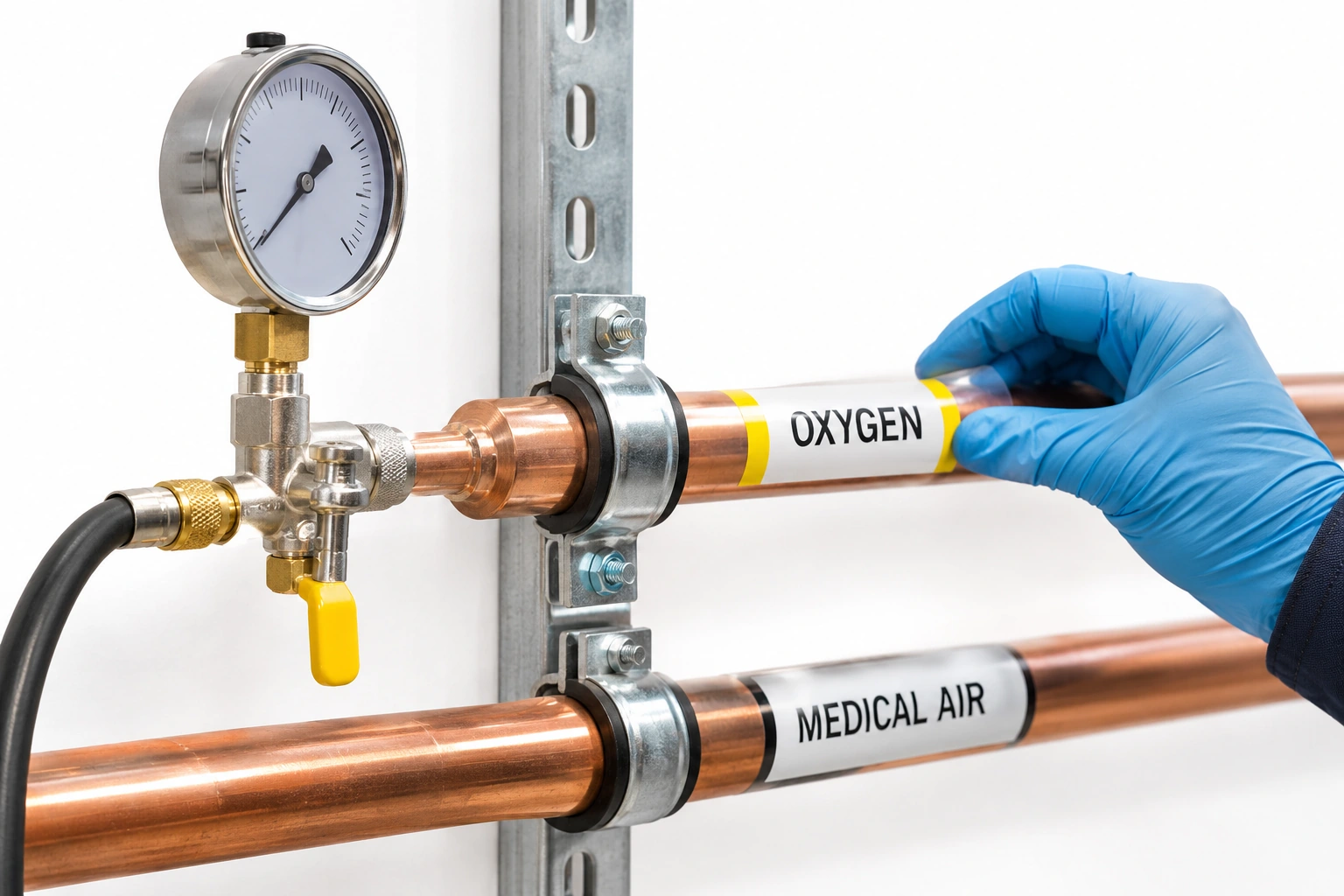
| Gas/service identity | Pipe labels and corresponding as-built identification | Contractor/test witness |
| Mechanical supports | Locations and conformity to the approved arrangement | Installation supervisor |
| Sleeves/penetrations | Protected penetrations and relevant fire/physical detailing | Building services coordinator |
| Pressure test | Authorized method, calibrated instrument, recorded observations | Competent MGPS tester |
| Cross-connection controls | Identified systems and documented inspection/test boundary | Qualified verifier |
| Excluded portions | Unfinished or later-phase sections | Project controller |
| Defect closure | Nonconformance, disposition, corrective evidence and retest | Quality lead |
A photograph of insulated piping without a location reference has little long-term evidential value.
What a controlled test sheet needs
Record test procedure ID, conditions, method and instrument identification. State the applicable acceptance criteria by reference to the project's approved test specification; do not copy a generic pressure or hold period from another country's project.
Retain the observed readings and test outcome with the witness's identity and date. Any leaking or otherwise failed section should remain flagged until the authorized correction and relevant retest are documented.
Coordinate with other works
Ceiling closure is a hold point because later access can be difficult. The hospital and main contractor should agree who releases an area for the next trade and which evidence must exist before that release.
Not every item that looks tidy is technically accepted. Conversely, a test failure in one identified section should not be inaccurately described as a failure of the entire building without understanding the affected boundary.
Case example: an unlabeled riser branch
A contractor submits a first-fix pressure test for a large floor zone. The drawing does not distinguish the oxygen riser branch from a newly introduced medical-air section, and part of the route is already enclosed.
The right project action is a traceable drawing/identity reconciliation and any qualified reinspection required by the adoption standard. A generic “pressure passed” note cannot establish correct service identity.
Link first fix to later commissioning
Form A2 is not the same as Form A3, which addresses second-fix pressure and vacuum leakage checks, or Forms A7/A8, which address terminal specificity and function in the Scottish schedule. These are sequential evidence boundaries rather than substitutes for one another.
The 2026 NHS England HTM 02-01 also provides a design, validation and verification framework, including project test forms. Each hospital should identify its own adopted form set before construction.
Component procurement relevance
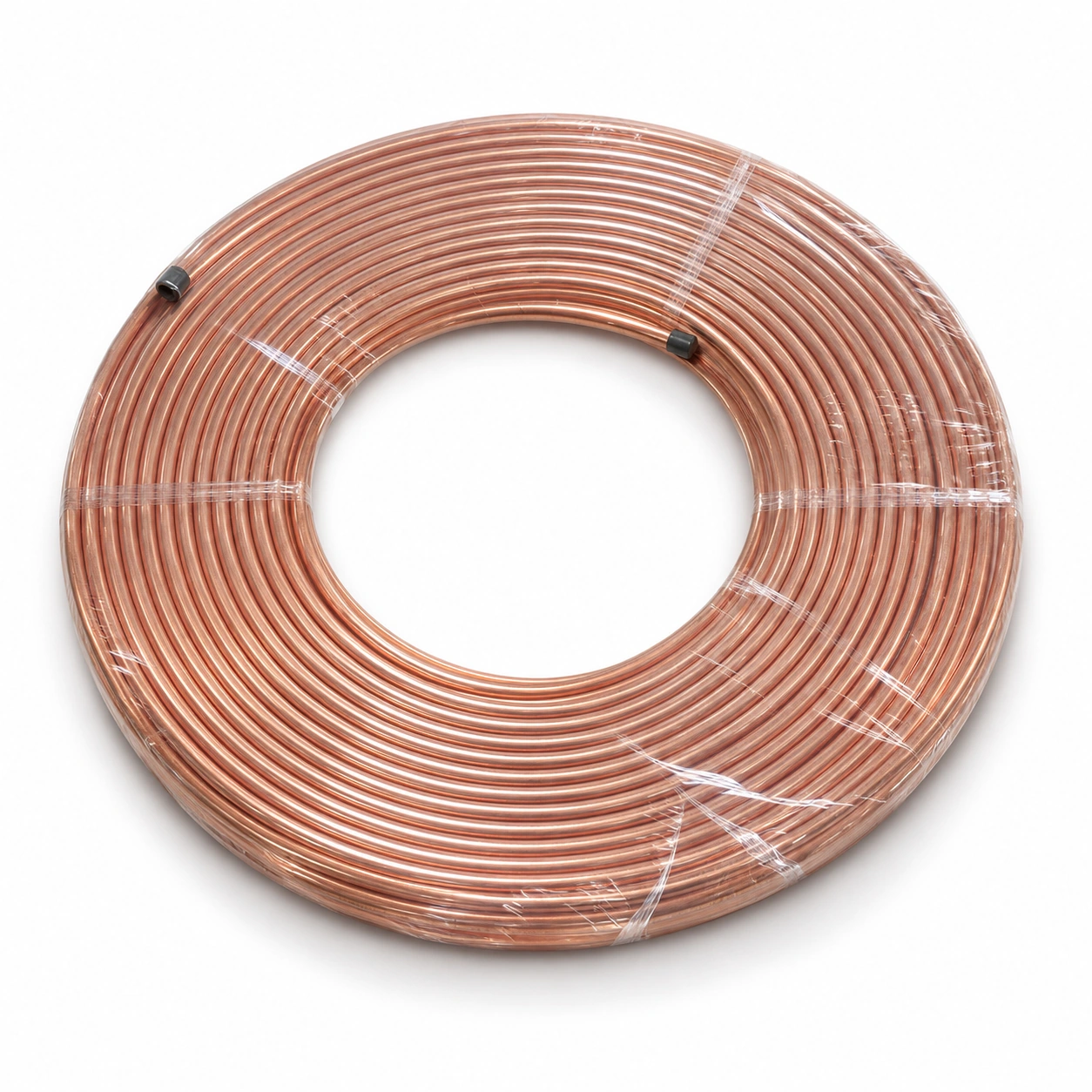
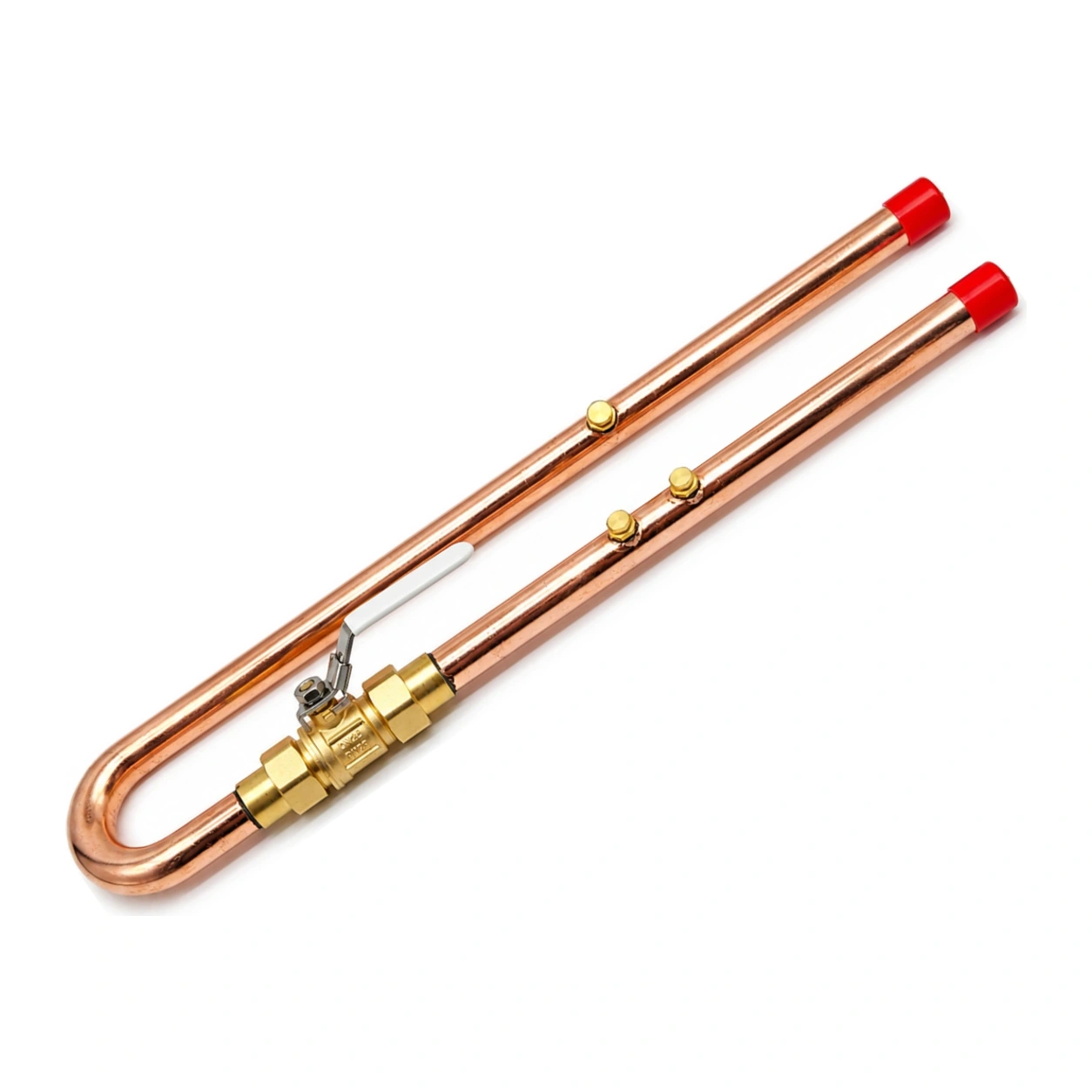
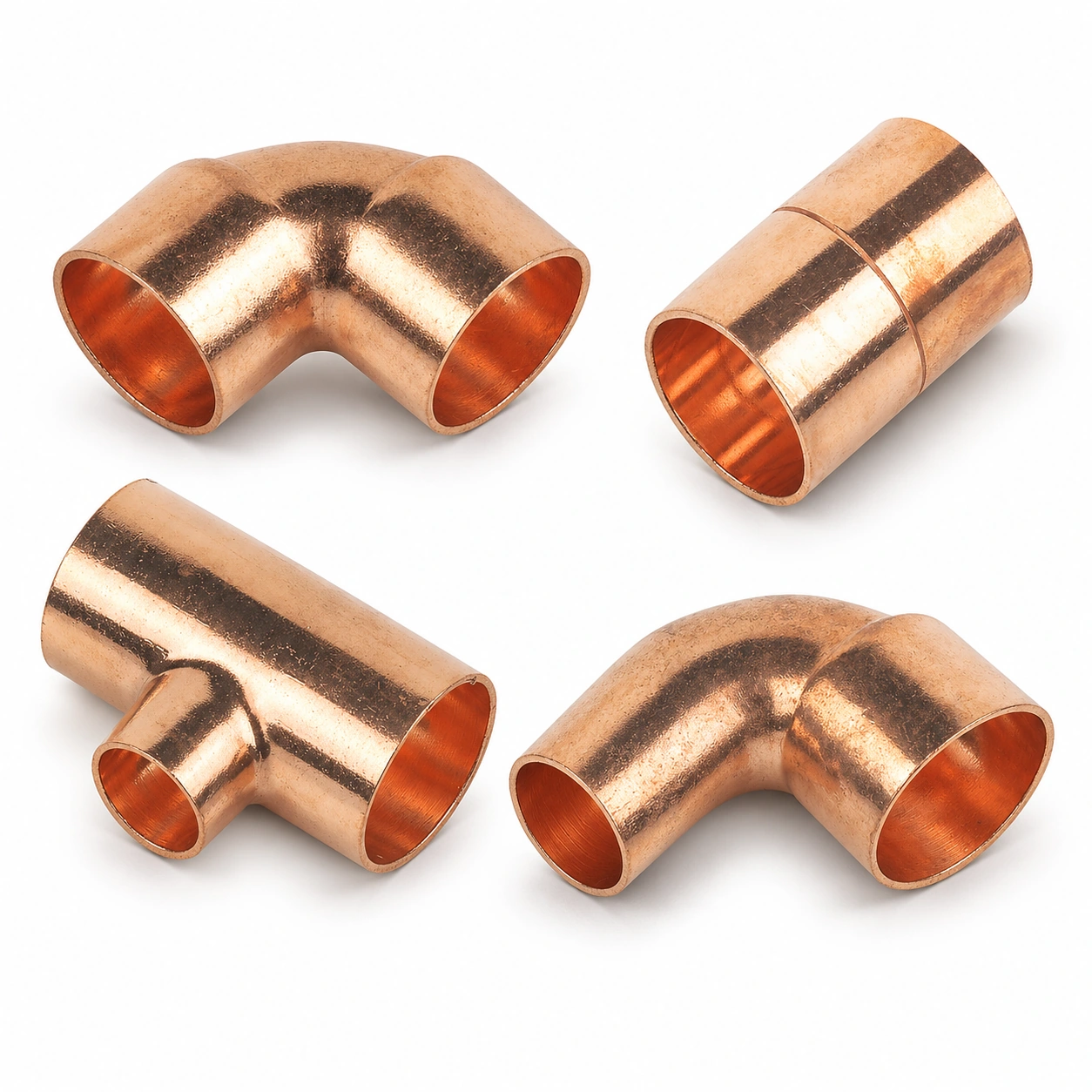
If pipe tails or terminal installations are deferred, identify their exact as-built locations and intended service early. This reduces confusion when ordering medical-gas copper pipe and fittings, isolation valves and related accessories.
BWC Medgas can support component procurement to approved drawings; first-fix testing and authority sign-off remain with the competent site team.
Send an approved first-fix components schedule to BWC Medgas.
Frequently asked questions
Is a passed pressure test enough to close the ceiling?
Not necessarily. Required identity, support, penetration, cross-connection and inspection evidence must also be accepted.
Can one floor-wide form represent unfinished sections?
Only when its defined test boundary and exclusions clearly support that claim.