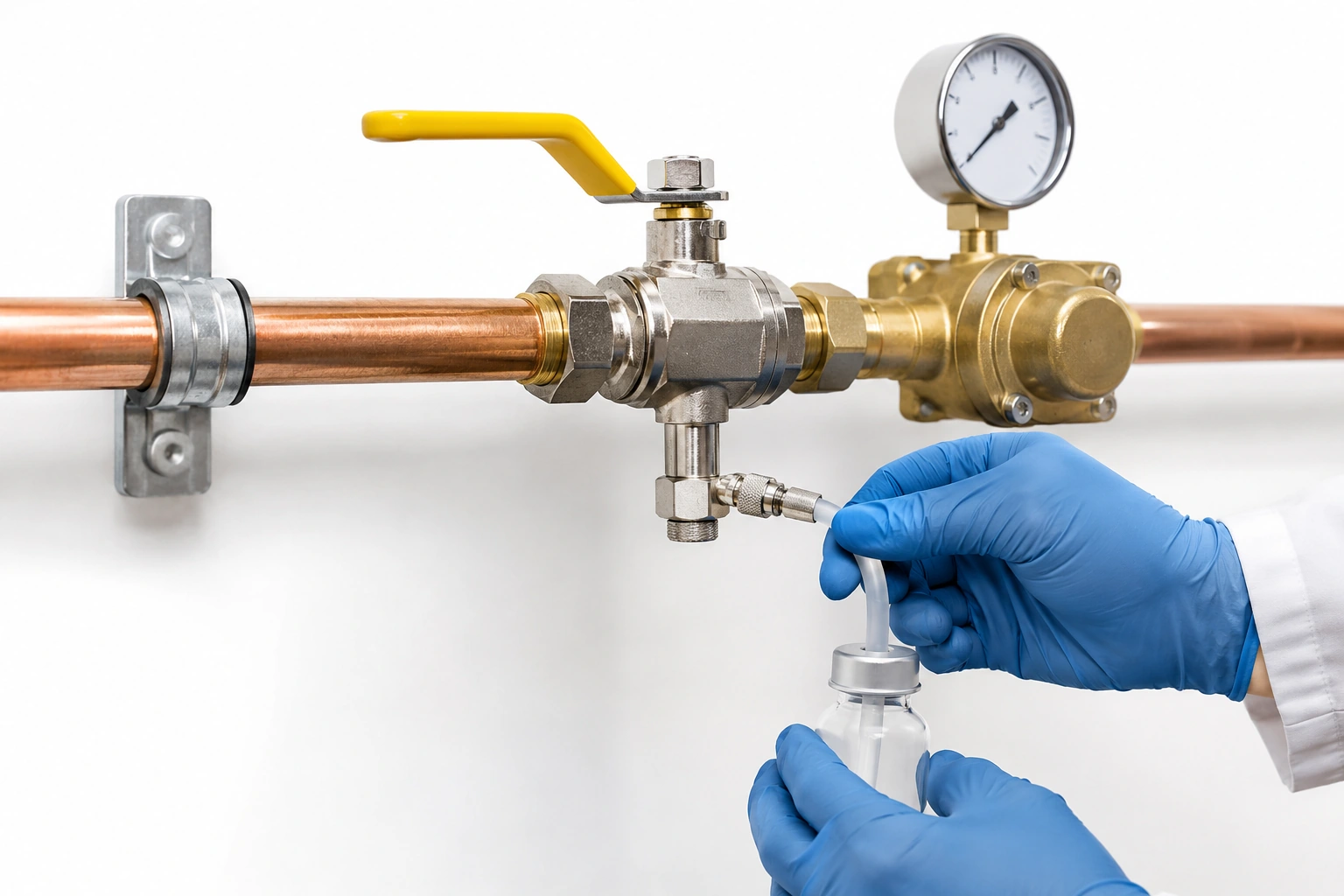
A pipeline may hold pressure, contain the right valves and still be unsuitable for clinical release if gas identity, particulates or supplied gas quality have not been accepted. Quality verification is more than a box marked “clean”: the project needs to know where the sample came from, which gas/service was present, and which accepted criteria applied.
In NHS Scotland SHTM 02-01 (2026), A16 covers particulate matter tests, A19 purging and filling, A20 medical gas identification tests, and A21 medical gas quality tests. These evidence areas should be connected but not merged into a single undifferentiated certificate.
Four distinct engineering questions
Particulate checks examine the relevant contamination concern under an approved method. Purging and filling concern controlled introduction/replacement of gases as required by the project plan. Gas identification verifies correct service identity at the intended sampled location. Gas-quality testing checks the specified gas and applicable quality requirements.
A pressure test does not demonstrate all four. Nor does a manufacturer's copper-tube cleaning statement prove the completed hospital pipeline is free from downstream construction contamination.
Sampling and identity register
| Data field | What to record | Why it matters |
|---|---|---|
| Test identity | A16, A19, A20 or A21, as applicable | Defines the question |
| Source/service | Exact gas and supply configuration | Prevents wrong interpretation |
| Sampling position | Plant, branch or terminal location | Locates actual evidence |
| Installed boundary | Open/replaced portions included in test | Limits acceptance claim |
| Instrument/laboratory | Approved method and traceability | Quality of measurement |
| Gas condition | Defined test state and relevant environment | Reproducibility |
| Acceptance basis | Adopted code, gas specification and criteria | Objective conclusion |
| Deviation/closure | Failure, corrective action and retest | Audit trail |
Measurements without an exact sampling point can be impossible to map back to an affected clinical room.
Consider both source and distribution contamination
An approved source-gas certificate addresses the specific source sample and supplier. Pipeline construction, new fittings, valve installation or changes in cleaning/handling can create separate contamination risks downstream.
The commissioning programme should determine required evidence at the correct points under the adopted standard. Avoid claiming that the manufacturer has certified the installed network merely by providing a cleaning statement for an individual component.
Example: a new oxygen branch with old sample results
A contractor installs another operating room and supplies a recent oxygen purity result from the hospital's main source. The extension includes new soldered/brazed pipework and terminal units that were not part of the original sampled network.
That source result does not on its own establish cleanliness and identity of the new branch. The appointed test authority must define any required downstream tests and acceptance boundary.
Prevent inadvertent cross-service errors
Identification tests should be linked to the installed terminal and service route. An oxygen label and visually correct outlet housing are not substitutes for qualified source-to-outlet identity verification.
ISO 9170-1:2017 concerns terminal unit product characteristics; installed network service identity is part of ISO 7396-1:2016 commissioning responsibilities. The records should preserve both levels.
Qualified methods and clinical continuity
Purging and testing medical gas pipelines require specialized expertise, approved gas/media, safe arrangements and hospital permits. Never use a general article as an instruction for connecting test cylinders or opening clinical valves.
Sampling may involve sensitive detection equipment or laboratories; the facility should record the actual accepted method rather than substituting a general workshop air-quality meter.
Quality chain at handover
Link A16/A19/A20/A21 results to test section IDs, approved as-built drawings, equipment acceptance and authorized release. If a later intervention changes a relevant boundary, the responsible authority must determine necessary retesting before re-use.
2026 NHS England HTM 02-01 covers design, validation and operational management. Final medical gas criteria depend on the relevant adopted code, source specification and local health regulatory framework.
BWC component role
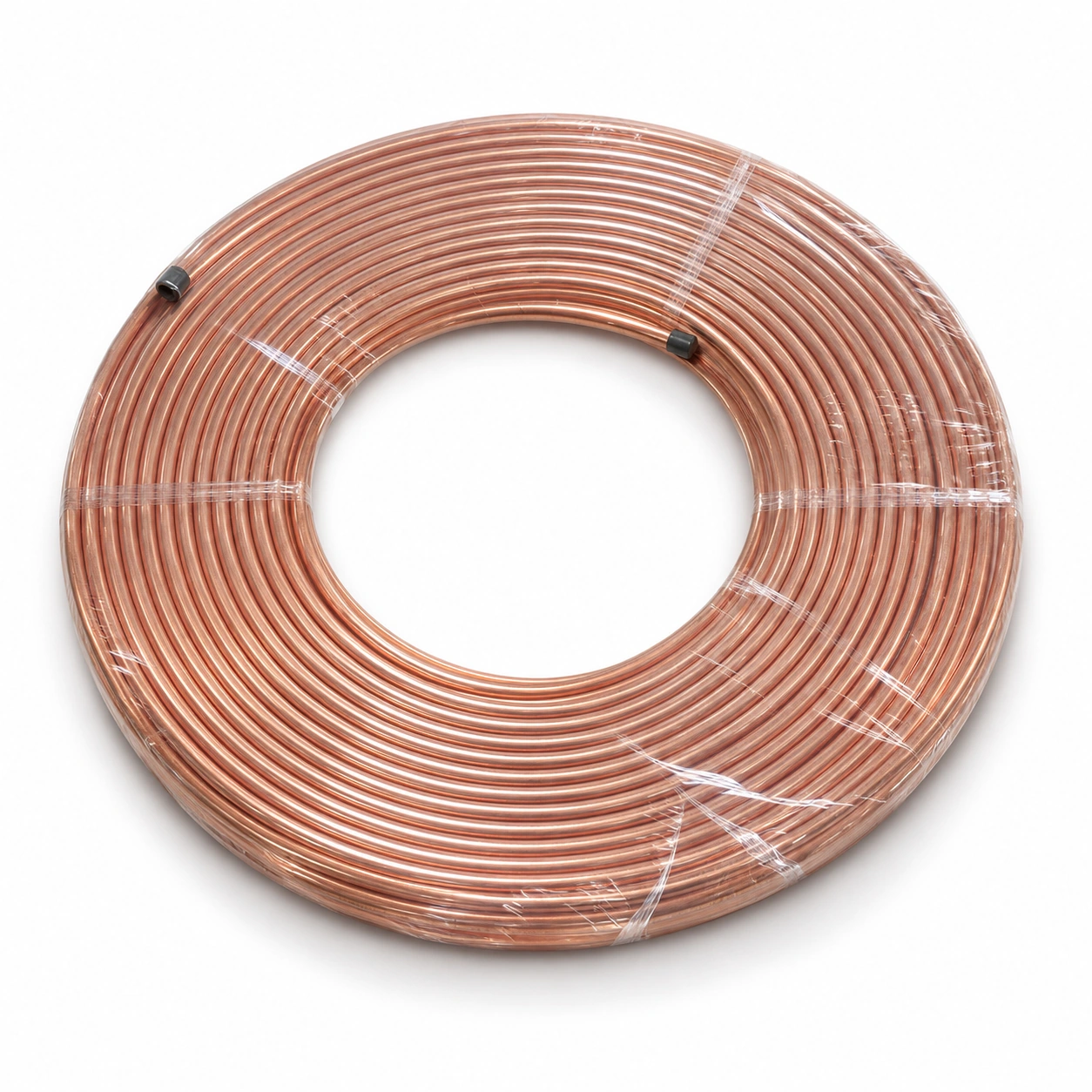
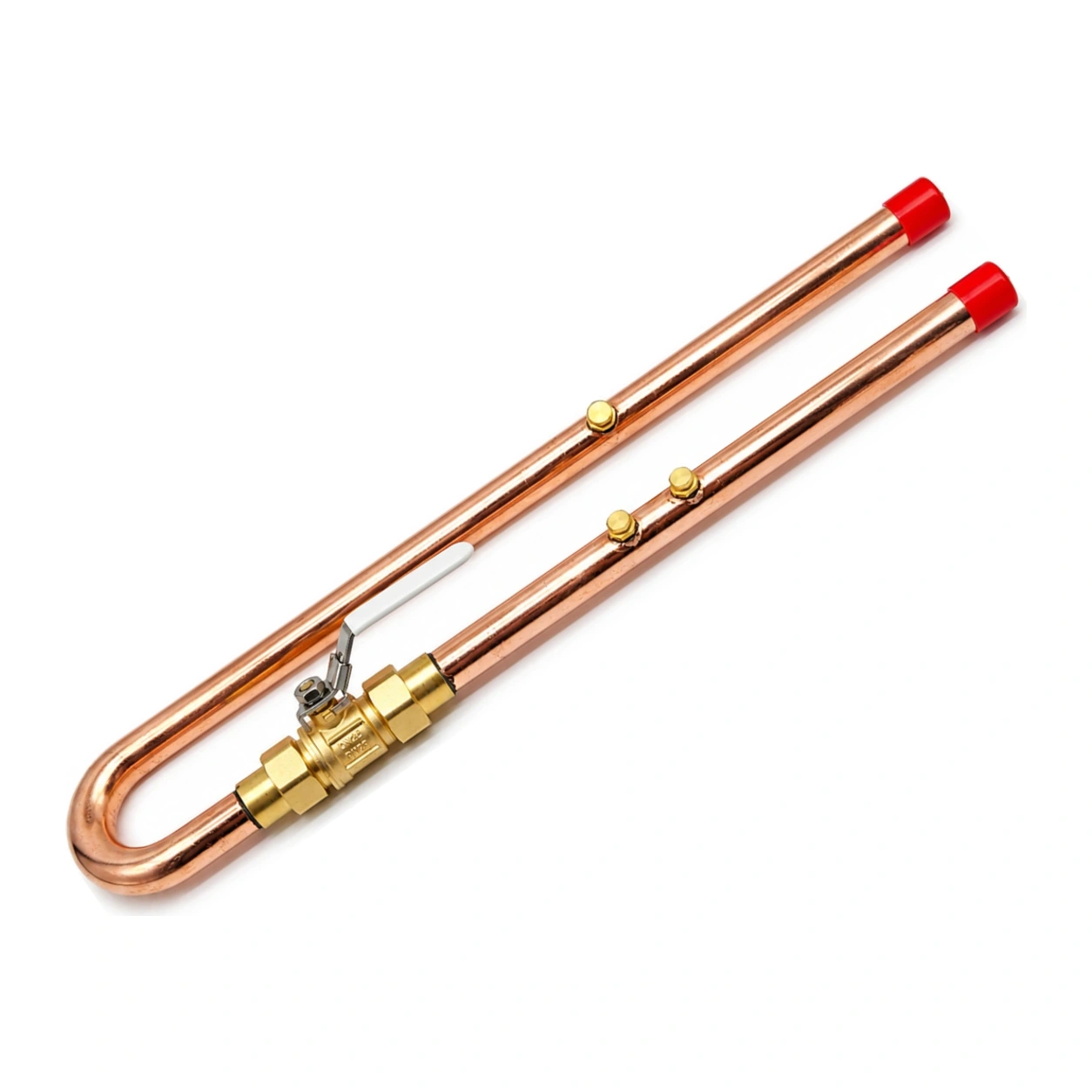
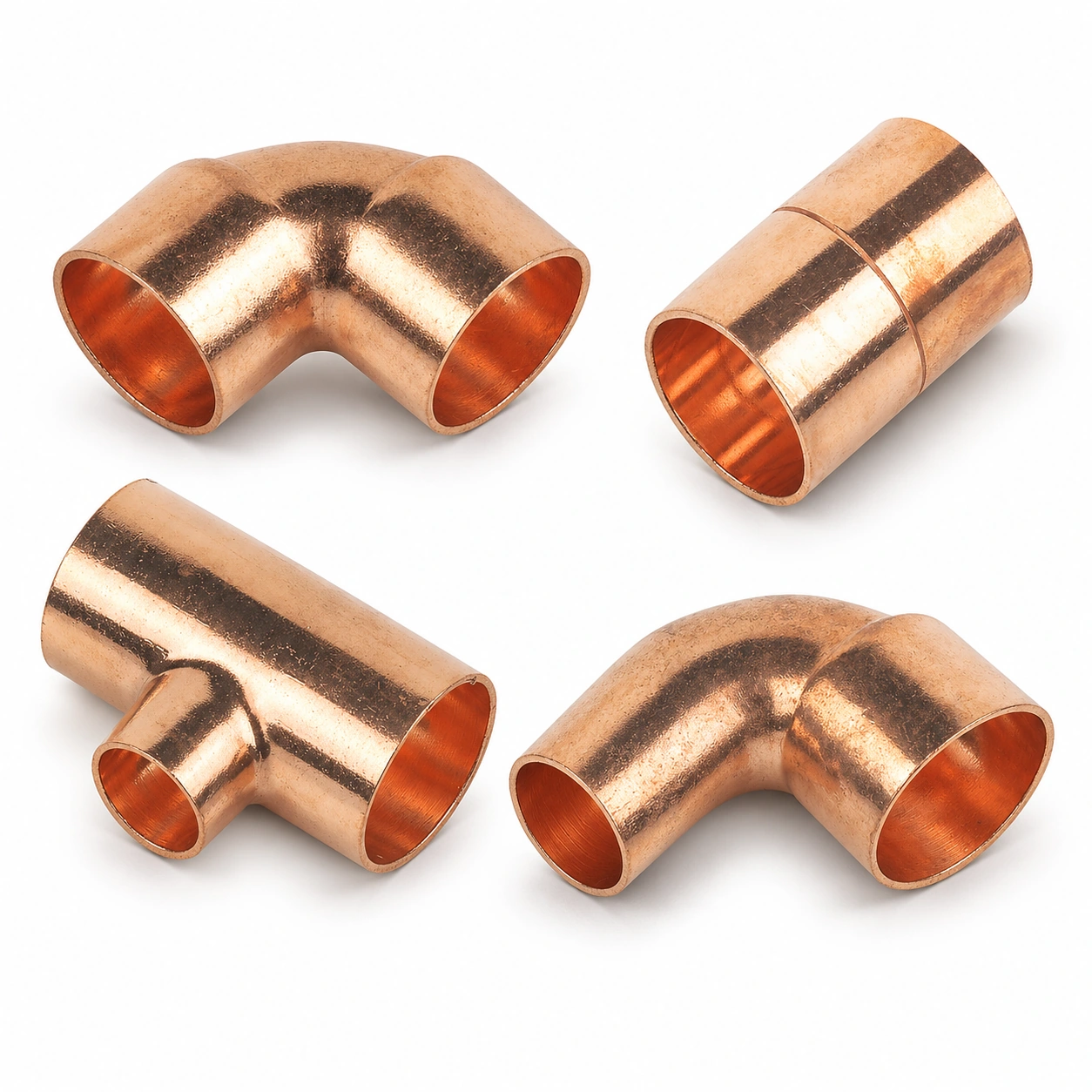
BWC Medgas supplies selected degreased medical copper tubes and fittings, medical gas terminals and valves. Material documentation and proper packaging support pipeline quality, but do not certify installed-system gas purity.
Discuss model-specific cleanliness documentation for BWC components.
Frequently asked questions
Does a clean medical-grade copper certificate replace final gas identification?
No. Material cleaning and as-installed service identity are distinct.
Can an oxygen source purity result represent all newly installed terminal units?
Not without the accepted source-to-terminal verification programme.