Medical gas infrastructure should not be maintained as one undifferentiated item labelled “medical gases.” Its sources, distribution sections, valves, alarms and patient connection points fail in different ways and affect different clinical areas. A useful preventive-maintenance programme links every task to a particular asset, an identified risk and evidence that the work was completed.
The [Joint Commission's piped medical gas maintenance guidance](https://www.jointcommission.org/en-us/knowledge-library/support-center/standards-interpretation/standards-faqs/000001340), updated in April 2026, explicitly notes that its standards do not prescribe one testing interval for all piped medical gas and vacuum systems. Hospitals establish a maintenance strategy based on manufacturer recommendations or an appropriately justified alternative equipment maintenance approach; system complexity, age, condition and patient acuity inform the decision. That is not permission to omit tasks required by applicable law or by a locally adopted standard.
First build a maintainable inventory
Separate the inventory by equipment function, patient impact and maintainable assembly. A single line reading “oxygen system” cannot prove what was actually checked.
| Inventory field | Entry to retain | Why it matters |
|---|---|---|
| Unique asset ID | MG-O2-AVSU-3F-04 | Trace the physical item across all work orders |
| Gas/service | Oxygen, medical air, vacuum or other designated service | Prevent service-specific confusion |
| Location and boundary | Plant room or clinical zone served, approved drawing reference | Understand patient impact |
| Manufacturer/model | Exact type, revision and serial/lot where provided | Obtain the correct maintenance instructions |
| Risk and criticality | Consequence, redundancy, clinical dependency, recent faults | Justify inspection priorities |
| Maintenance basis | Manufacturer manual, adopted rule or approved alternative strategy | Explain the chosen task and interval |
| Work status | Last completed, next due, defects and closure | Demonstrate execution |
| Responsible personnel | Qualified person, reviewer and hospital authoriser | Preserve accountability |
ISO 7396-1:2016 establishes a systems framework for compressed medical gases and vacuum, while NHS England HTM 02-01 Part B (August 2026) and NHS Scotland SHTM 02-01 Part B (September 2026) give region-specific operational-management guidance.
Rank risk before assigning resources
A critical theatre oxygen source alarm deserves a different management response from an uncomplicated, low-impact administrative device. Risk classification should consider likelihood of failure, clinical consequence, ability to detect the failure, installed redundancy, spare availability and time required for safe restoration. Record the judgement and its approver rather than using an undocumented colour-coded spreadsheet.
A practical planning method is to establish required activities from the adopted rules and manufacturer documents, then choose and document a risk-based schedule for activities whose frequencies are left to the organisation. Increase scrutiny after a failure trend, configuration change or incident. Reassess when clinical use changes, for example when a ward becomes a higher-acuity unit.
A practical three-level work-plan
System level: source availability, reserve arrangements, distribution condition, alarm monitoring, contingency preparation and controlled record review.
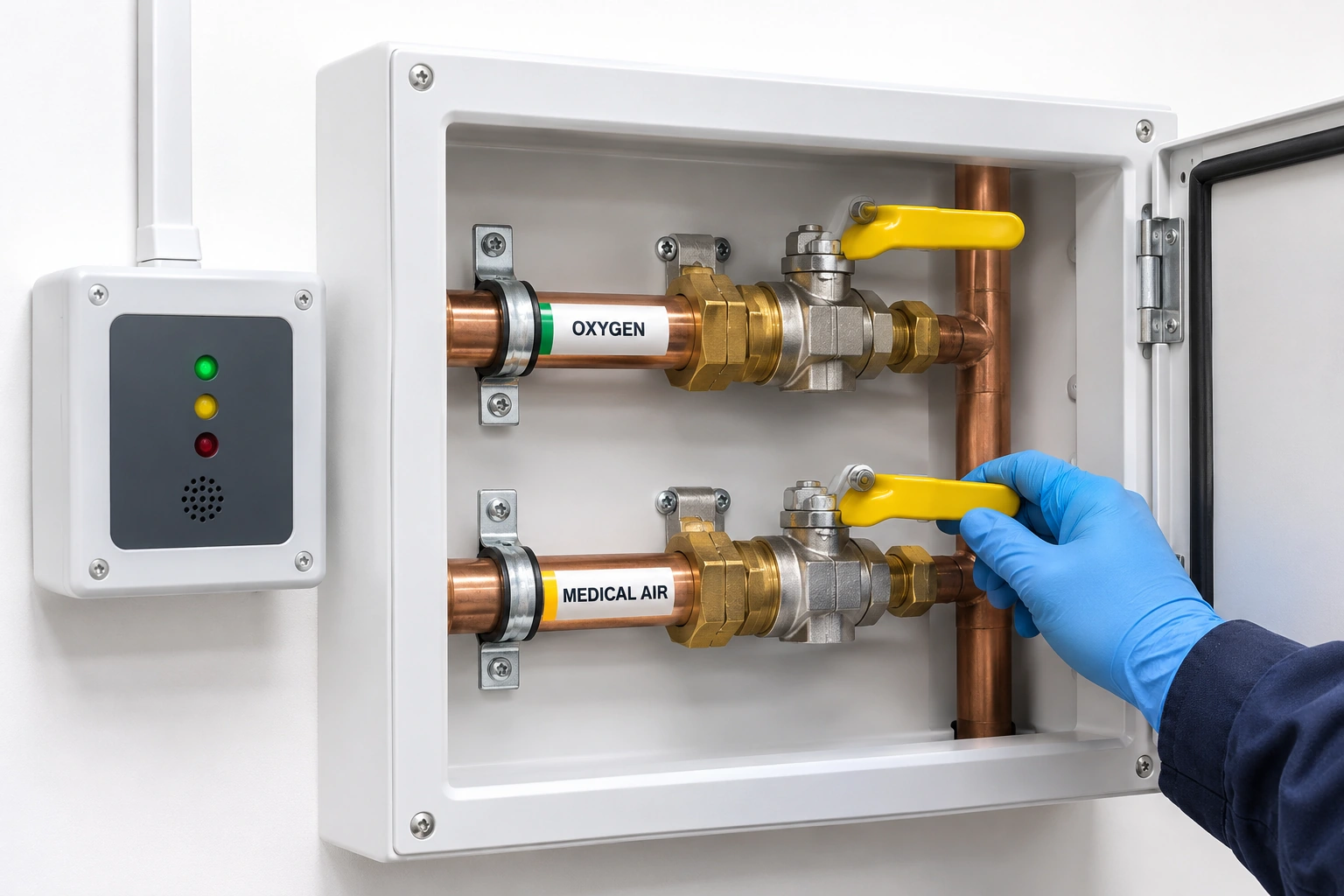
Asset level: the specific regulator, valve, outlet, transducer, compressor, dryer, vacuum unit or alarm module, with its maker's permitted maintenance activities.
Clinical interface: affected rooms, staff notification, temporary supply arrangements, signed release and any restrictions during a work window.
Do not treat all observations as repair authority. A routine visual round may identify a fault; opening a valve assembly or altering live gas supplies requires the site's approved permit, competence and clinical continuity controls.
A monthly review that actually changes decisions
At a monthly maintenance review, compare work completed against the approved plan. Focus on overdue high-criticality tasks, repeated faults, missing parts, incomplete authorisations and equipment recently changed. Track work-order closure evidence rather than only the percentage of tasks marked “complete.”
A concise management dashboard can show: critical assets with open defects; overdue approved tasks; alarms repeated by zone; unclosed permits; and replacement parts awaiting technical approval. This is more useful than a simple count of technician visits.
Example: an older surgical ward
An ageing surgical ward has six pressure-related alarms in eight weeks but the maintenance sheet still says “annual check completed.” The first improvement is not to guess a new interval. Reconcile the alarm log, affected zones, associated pressure sensors and service record; identify the fault mechanism and update the risk evaluation and approved schedule.
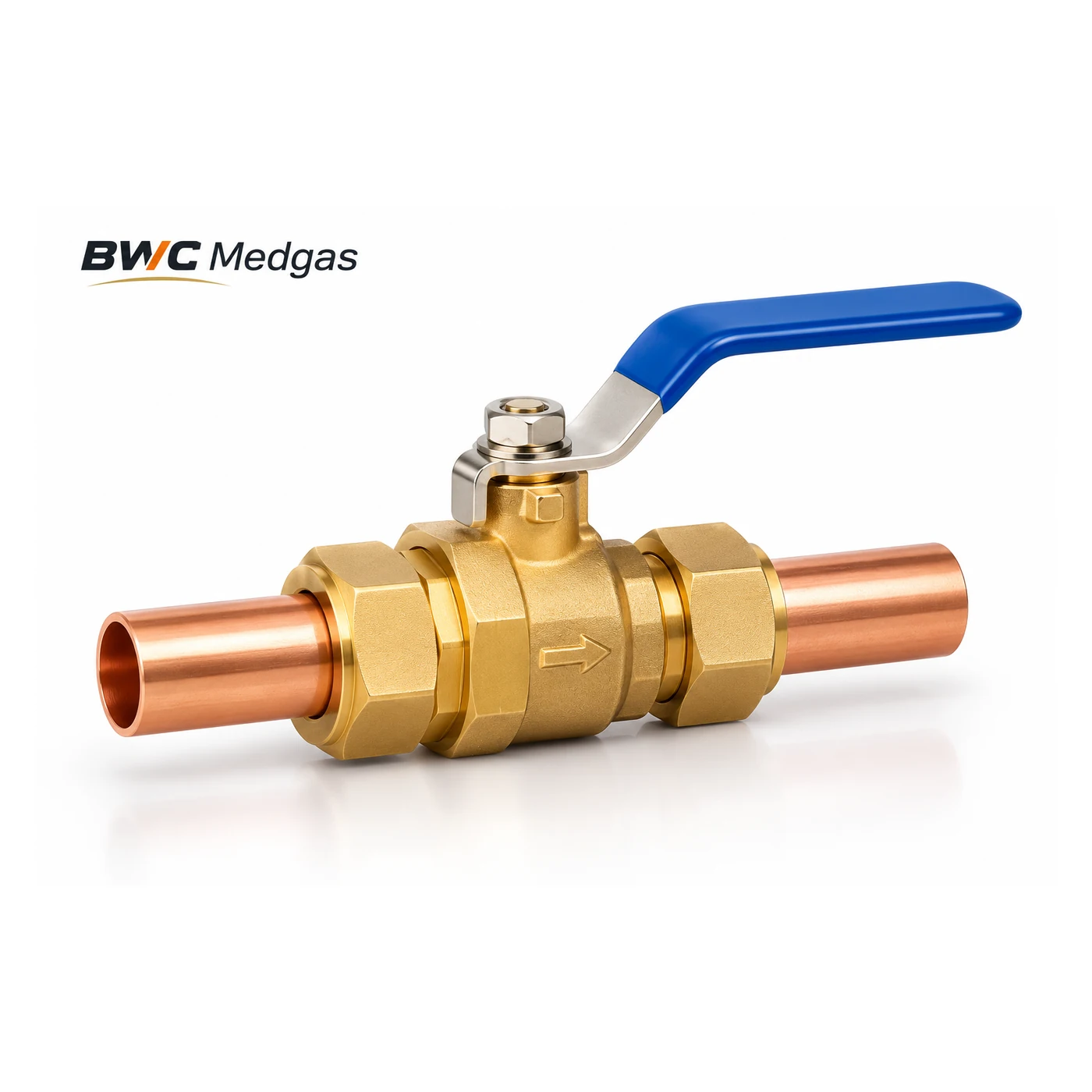
For replaceable zone valve boxes, pressure regulators and medical gas alarm systems, BWC Medgas can help match hardware against approved asset schedules. Supply information should be linked to the actual installed model and gas interface.
Discuss a controlled replacement-parts schedule with BWC Medgas.
A useful handover standard
A completed maintenance record should let another qualified engineer answer: what was inspected, where, according to which controlled procedure, what was found, who authorised any interruption, which component was installed and what evidence restored the equipment to accepted service? If the record cannot answer those questions, the process needs improvement.