
A medical gas refurbishment contractor may receive a request for additional oxygen outlets or replacement zone valves without a complete set of existing system drawings. That makes equipment purchasing harder: a supplier cannot infer the location, gas-service arrangement or exact connection details from a product list alone.
The current NFPA 99:2027 publication highlights the importance of medical gas system diagrams. This is a practical topic for US contractors and hospital facilities teams preparing projects involving existing pipework.
What does NFPA say about the 2027 edition?
The NFPA publisher's 2027 edition overview identifies a number of Chapter 5 changes, including new requirements involving medical gas system diagrams. The same summary refers to changes affecting inspection, testing, piping materials and the organisation of operational requirements.
The NFPA 99 development page identifies the 2027 edition as the current published Health Care Facilities Code. The publication itself is broader than medical gas hardware, covering healthcare systems according to risk.
A published code edition and the edition actually adopted for a particular project remain different matters. The hospital's project authority or design team should establish which edition governs the work.
Why do system diagrams matter when purchasing valves?
Medical gas isolation equipment is associated with a specific service and the portion of a pipeline that it serves. The correct number of valves, their identification and the relationship to downstream outlets belong to the system design.
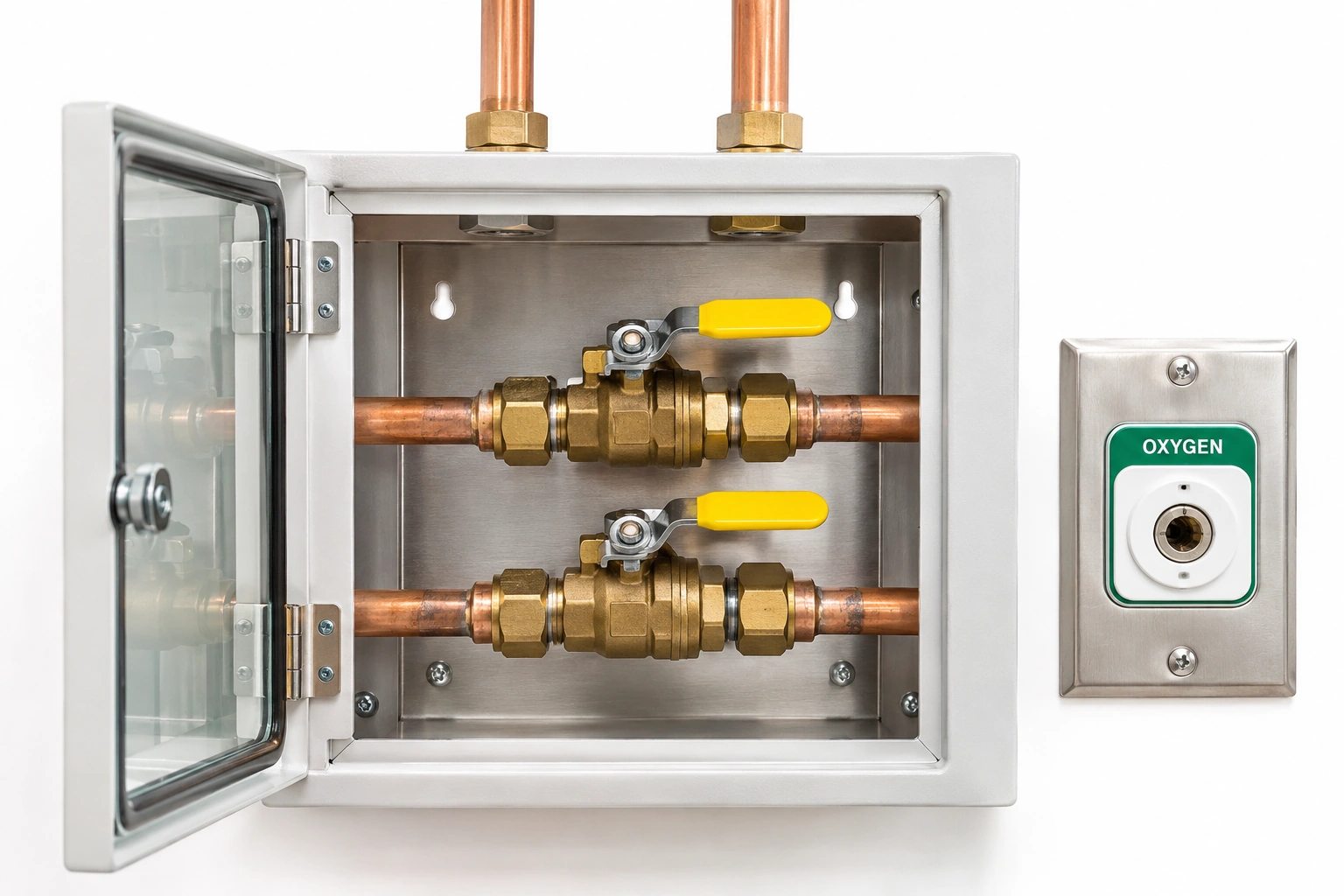
An equipment supplier may manufacture a zone valve box, but a generic product photograph cannot establish where the valve unit is installed or what hospital area it serves.
For a refurbishment, the purchaser should therefore obtain the applicable existing system diagrams and approved change drawings before ordering replacement isolation equipment.
That is a documentation and identification principle—not an instruction to isolate an operating service.
What information should the drawing set identify?
The project team can ask for records that support correct equipment selection:
- Identification of each applicable gas and vacuum service.
- The relevant pipeline and isolation-valve arrangement shown in the approved design records.
- The equipment and areas to be affected by the proposed change.
- The exact valve sizes and connection types specified for each replacement unit.
- The required outlet family and mounting arrangement for any new terminals.
- Alarm-related interfaces shown in the project schedule.
- Document revision and identification of the authorised designer or record owner.
Each required item should tie back to an equipment identifier on the bill of materials.
What does ISO 7396-1 add?
ISO 7396-1:2016 covers pipeline distribution systems as well as supply systems, monitoring, alarms and non-interchangeability. Its published scope expressly includes modifications and extensions of existing pipeline distribution systems.
This supports a useful engineering distinction: adding outlets to an existing hospital is not simply buying extra outlet hardware. The changes belong to the larger system and its documented design, verification and operational responsibilities.
A practical valve and terminal RFQ
A project equipment schedule should describe each proposed item by the medical gas service, approved technical drawing reference, connector or inlet dimensions, quantity and supplied accessory package.
For a zone valve box, confirm the valve count and services, enclosure and mounting dimensions, specified connections and pressure-related accessories. For an outlet, identify the gas-specific mating system and installation format.
Keep installation and verification deliverables distinct from the component manufacturer's model datasheet.
BWC Medgas and US project components
BWC provides zone valve boxes, medical gas isolation valves, terminal units, alarm products and related fittings.
A contractor can submit the component schedule and approved drawing references to BWC for a product-specific offer. The facility and responsible engineering professionals determine system changes and operational safety.
Submit a US medical gas retrofit component list to BWC.
Frequently asked questions
Does the current NFPA 99 publication require medical gas system diagrams?
NFPA identifies medical gas system diagrams among the 2027 edition's Chapter 5 updates. Specific project applicability requires review of the adopted code and full text.
Can a supplier use a product catalogue as the hospital's existing system drawing?
No. Product specifications and actual as-built system records serve distinct purposes.