Extending a medical gas network in an occupied hospital is not simply a smaller version of a new-build project. The existing system is in active clinical use, may differ from old drawings, and cannot be interrupted according to a contractor’s convenience.
The first deliverable should be a refurbishment phasing brief that connects clinical continuity with design boundaries, verification evidence and authorized site arrangements. This article addresses planning and documentation, not instructions for isolating or modifying live medical gas lines.
Confirm what actually exists before choosing parts
Begin with a controlled survey plan. Obtain current as-installed drawings, maintenance records, relevant test information and the operator’s knowledge of the zones served. Identify missing or conflicting records. A connection point shown on an old plan may no longer be representative of installed conditions.
Record the system service, confirmed interface, physical access, affected rooms, existing valve zoning, alarms and whether the proposed work touches an active distribution segment.
Where evidence is incomplete, mark the boundary as unconfirmed and assign a competent party to resolve it under the hospital’s safety process.
Separate existing, retained, removed and new works
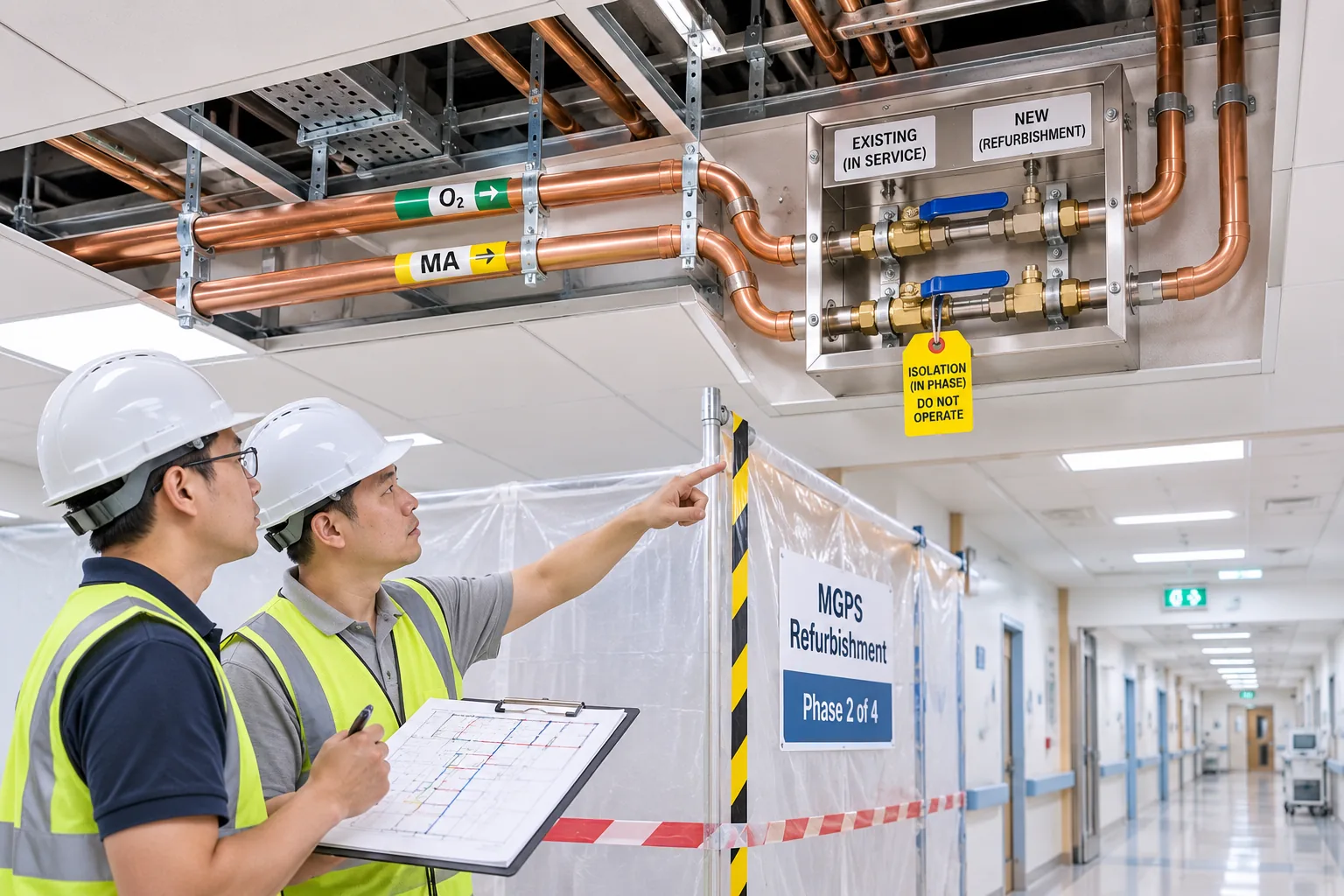
An effective drawing package differentiates:
- Existing installation retained without alteration.
- Existing components to be removed or made obsolete under approved procedures.
- New components and distribution being added.
- Temporary services or contingency arrangements to be managed by the facility.
- The exact proposed connection boundary and required verification scope.
Make these distinctions visible in drawings and the bill of materials. They prevent procurement of replacement terminals or valves for the wrong installed interface.
Design phases around clinical operations
Create a phase record for each affected area: clinical owner, expected service impact, dependencies, required access, approvals, contingency planning, relevant installation/testing boundaries and conditions for return to use.
The phase sequence must be approved by the healthcare facility. Avoid treating room vacation, patient movement, contingency gas arrangements or outages as ordinary contractor logistics.
The plan should also consider neighboring areas that share a service zone, even if their rooms are outside the construction boundary.
Plan hold points, not just dates
A date on a construction schedule does not authorize medical gas work. Suggested project hold points include:
- Verified scope and connection interface before component ordering.
- Clinical and operational review of proposed service impacts.
- Approved work documentation and site-specific safety controls before activity affecting the existing system.
- Required installation and inspection evidence before concealed work.
- Documented system testing, gas identification and acceptance evidence before any affected area is authorized for use.
- Updated as-installed information and maintenance records at handover.
The applicable HTM/SHTM or local code and the healthcare organization’s authorized-person arrangements govern the details of work permits and verification.
Avoid repeated system interruptions
Design decisions can reduce unnecessary future disturbances. For example, coordinated valve zoning and adequately planned access may allow later maintenance to affect a smaller defined clinical area. That benefit needs to be evaluated by the engineer and operator, not inferred simply because a valve exists on the diagram.
Similarly, a change to the medical gas source may require an updated system-level review even if no patient outlet is physically moved.
Example of a phase record
A project may divide a hospital refurbishment into wing A and wing B. A legitimate phase record could state:
- Phase A: new clinical rooms are installed but not released for use.
- Existing connection: identified on survey drawing, engineering review pending.
- Impacted operational zone: identified by the site operator.
- Component package: terminal schedule and valves released only against approved interface drawings.
- Verification: specific acceptance documents and responsible signatories identified.
- Next phase permitted only after recorded approvals.
This is a management example, not a method for connecting, testing or restoring a live gas supply.
Procurement traps to avoid
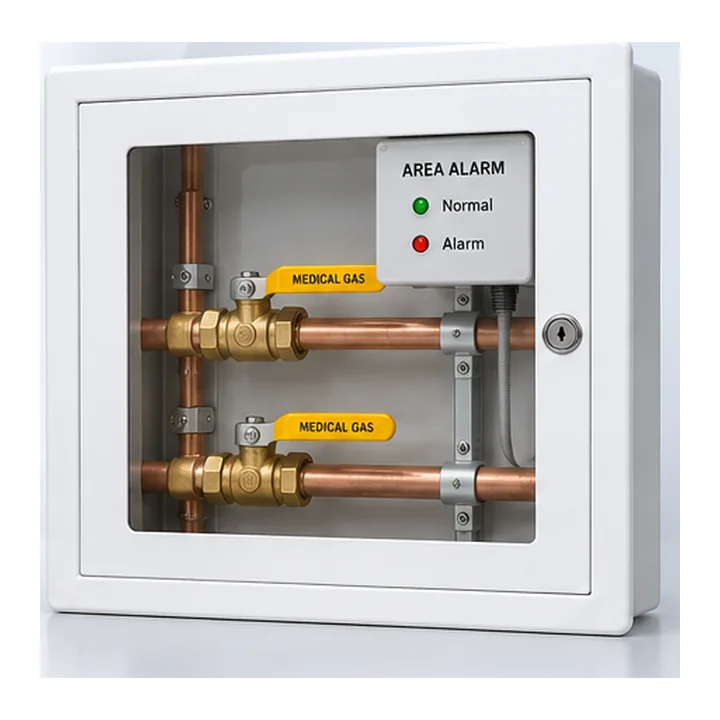
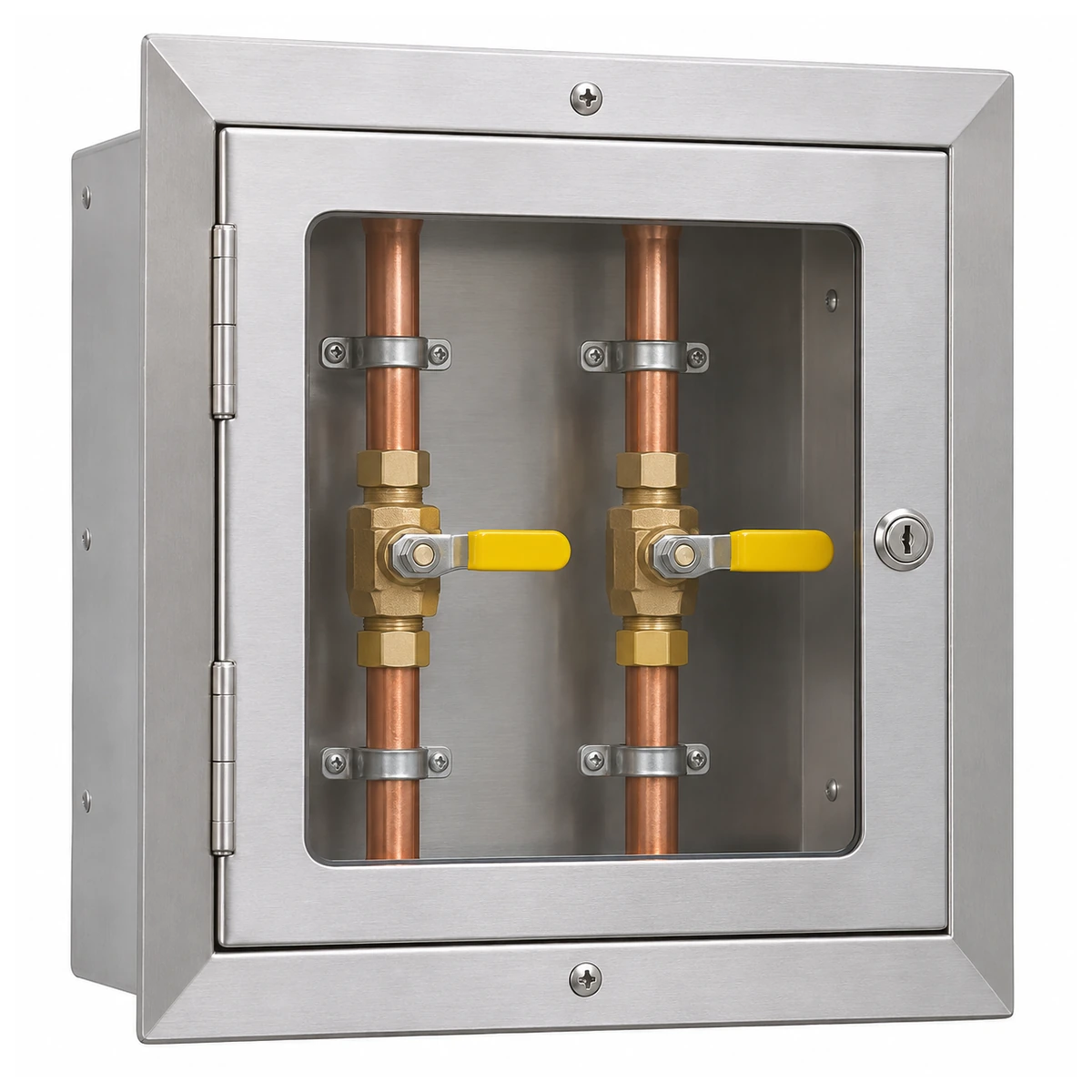
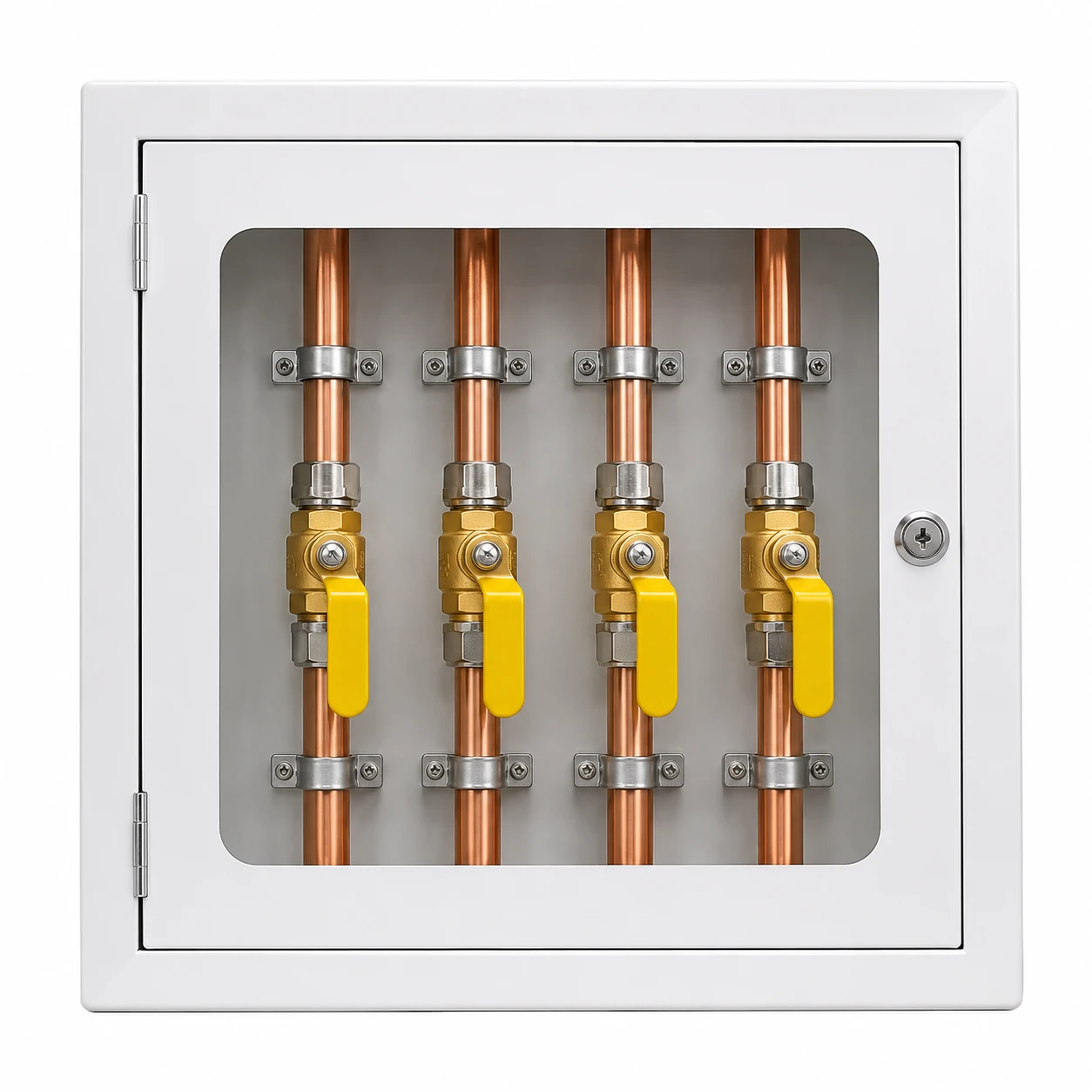
Old and new outlets can have similar appearance but different mating connections. Replacement valve boxes may have different dimensions or service configurations. Alarm interfaces may be changed by a modernization package. These risks require exact interface confirmation, not substitute-by-photo purchasing.
State explicitly which assemblies BWC Medgas may supply—outlets, zone valves, alarms and related hardware—and which tasks remain with the appointed installers, designers and operator.
Discuss verified refurbishment component requirements with BWC Medgas.
Frequently asked questions
Can an old as-built be used as the only connection evidence?
Not safely by assumption. Changes and undocumented repairs may have occurred, so the responsible team should resolve discrepancies before design or procurement decisions.
Can a component supplier approve the return of a hospital area to clinical use?
Supplying a compliant component is different from authorizing an installed MGPS area for clinical use.