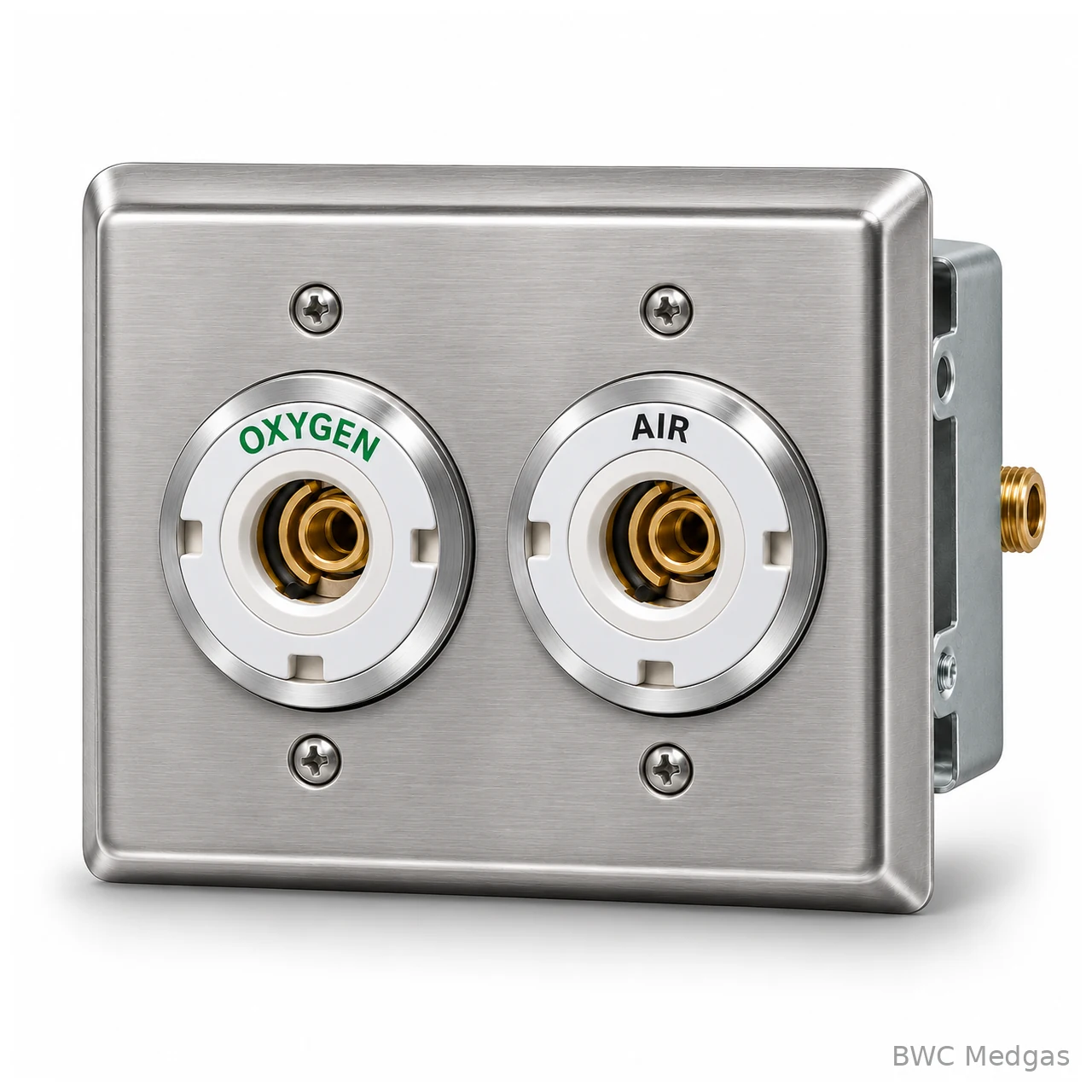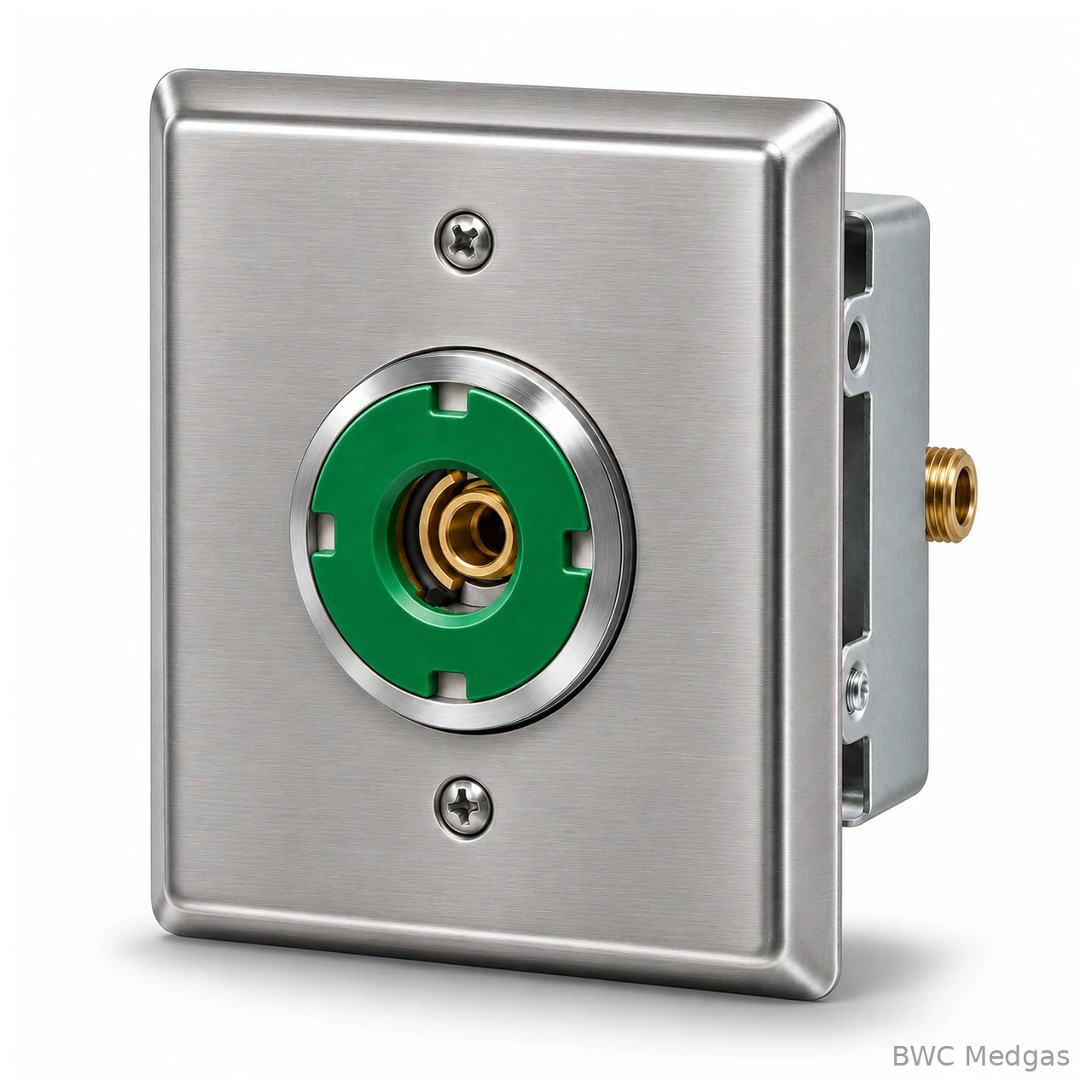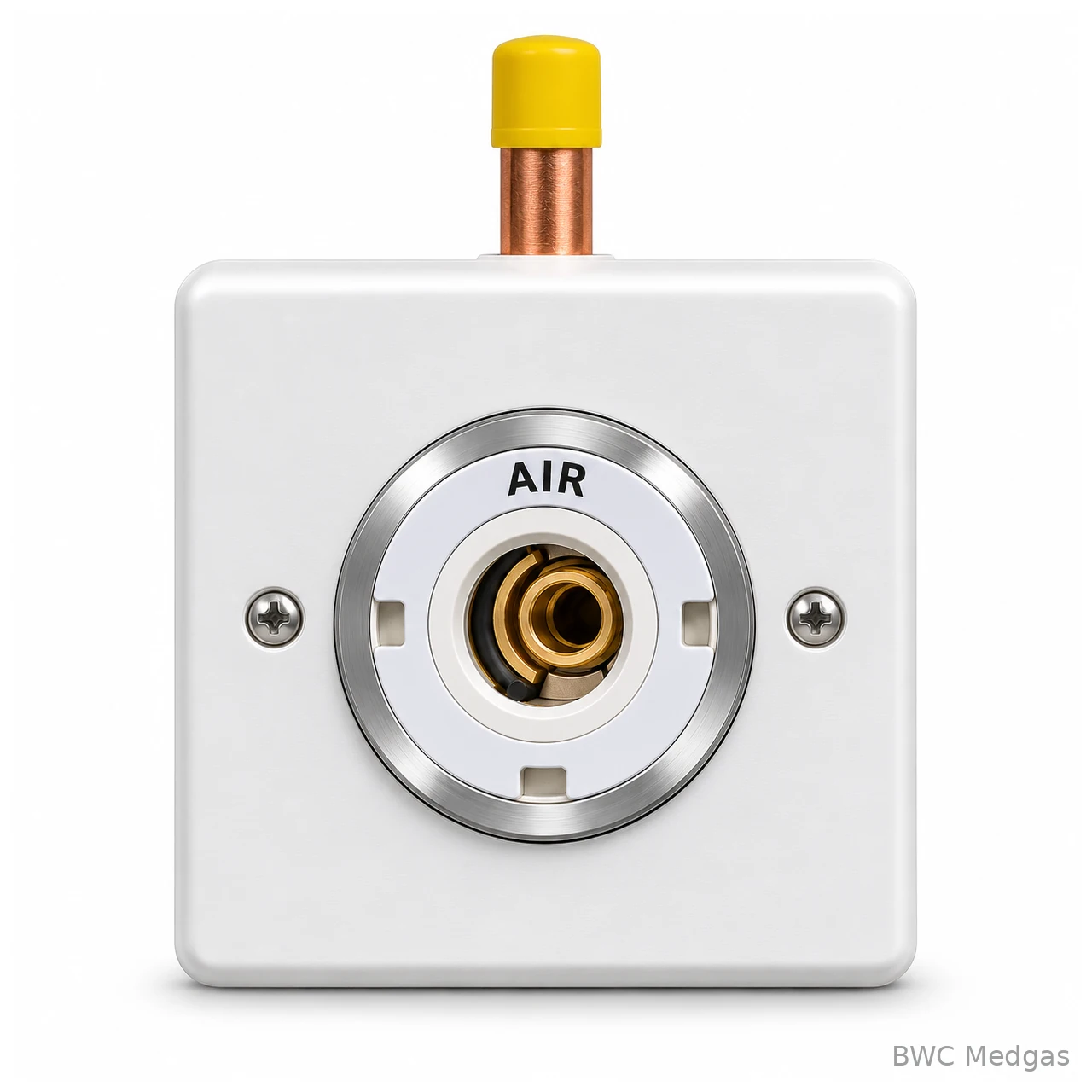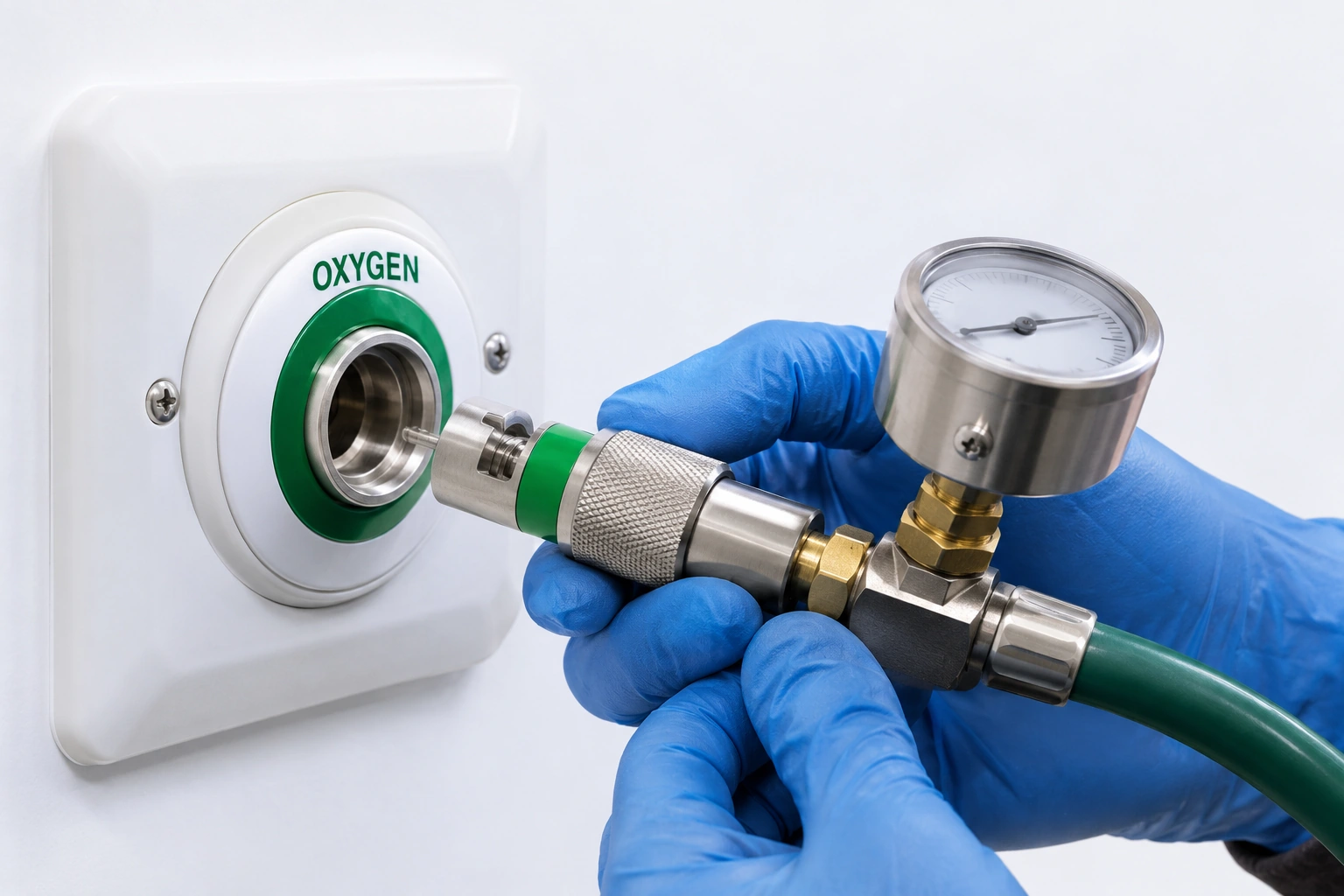
A wall outlet can be installed with the correct color and label and still lack adequate evidence that it belongs to the intended gas service, meets the required function and is connected to the verified distribution zone. “The socket fits a probe” is not proof of clinical readiness.
A terminal-level verification register makes the acceptance status visible per location and service. It supports the facility's approved commissioning process; it does not tell installers how to deliberately cross-connect, manipulate live gas lines or carry out hazardous tests.
Separate identity, specificity and functional requirements
Service identity: What gas or vacuum service is intended at the defined physical location, and what evidence confirms that service at the point of use?
Gas-specificity: What evidence demonstrates that the terminal and approved mating probe are configured to prevent use with the wrong service?
Functional performance: What approved measurements or observations establish that the assembled terminal functions as required under the governing procedures?
Cross-connection evidence: What system-level checks demonstrate that service lines and terminal locations are not incorrectly related?
These checks answer different questions. A single tick for “terminal passed” should link to the detailed records, not replace them.
Use the NHS 2026 documentation map carefully
NHS Scotland SHTM 02-01 (2026) explicitly lists Form A7: terminal unit schedule, cross-connection and gas-specificity tests; Form A8: terminal unit functional tests; Form A20: medical gas identification tests. These are distinct evidence categories.
The local adopted requirements may use different forms. Do not paste NHS form numbers into a US contract and claim local compliance. The principle is to preserve the traceability from each actual terminal to the applicable verified results.
ISO 9170-1:2017 addresses performance/gas-specificity of medical gas and vacuum terminal units. ISO 7396-1:2016 covers the wider MGPS including testing and commissioning.
A register that an independent reviewer can audit
| Column | Required information |
|---|---|
| Terminal asset ID | Unique identifier tied to physical location |
| Building / room / position | Exact as-installed location |
| Intended service | Gas/vacuum identity and approved room requirement |
| Installed model | Manufacturer, model, gas-specific variant and revision |
| Installed zone | Relevant MGPS zone/diagram reference |
| Required verification | Governing approved test or check ID |
| Evidence record | Completed report and result/reference |
| Instrument information | Calibration/reference where required |
| Exception/defect | Issue ID, affected scope and disposition |
| Accepted by | Authorized witness, date and signed decision |
A spreadsheet can be used, but it must point to the actual test reports and be version controlled. Terminal photos are optional supporting evidence; they are not a substitute for the required verification.
Traceability across drawings and installed labels
A project may assign outlets to rooms before construction. Later the architect renumbers rooms or combines bays. A crosswalk should preserve the relationship between design room number, final room name and installed terminal ID.
Otherwise the acceptance dossier can contain a correct result whose location is ambiguous. Fix this before final turnover. Do not change historic test IDs without a documented mapping.
Example: one incomplete point in a completed ward
A new ward contains 20 specified terminal positions. The verifier has signed satisfactory evidence for 19, while one outlet's required gas identity record is unresolved.
The project register should show 19 accepted records and one open terminal, with its exact location and reason. The healthcare operator decides any clinical area restrictions and release conditions. An aggregate “95% tested” figure is not a release authorization.
Record defects without hiding failed results
A defect record should state the terminal ID, relevant service, original observation, related test document, accountable engineer, corrective action and retest result. Keep both unsuccessful and closure evidence.
Do not simply replace the page in the final binder with a later “pass” and discard the original event. A preserved audit trail helps identify whether an issue was local to a faceplate or part of a wider installation pattern.
Connect source, zone and point-of-use verification
The project should link the terminal schedule to source and area valve zone information. A correctly labeled outlet may still require system-level gas identity and performance verification at the chosen boundaries.
Only the appointed competent commissioning team determines test selection and procedures. The article offers a document framework, not pressure/flow limits or instructions for energizing systems.
Procurement implications
Ask the manufacturer to provide exact model and gas variant identifiers, intended connection family, assembly documentation and relevant product test/marking evidence. These support the site register but cannot replace installed-system testing.
BWC Medgas can discuss terminal unit variants and related zone valve hardware against an approved terminal schedule.
Submit the approved outlet model and location register to BWC Medgas.
Frequently asked questions
Is the manufacturer's product certificate equivalent to the hospital's gas identity test?
No. Product and installed-system evidence are distinct.
Should all outlet testing be summarized only by total passed count?
No. Each outlet's location, service, acceptance evidence and any unresolved condition need traceability.